Antarctica

Antarctica is unlike anywhere else on Earth—a place that strips the world back to its rawest elements and reminds you just how powerful our planet truly is. This vast southern wilderness is defined by ice, wind, and ocean, where towering glaciers calve into the sea, sculpted icebergs drift silently past, and wildlife thrives at the edge of what is possible. From photographing penguins navigating their frozen world to witnessing whales surfacing in icy channels, every moment here feels both intimate and monumental. Photography in Antarctica is about more than dramatic scenery. It is about patience, storytelling, and learning to read a landscape that is constantly in motion. Zodiac landings, quiet moments on shore, and hours spent observing wildlife all become opportunities to slow down and truly see this place for what it is—fragile, resilient, and profoundly important. These journeys are immersive and humbling, inviting a deeper connection to a continent that few ever experience, yet one that affects us all.
Penguin Parade
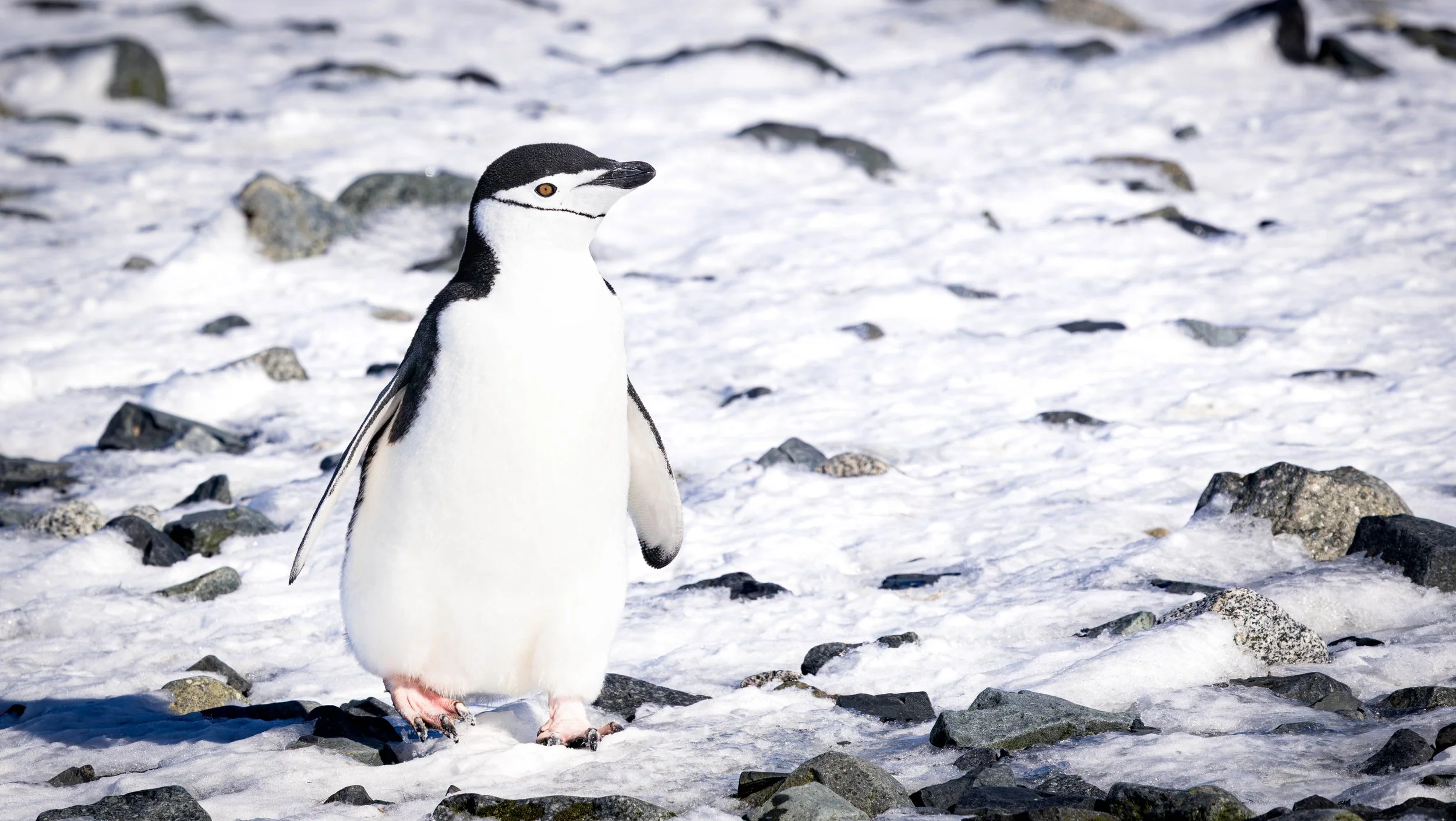
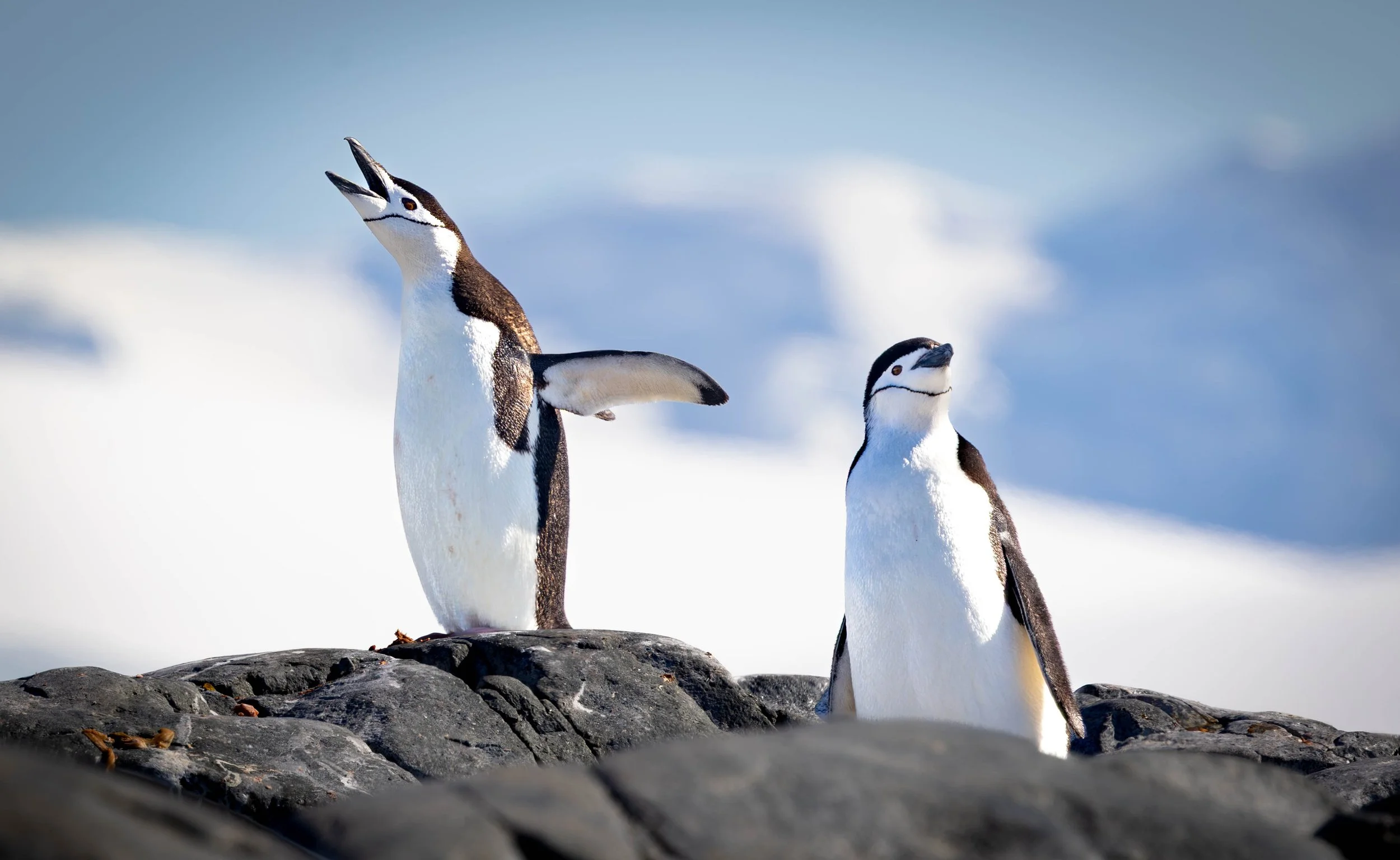
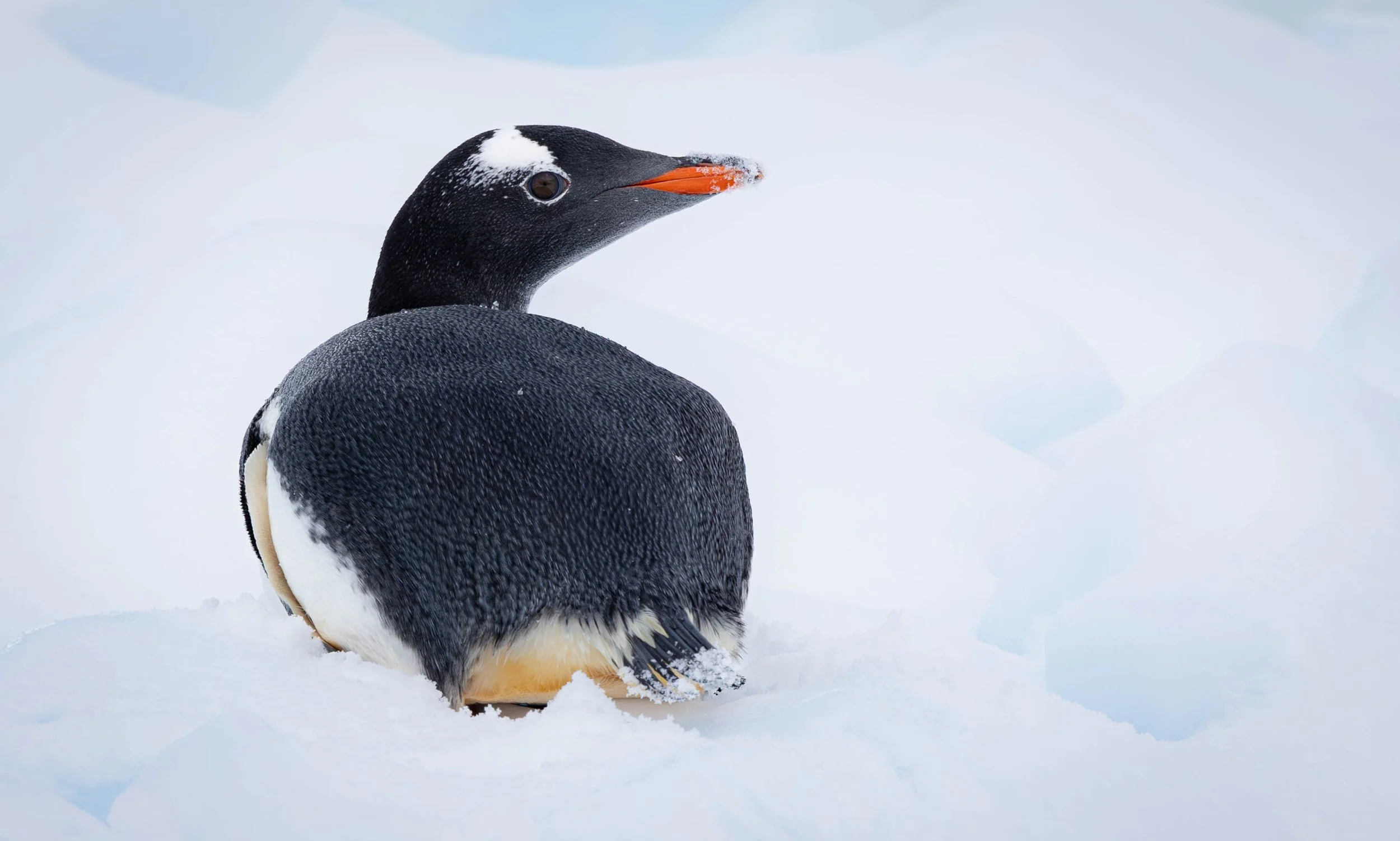
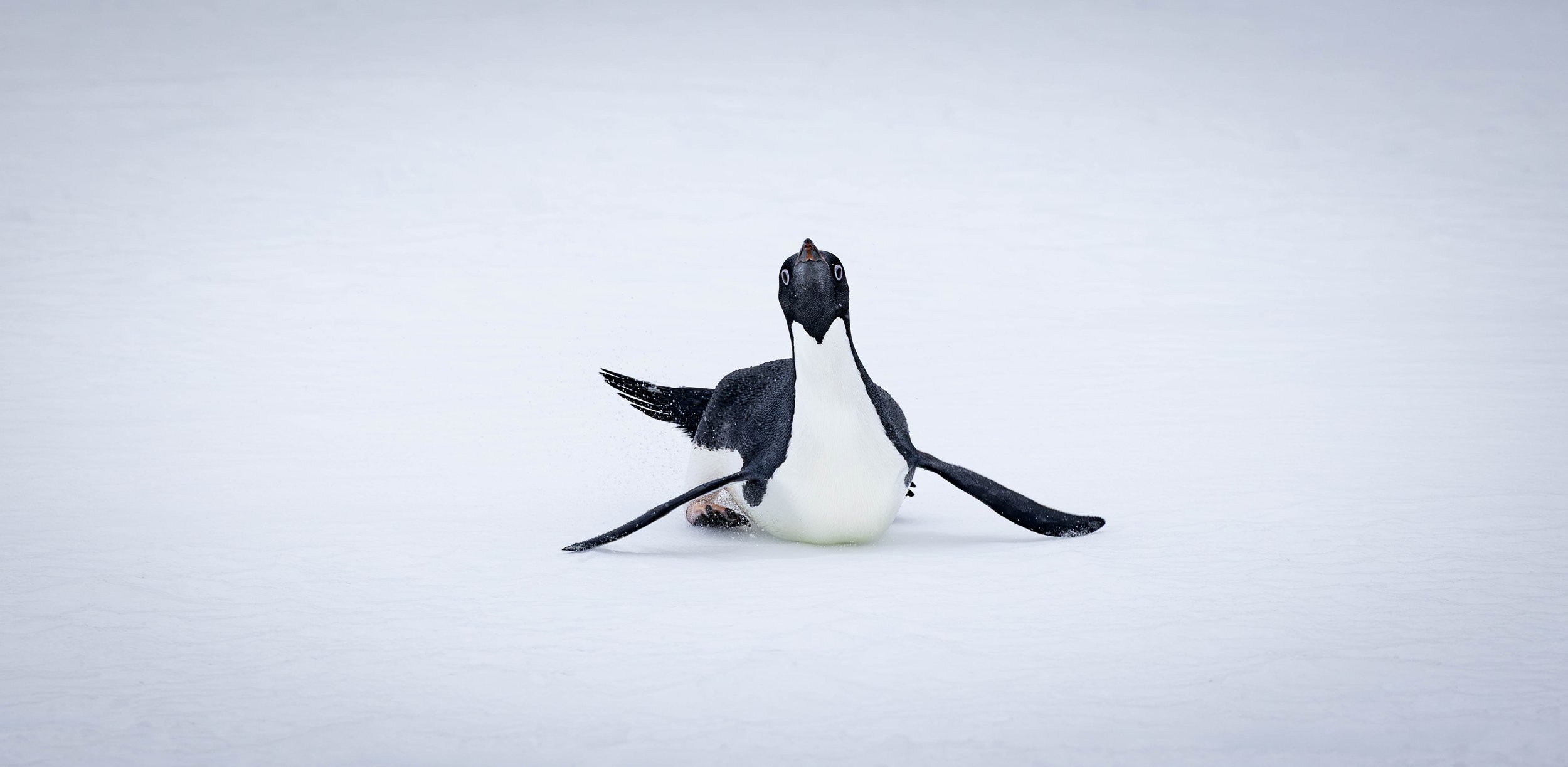
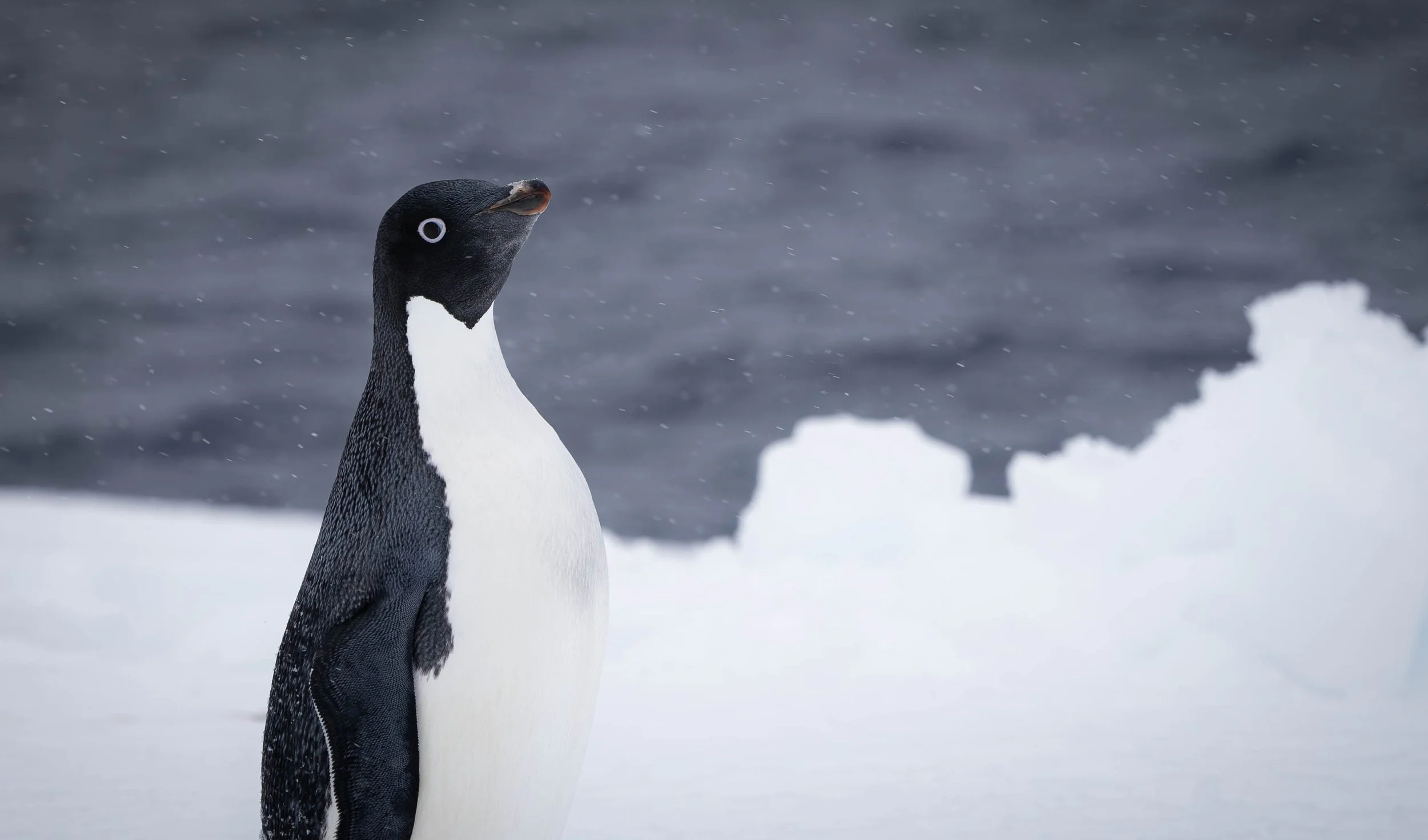
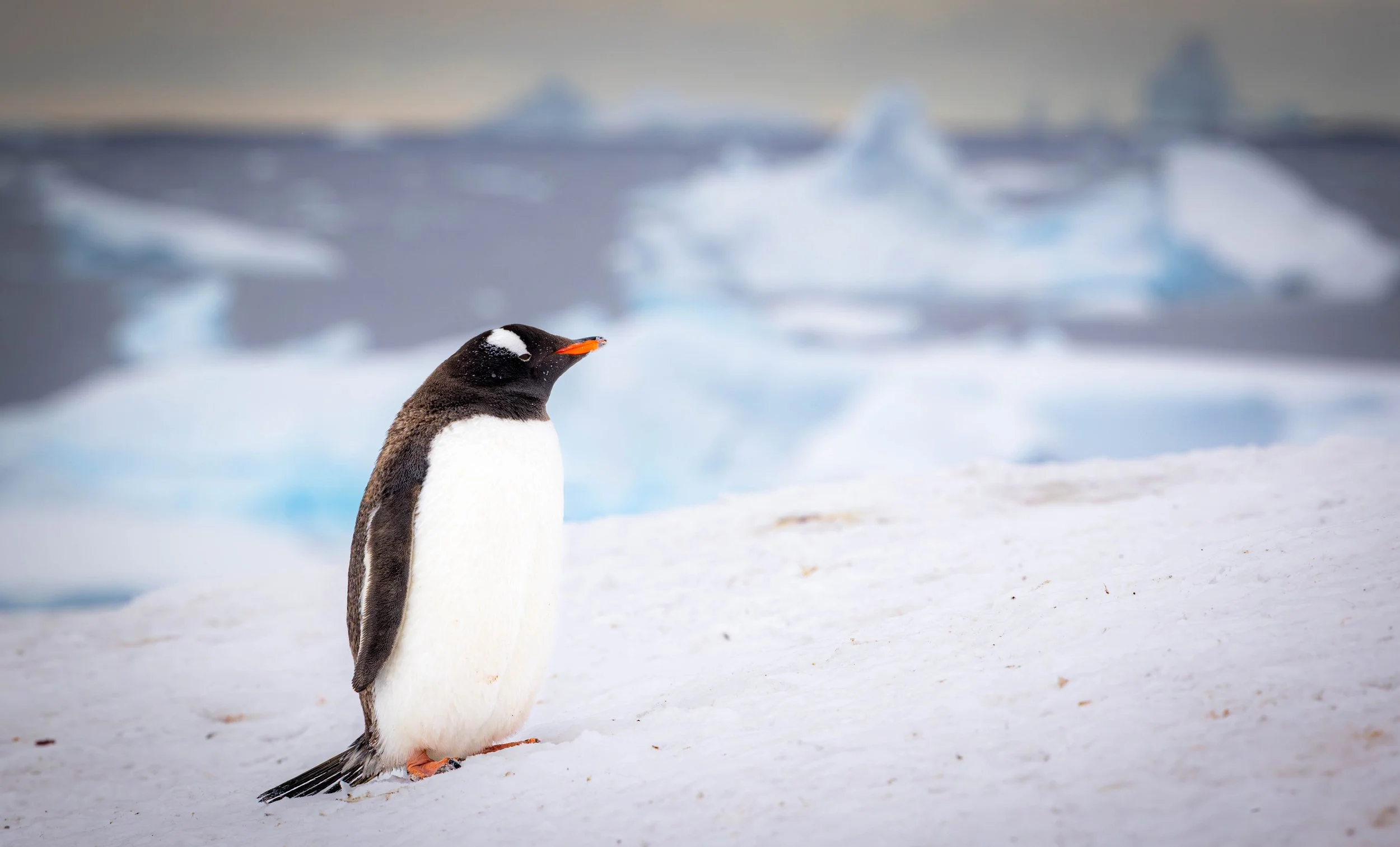
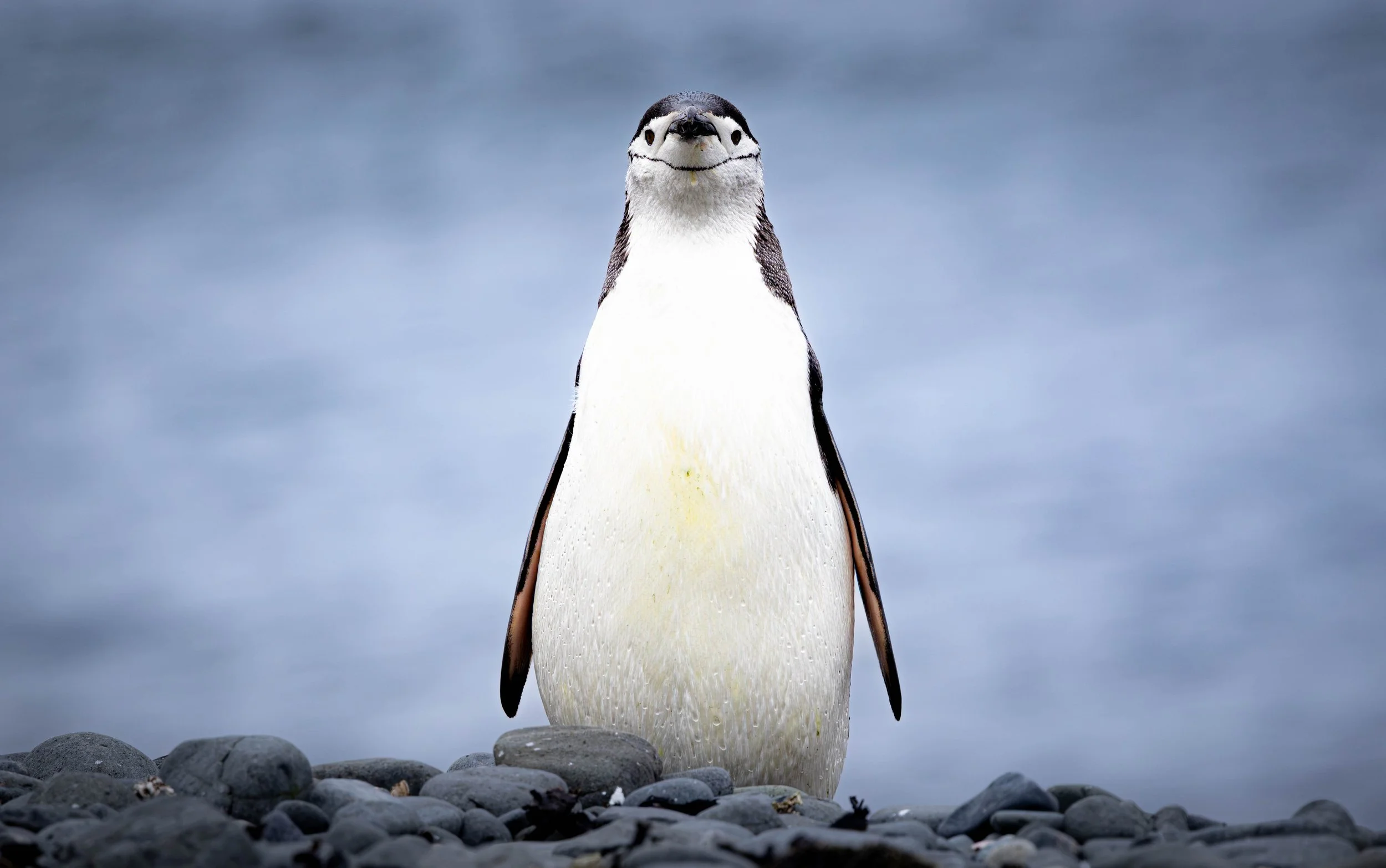
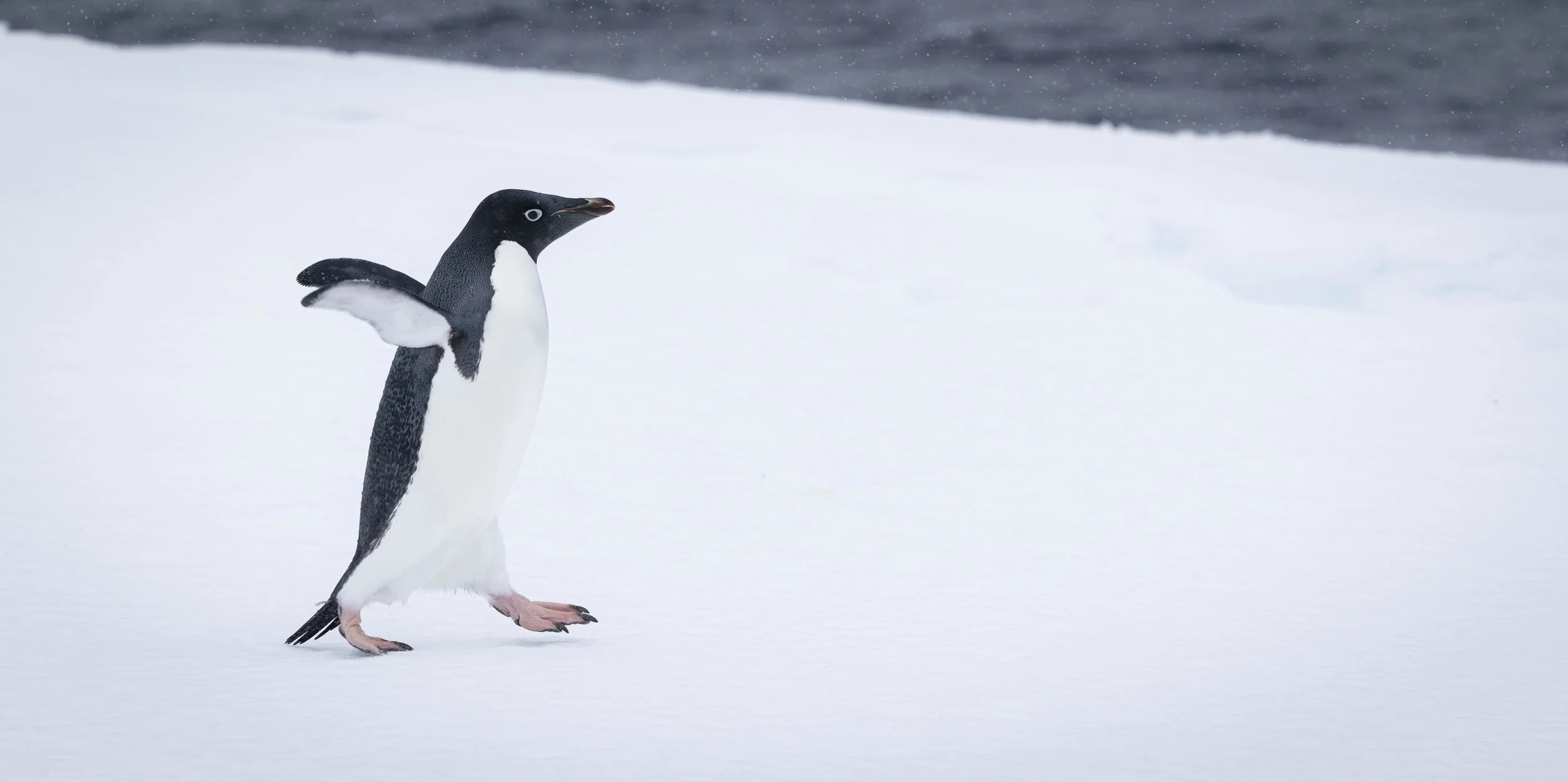
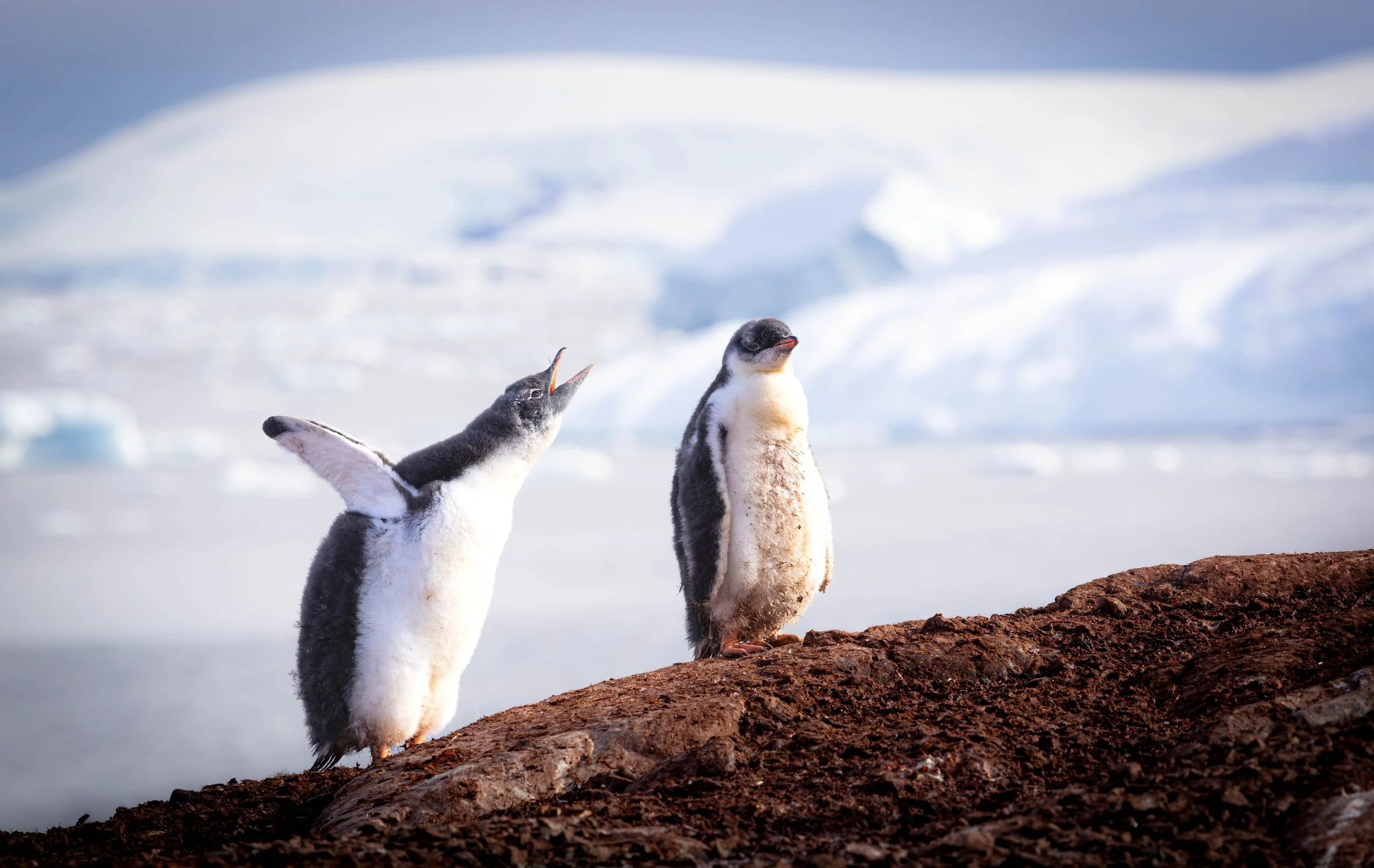
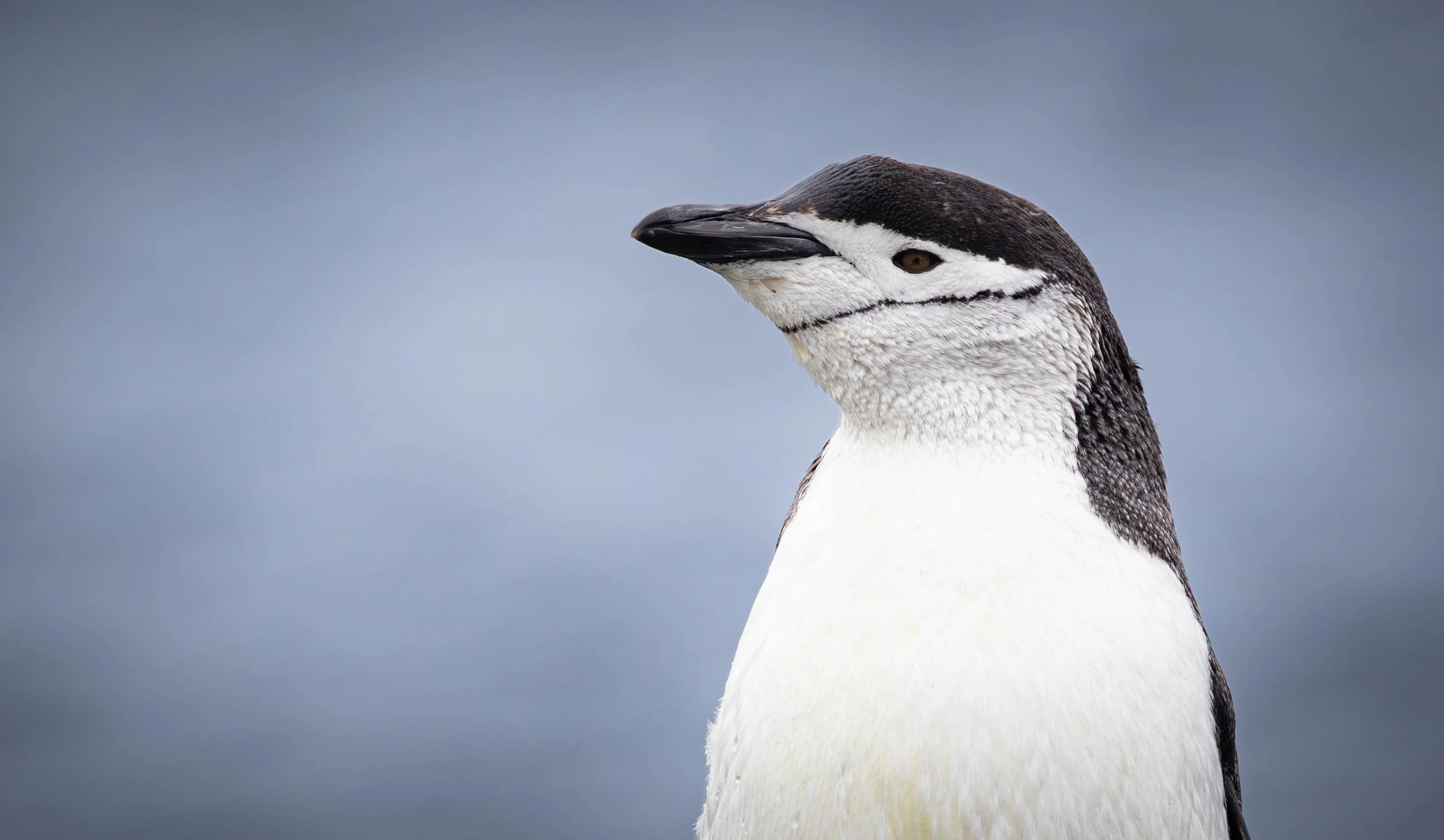
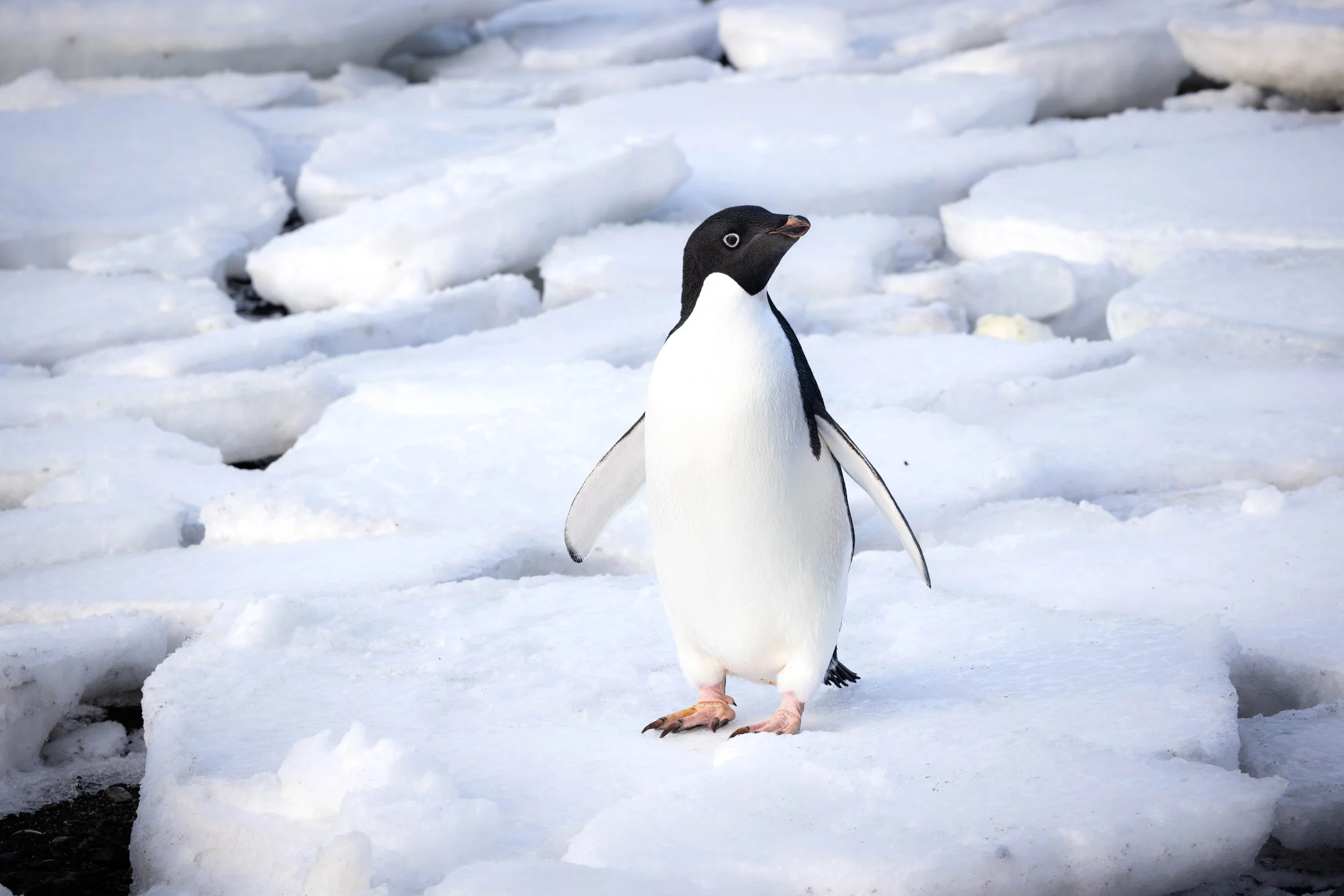
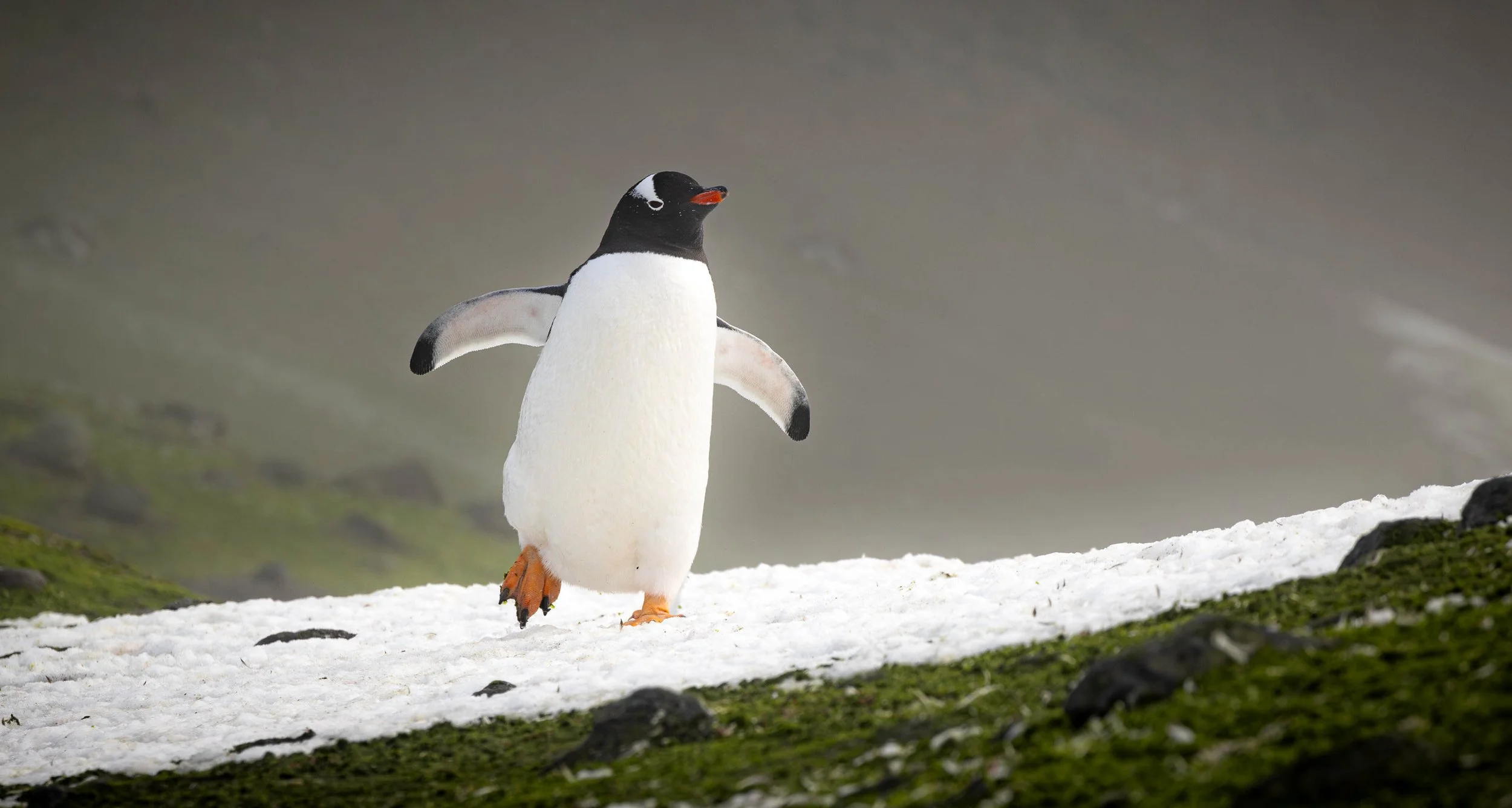
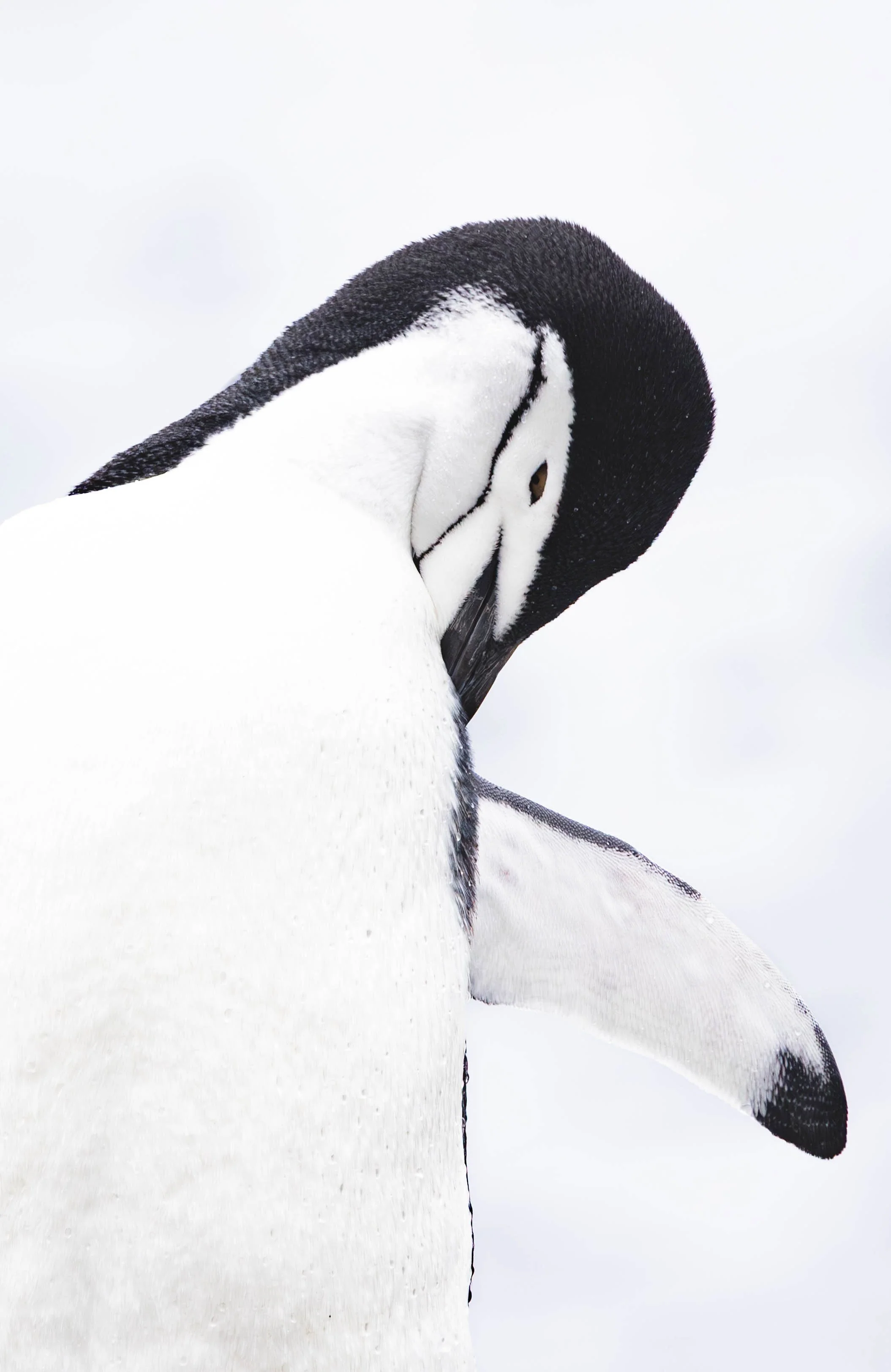
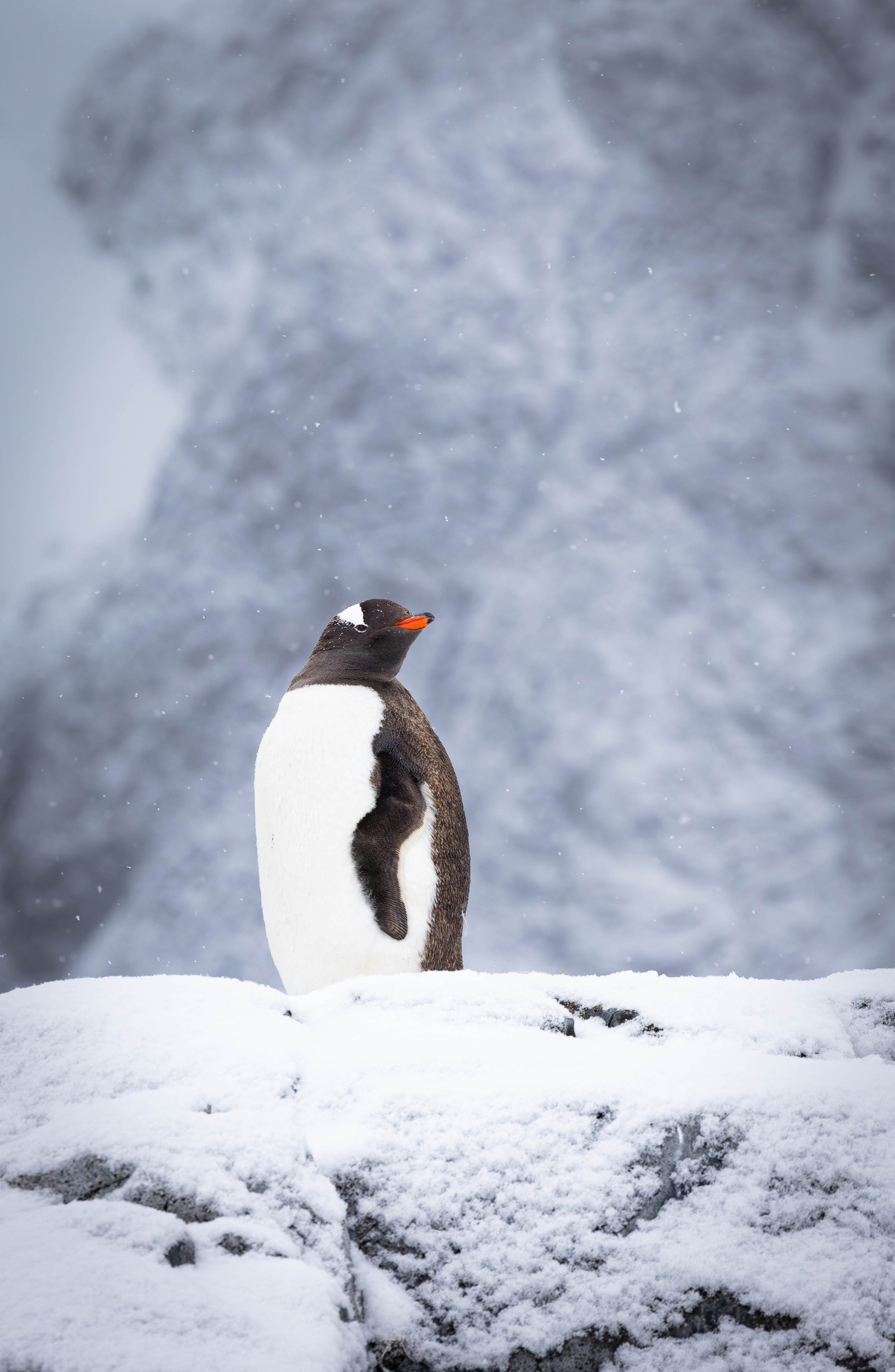
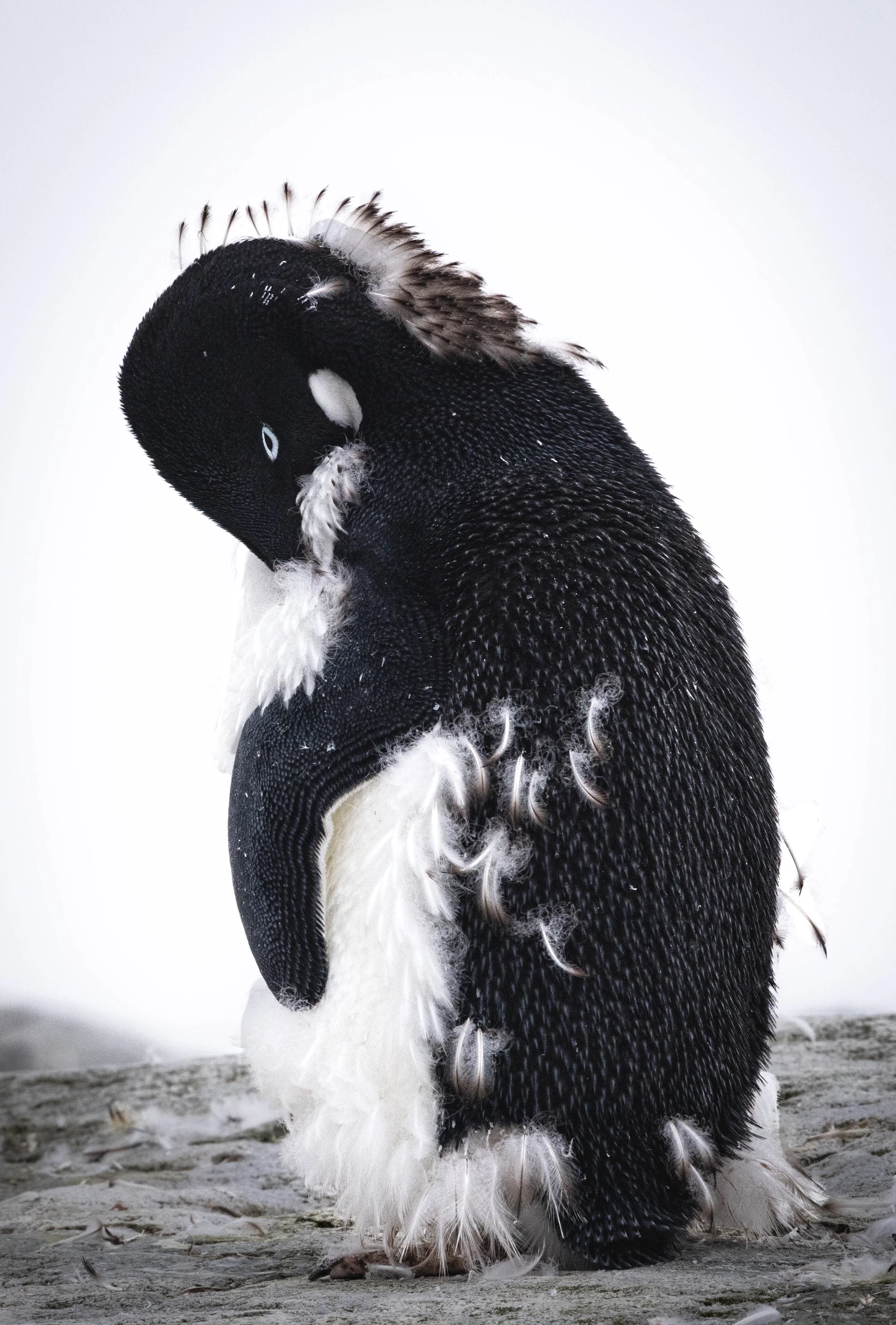
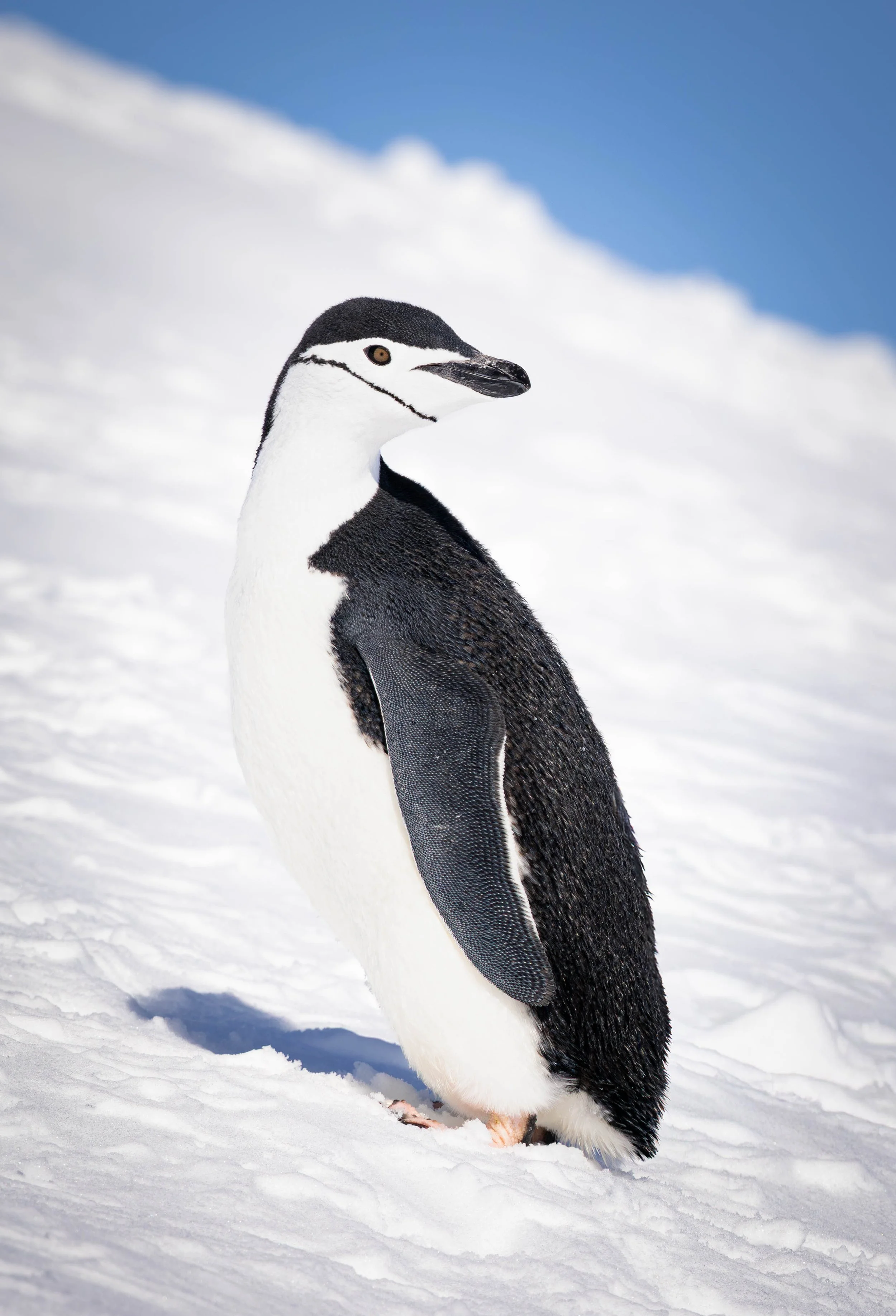
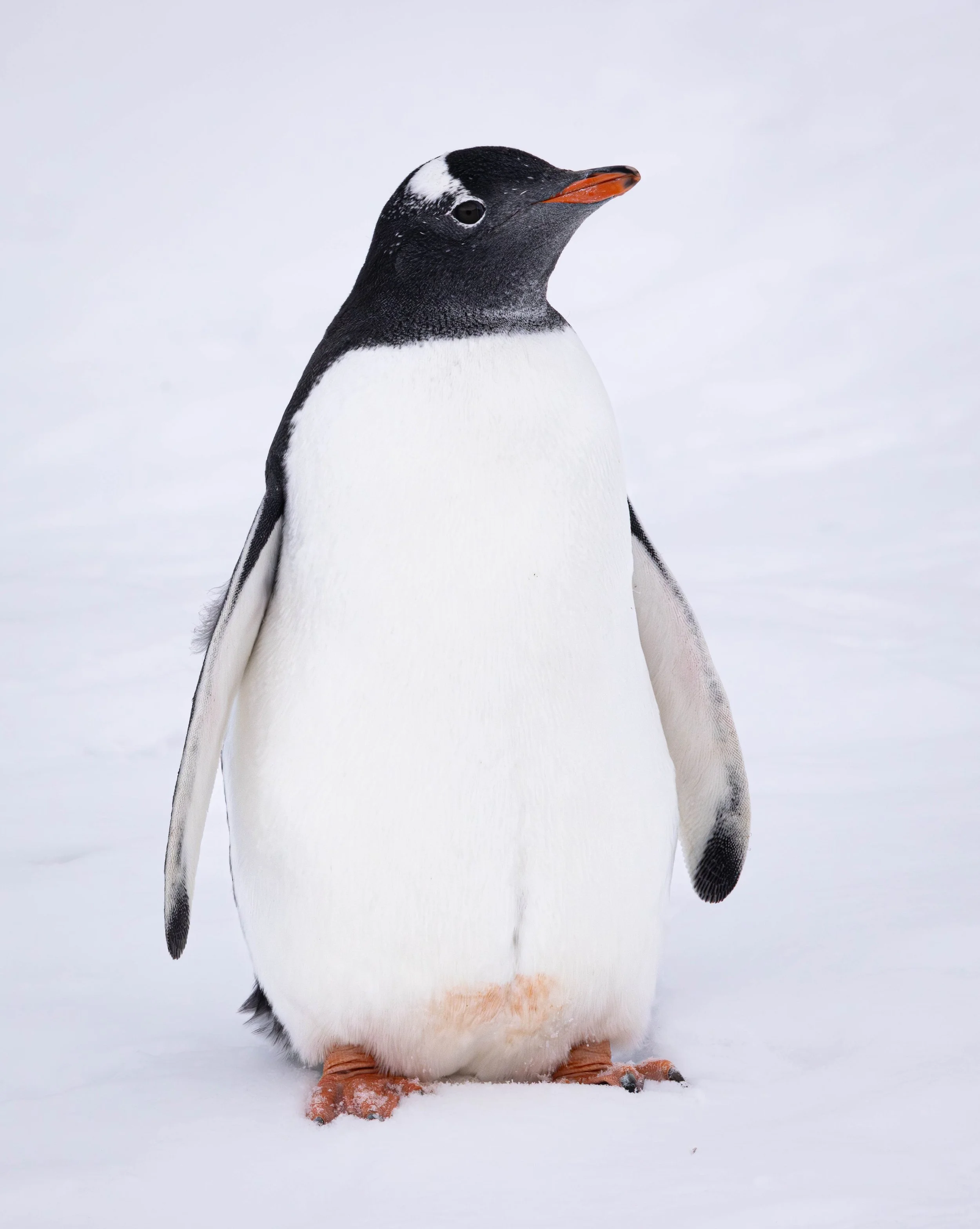
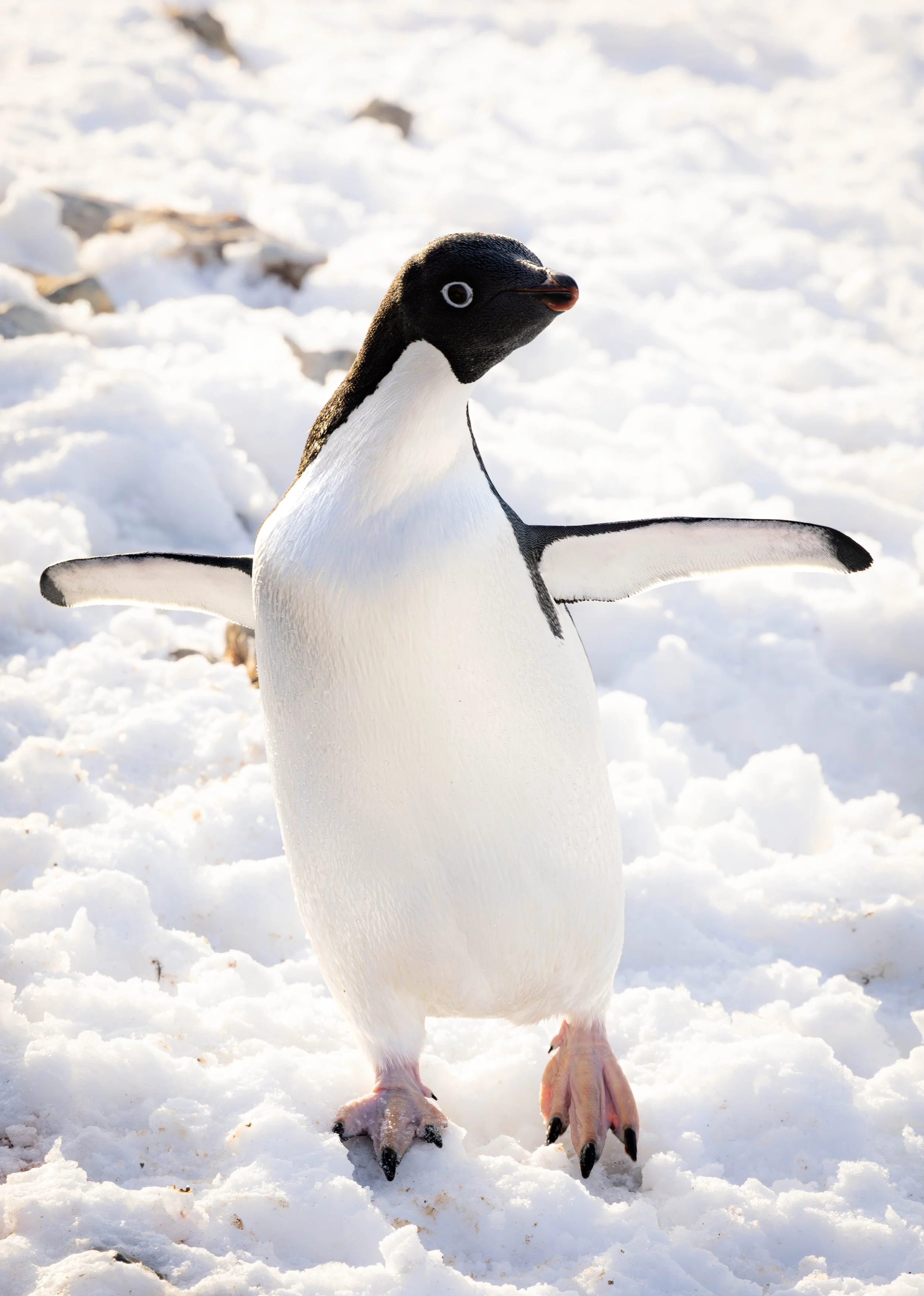
Adélie, Chinstrap, and Gentoo penguins are among Antarctica’s most iconic residents, each shaped by the demands of life at the edge of the Southern Ocean. During February and March, colonies are alive with late-season energy: chicks are growing fast, adults are making constant foraging trips, and the rhythm of feeding, guarding, and molting dominates daily life. Adélies, closely tied to sea ice, bustle across rocky shores with remarkable determination, while Chinstraps—often the most vocal—fill the air with sound as they defend nesting sites and tend nearly full-grown chicks. Gentoos, slightly larger and endlessly curious, move between land and sea with ease, their long tails and white head patches making them instantly recognizable. This late-summer period offers a window into penguin family life, where resilience, cooperation, and precise timing are essential for survival before winter returns.
From a conservation and photography perspective, these species tell an important and evolving story. Changes in sea ice, shifting prey availability, and warming ocean conditions are already affecting penguin populations in different ways—Adélies declining in some regions, while Gentoos expand southward into newly ice-free areas. Photographing penguins at this time of year is about more than capturing charming moments; it is about documenting behaviour, context, and change. Low angles, patience, and respect for colony boundaries allow images to reflect authentic interactions—feeding exchanges, curious glances, and the quiet intensity of molting adults. These photographs become records of a fragile balance, using visual storytelling to connect viewers at home with a continent they may never visit, but one whose future is closely tied to our own.
The Importance of Ice
Part One: The Antarctic Ice Sheet
The Antarctic Ice Sheet is the largest single mass of ice on Earth, covering nearly the entire continent and holding close to 70% of the planet’s fresh water. Built up over millions of years from compacted snowfall, this ice reaches thicknesses of several kilometres in places, creating a frozen archive of Earth’s climate history. From space, Antarctica can feel distant and untouchable, but what happens to this ice sheet matters profoundly to people far beyond the polar regions.
If the Antarctic Ice Sheet were to melt entirely, global sea levels would rise by approximately 58 metres, reshaping coastlines, displacing communities, and transforming ecosystems worldwide. Even small increases in melt rates contribute to rising seas, stronger storm surges, and increased flooding in low-lying cities and island nations. Antarctica may feel remote, but its ice acts as a stabilizing force for our planet. As temperatures rise, the changes occurring here are not isolated—they ripple outward, affecting where and how people live across the globe.
Part Two: Sea Ice — The Living Ice
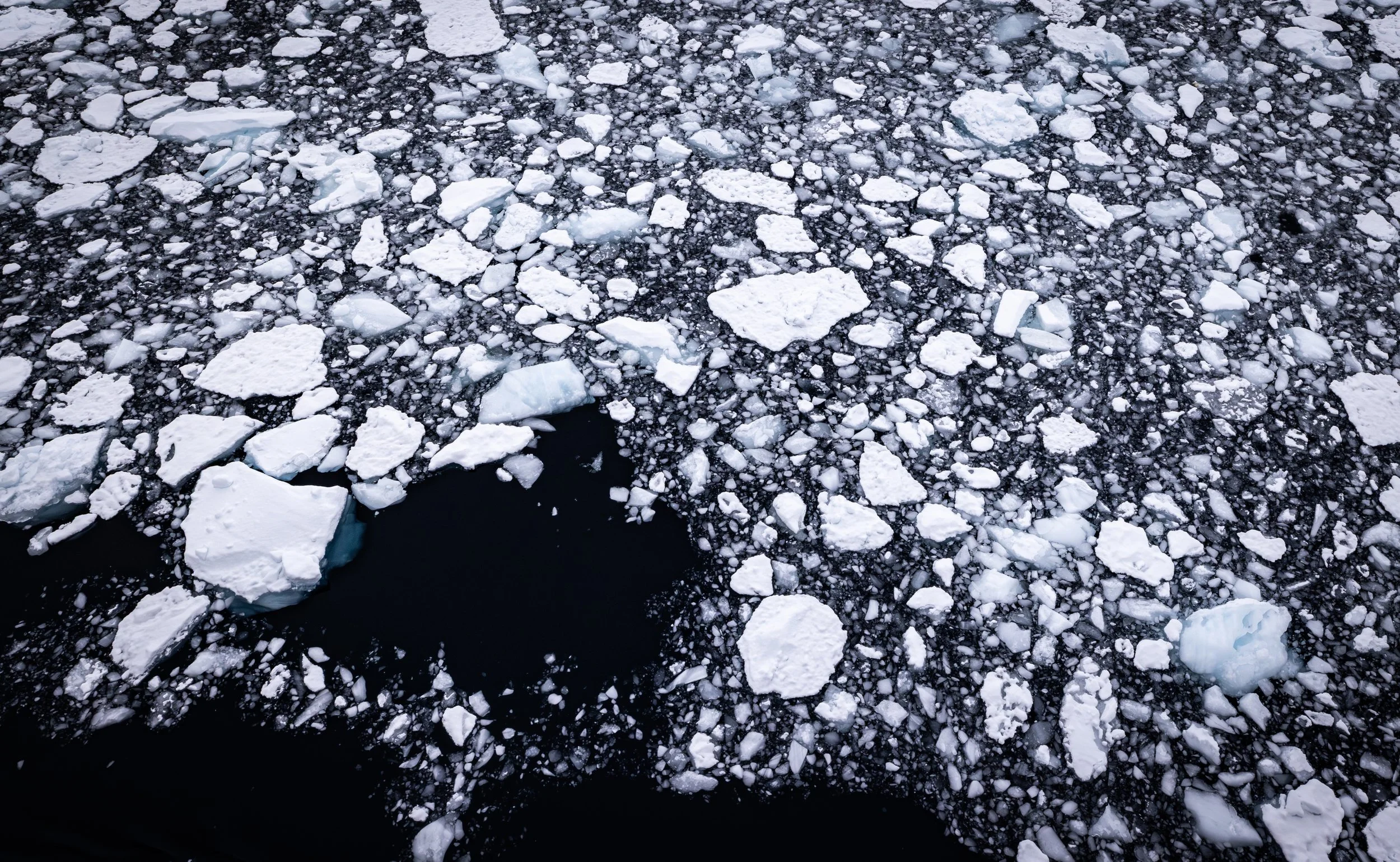
Unlike the massive ice sheet locked to the land, Antarctic sea ice is constantly in motion, freezing and melting with the seasons. Each winter, sea ice expands to nearly double the size of the continent, only to retreat again in summer. This rhythmic cycle is often described as the lungs of the Earth, breathing in and out each year, driving processes that keep our planet in balance.
As sea ice forms, it expels salt through briny channels, making the surrounding water colder, saltier, and denser. This dense water sinks to the deep ocean, helping power global ocean circulation (often called the planet’s conveyor belt). These currents distribute heat around the world and play a critical role in shaping weather patterns, from polar climates to tropical rainfall systems. What begins as freezing seawater in Antarctica helps regulate conditions thousands of kilometres away.
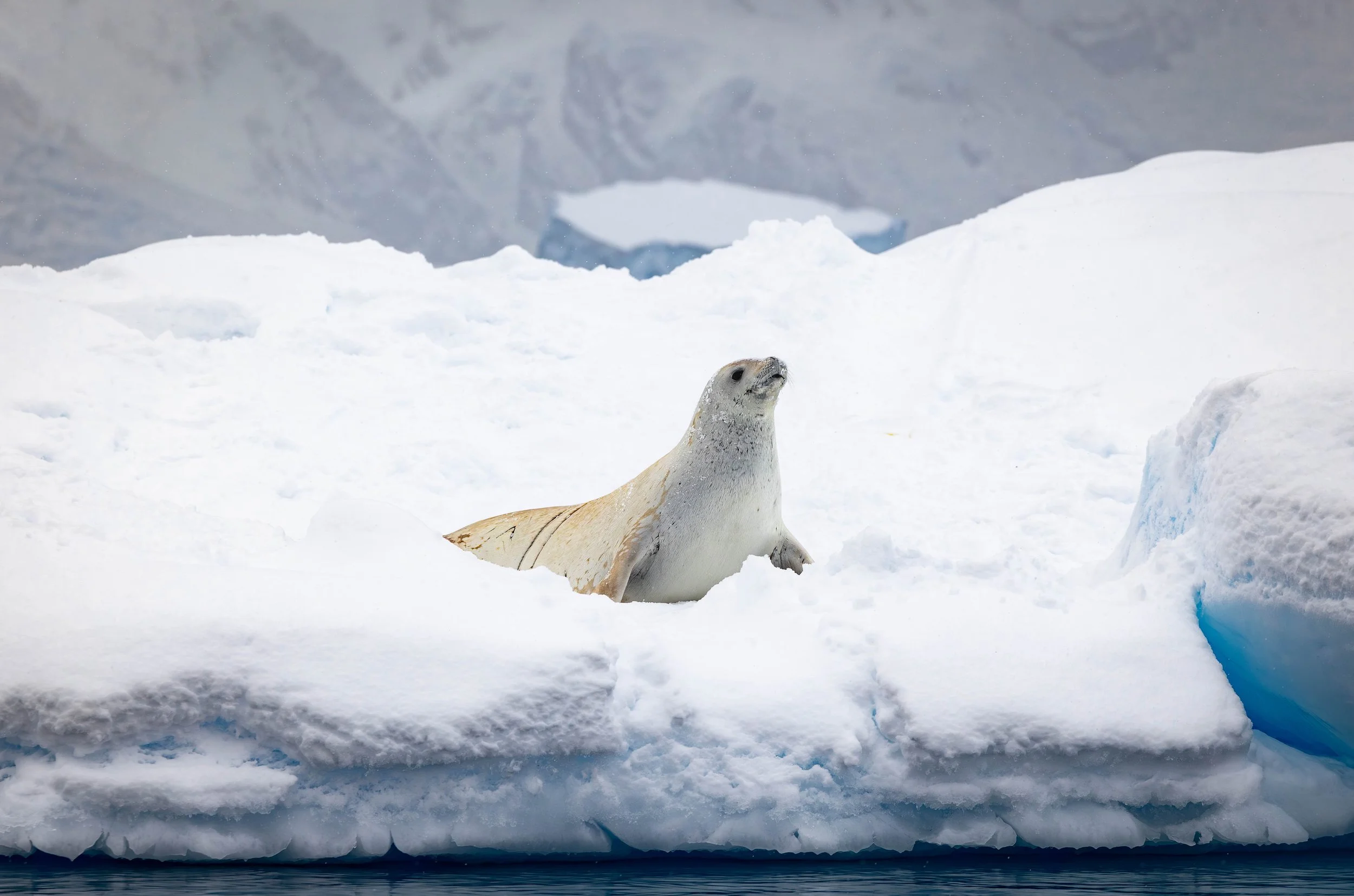
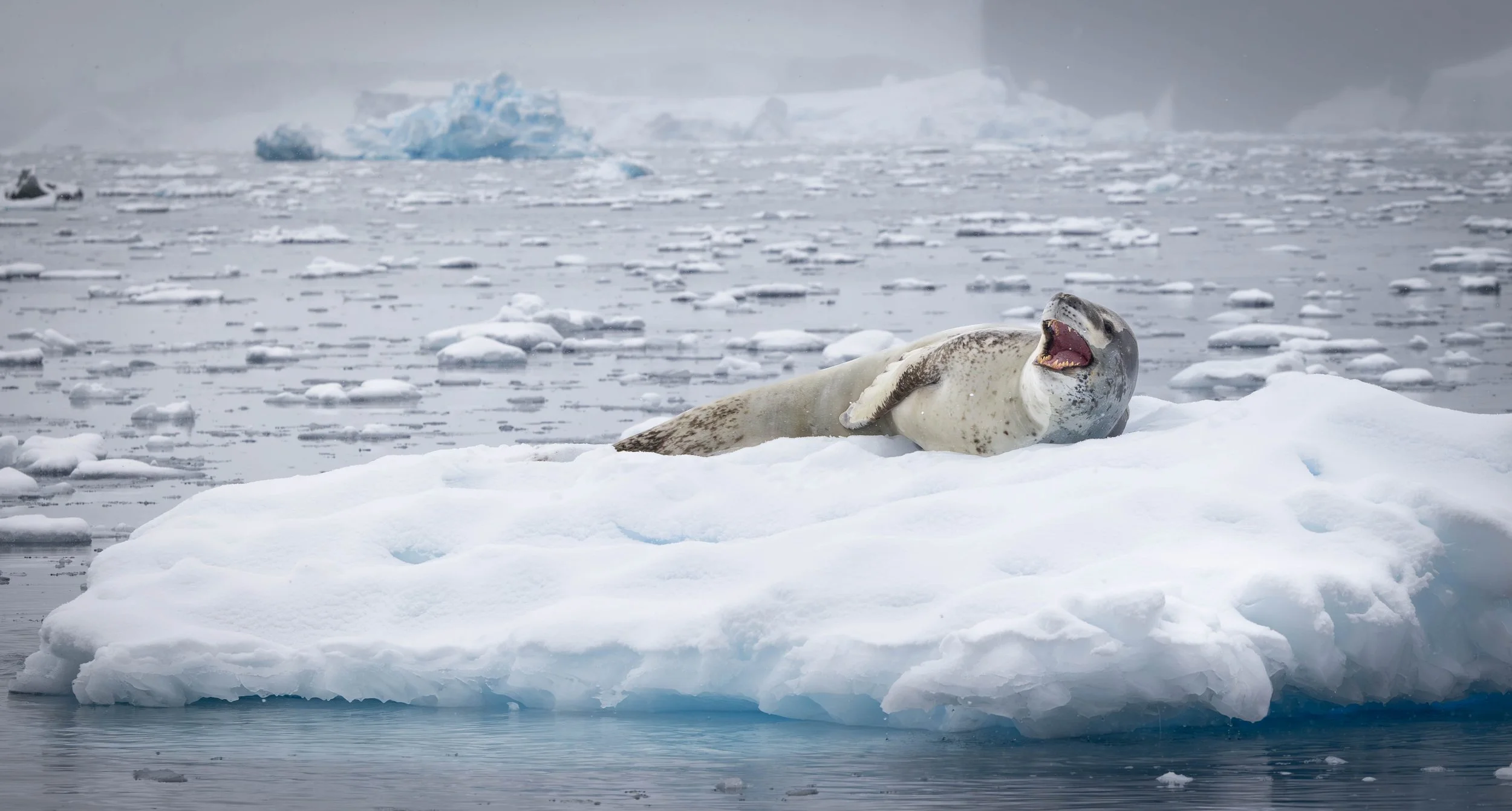
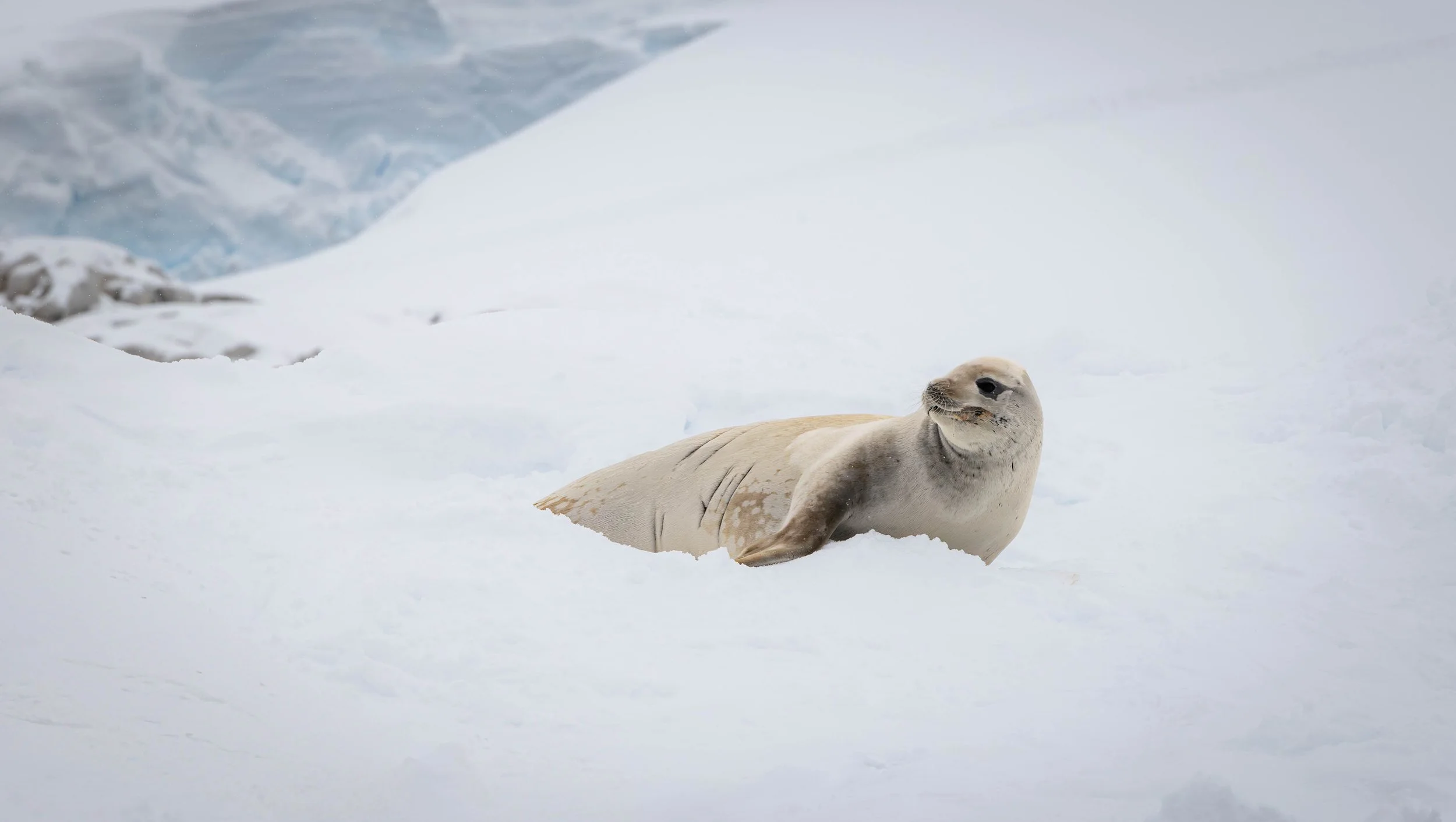
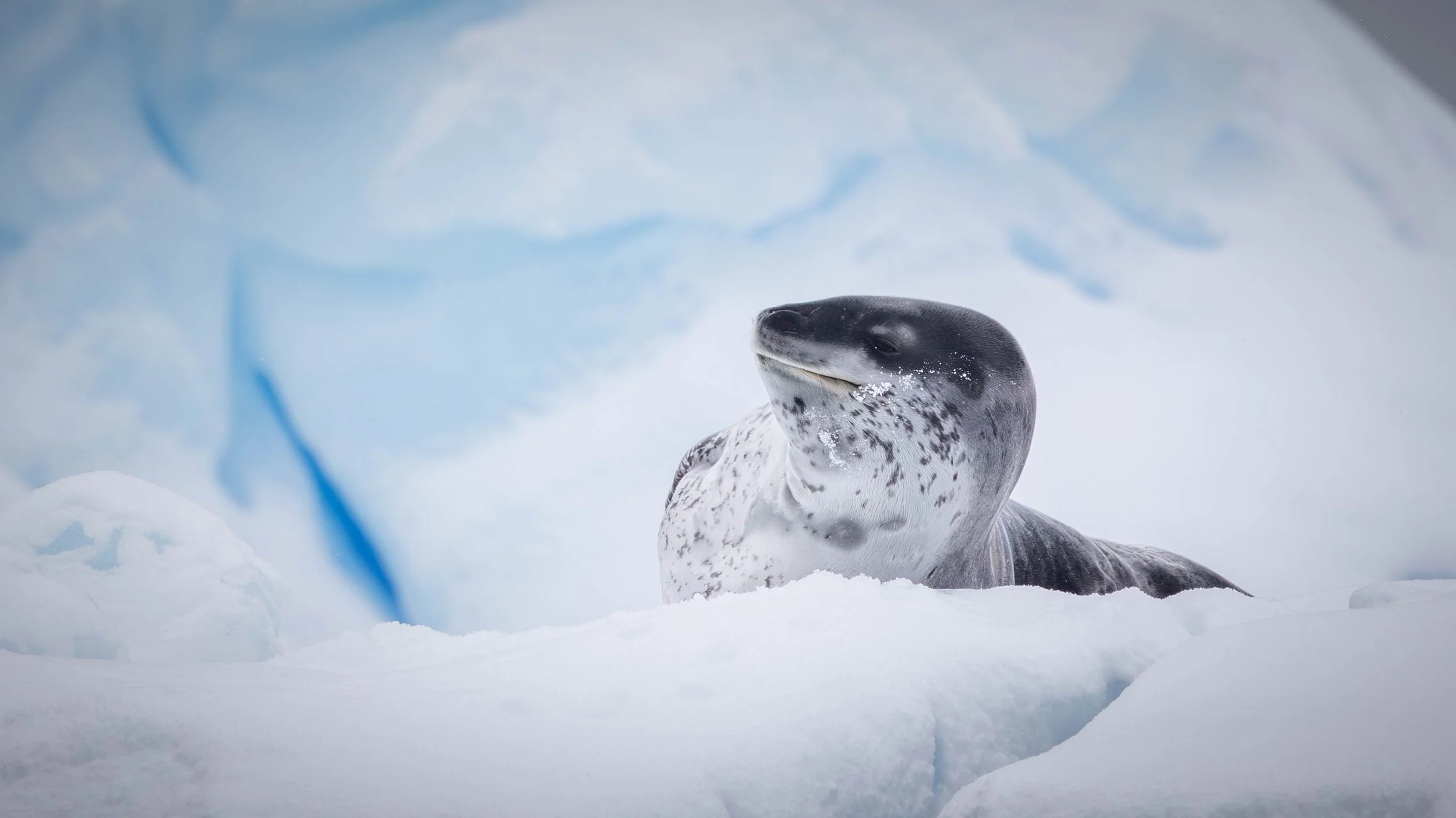
Sea ice is also a foundation for life. As it melts, nutrients trapped within the ice are released into the surrounding waters, triggering massive phytoplankton blooms. These microscopic organisms form the base of the marine food web and are responsible for producing roughly half of the oxygen we breathe. This means that every second breath taken by people around the world is linked to processes happening in Antarctica (and the Arctic). Beyond its invisible influence, sea ice also provides vital platforms for wildlife, supporting the survival of species from krill to penguins and seals. In Antarctica, ice is not just frozen water, it is a living system that connects the poles to every corner of the planet.
Where Whales Come to Feed
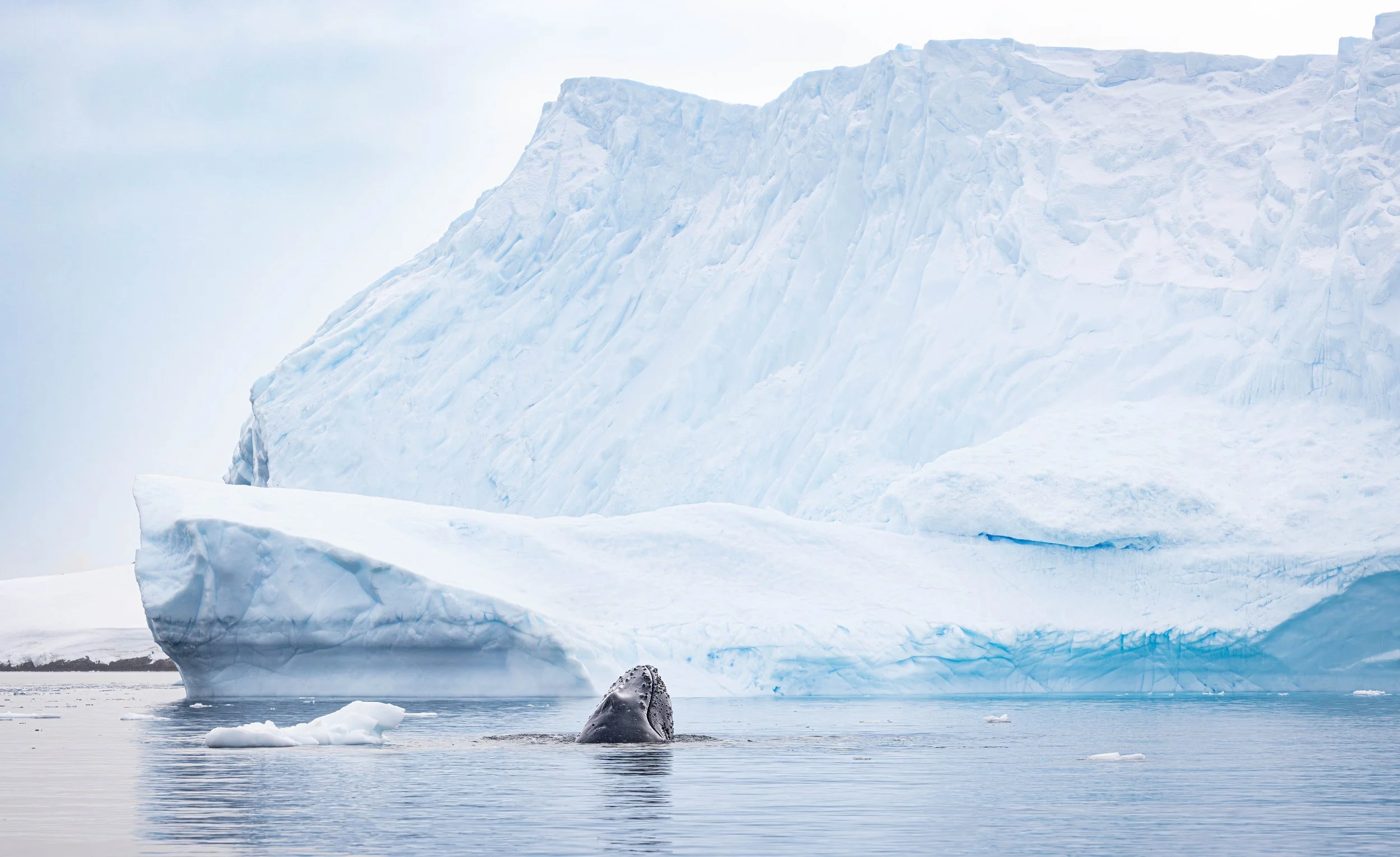
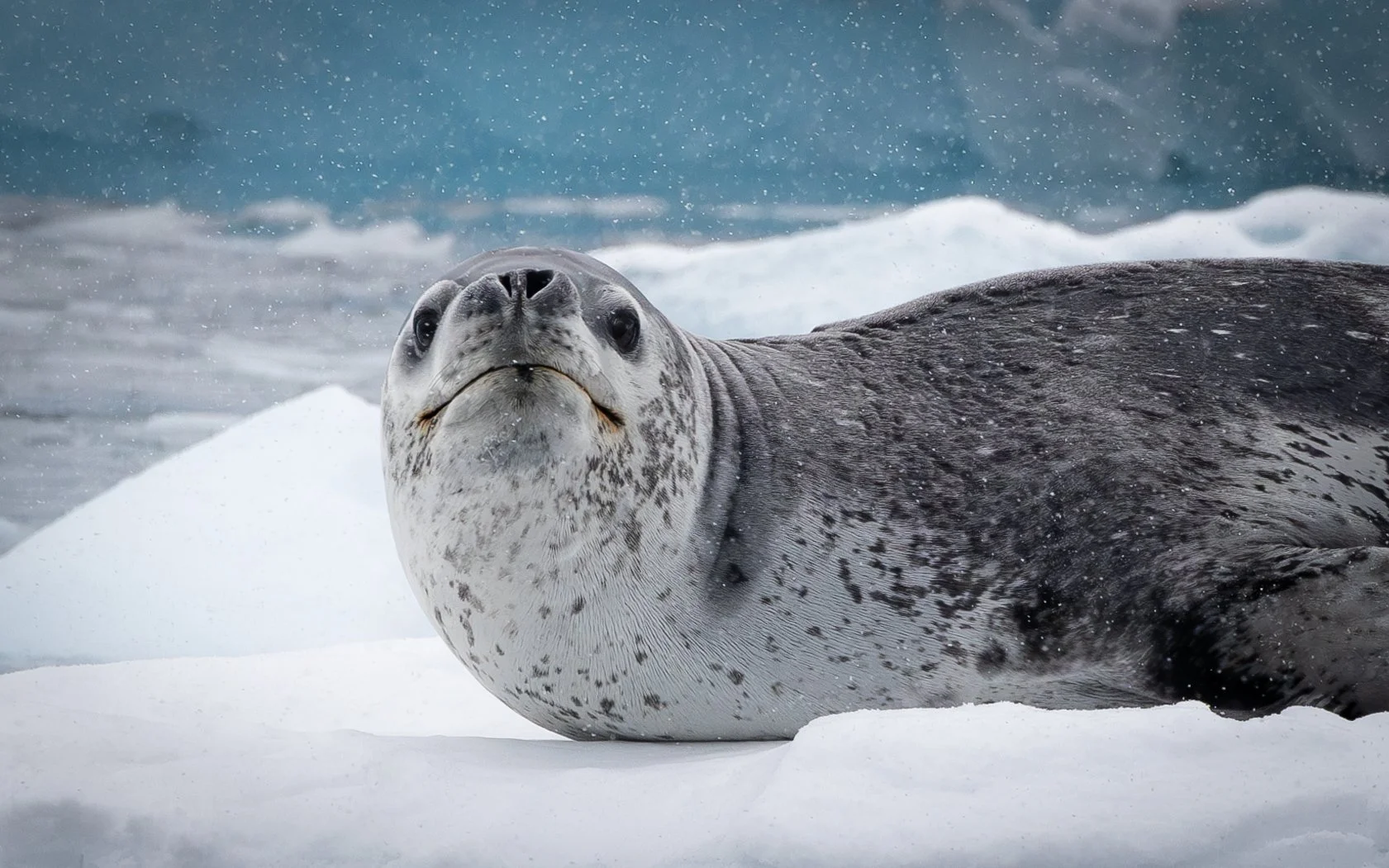
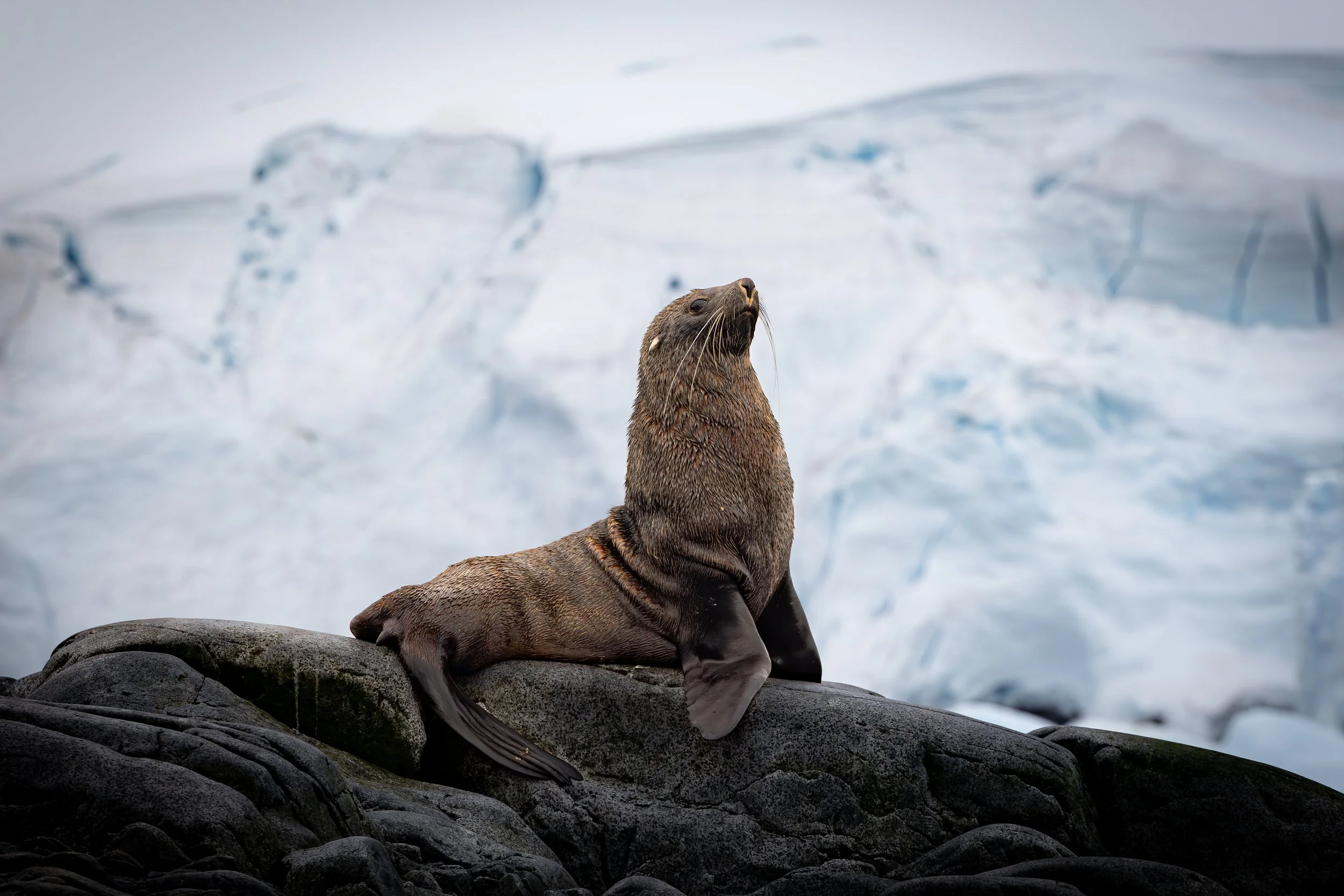
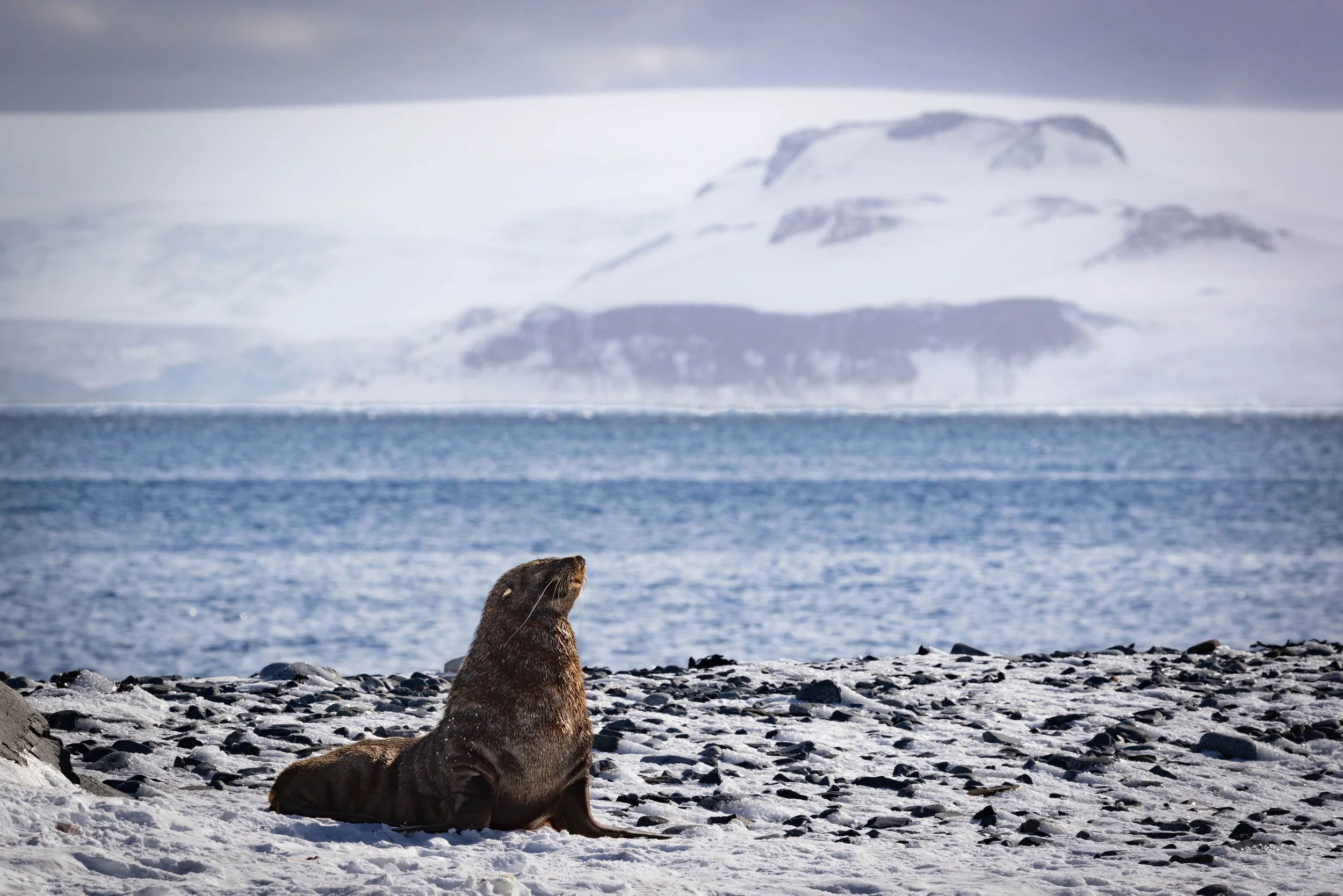
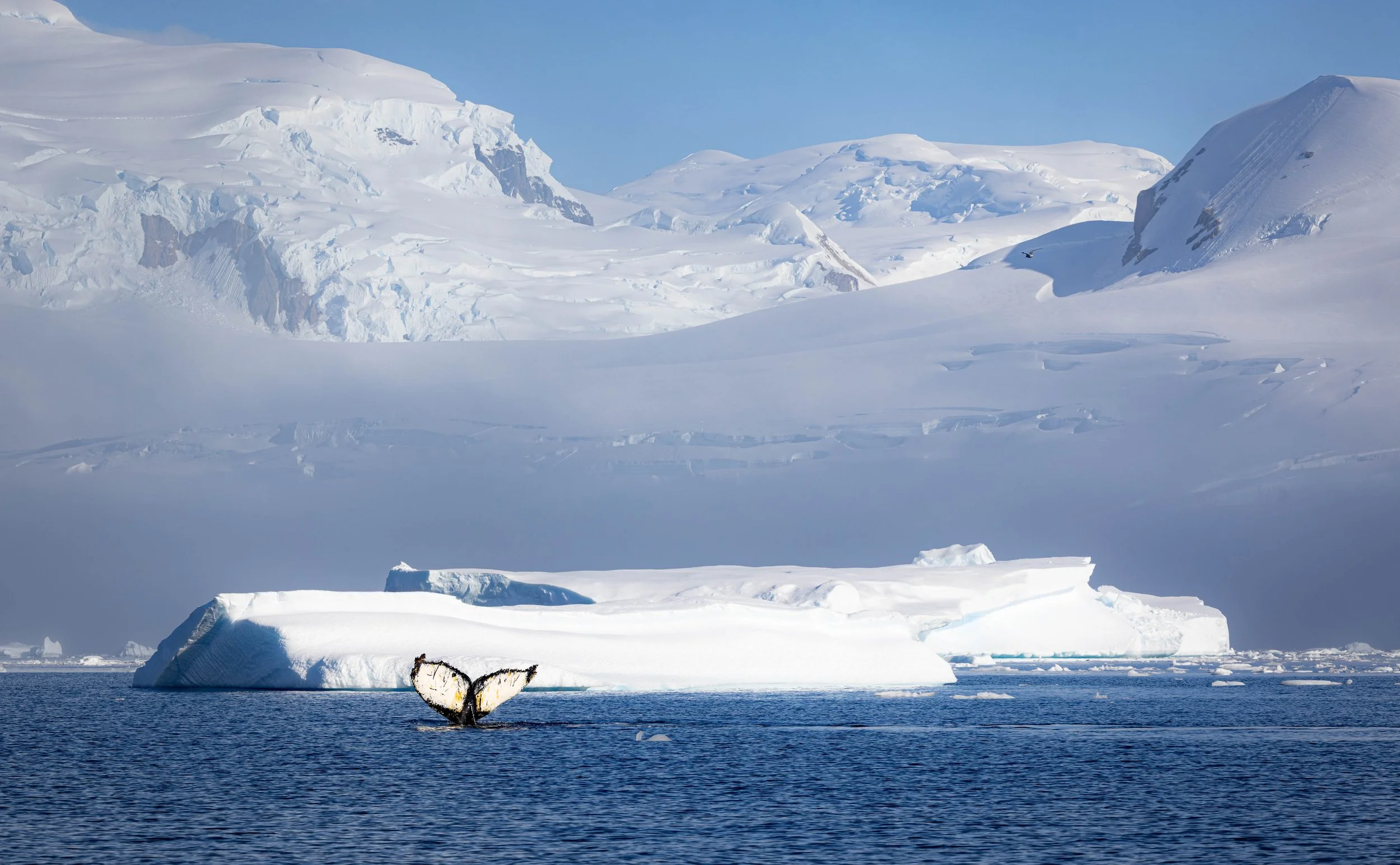
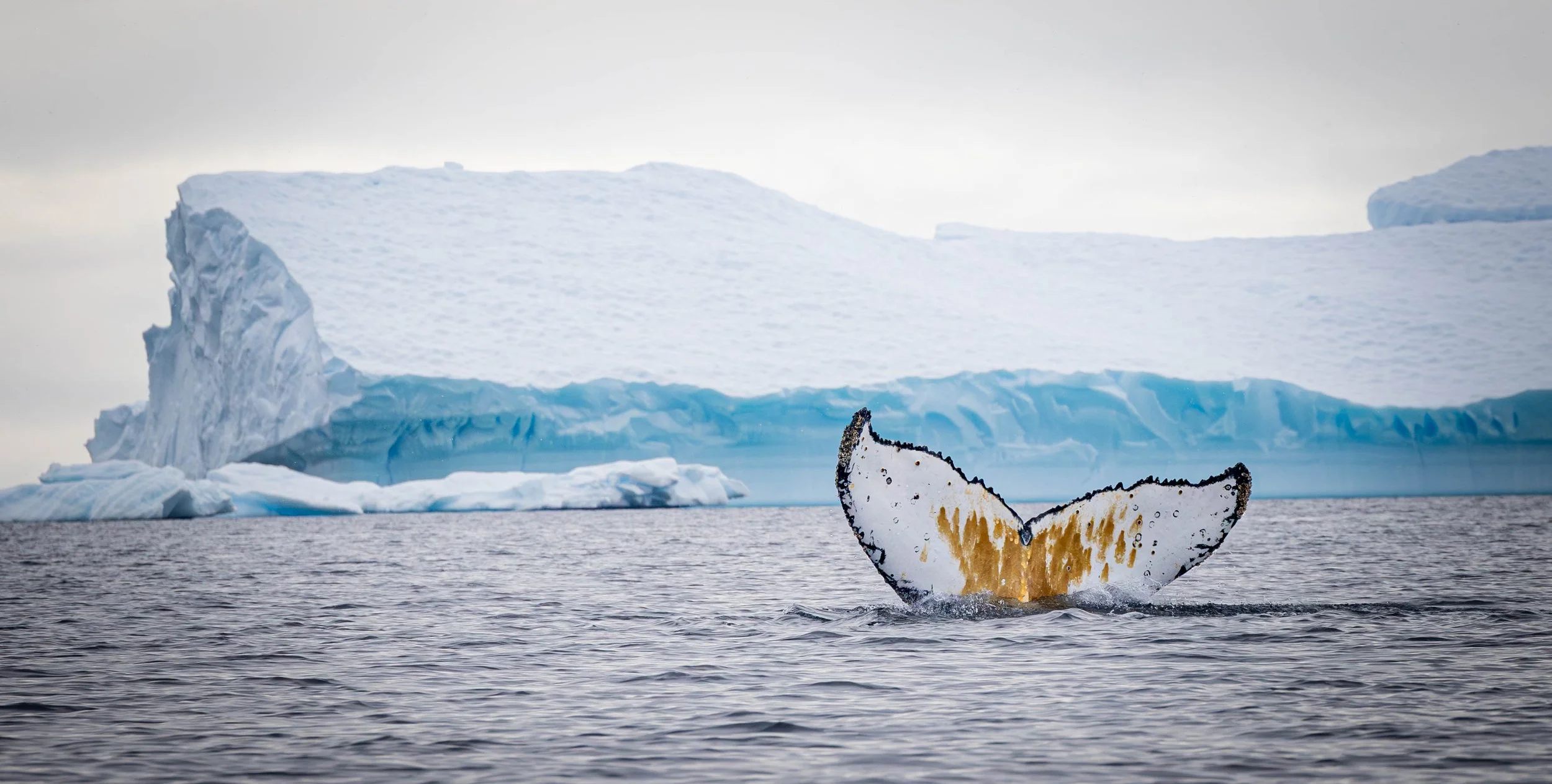
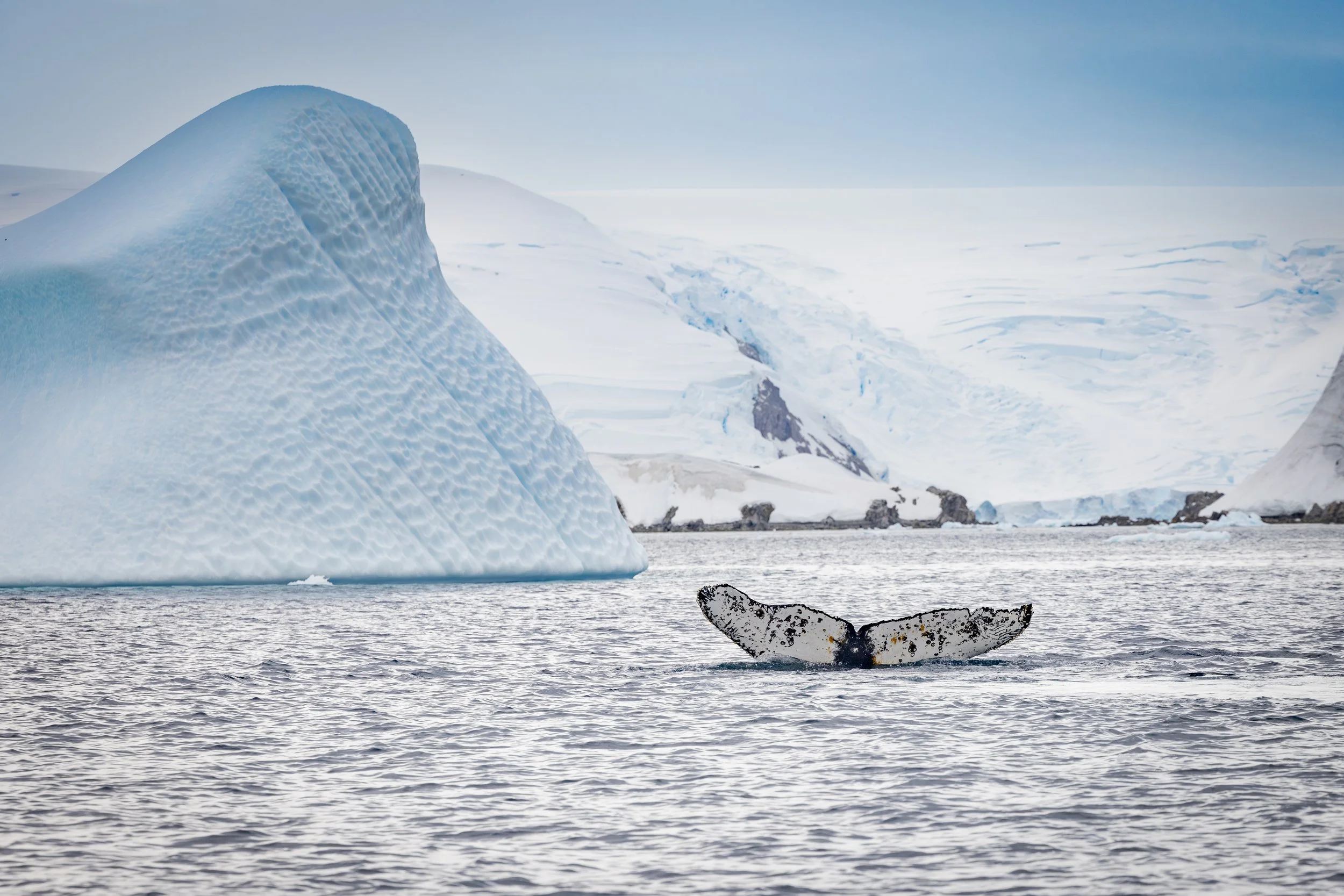
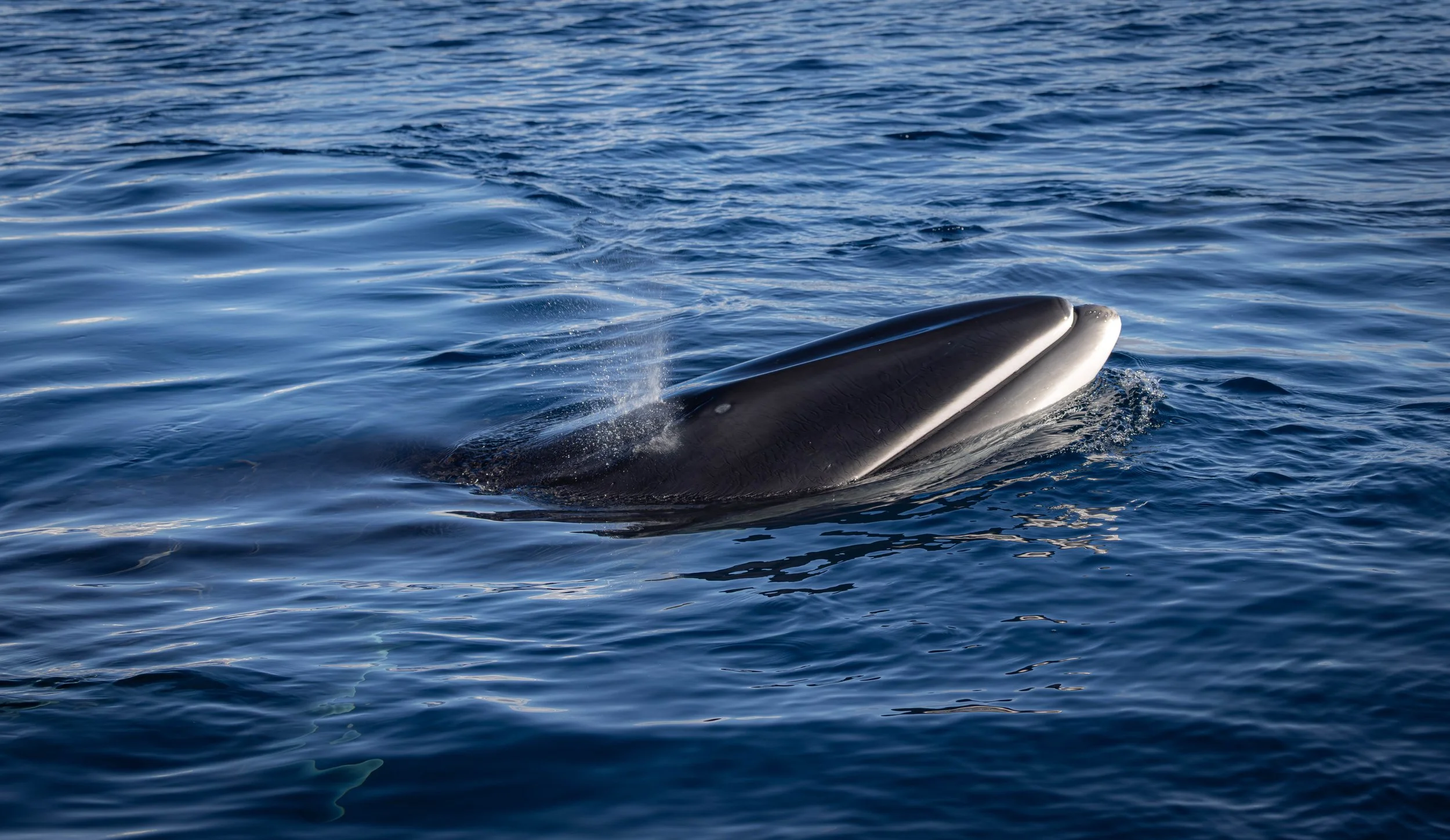
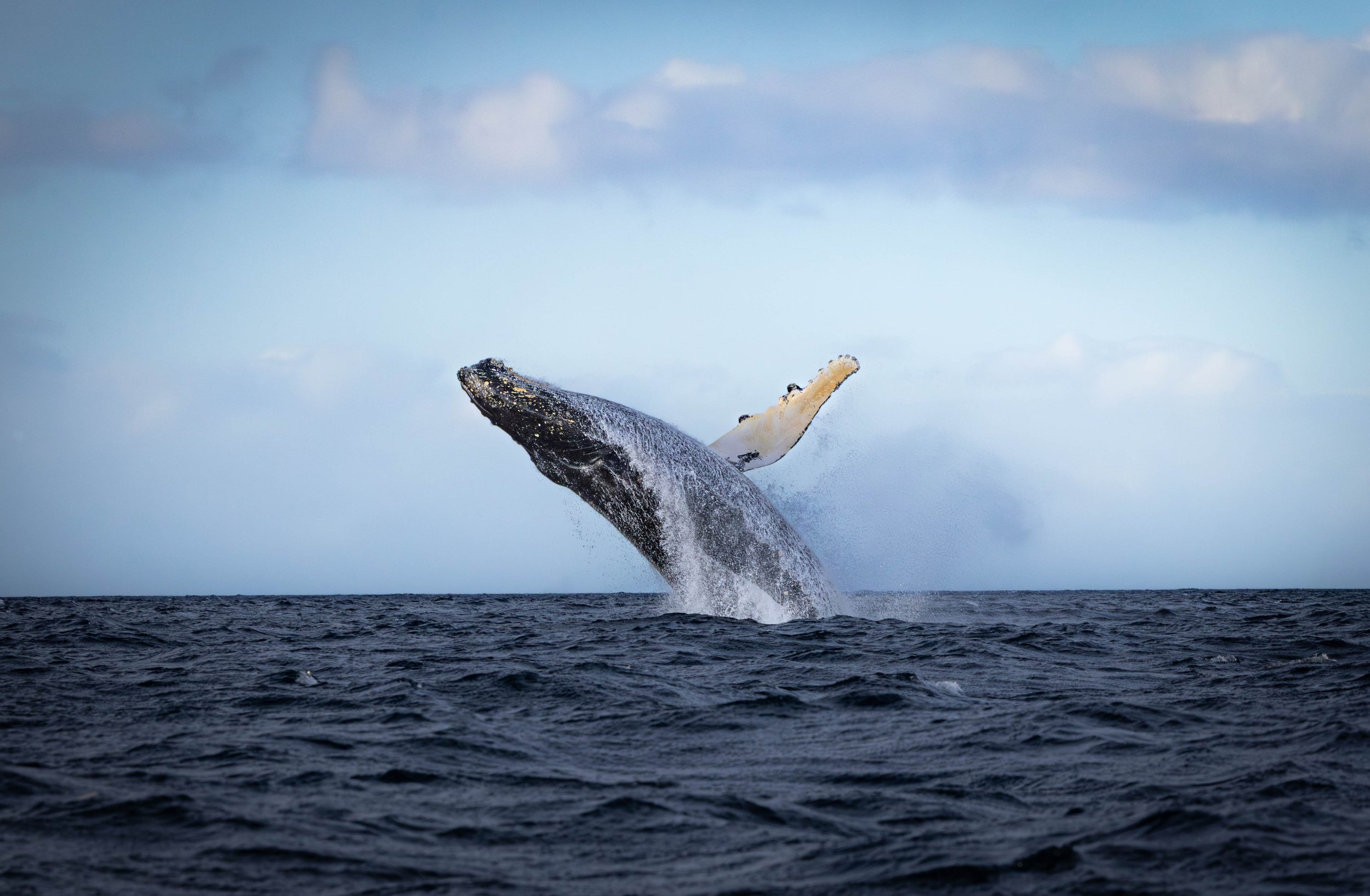
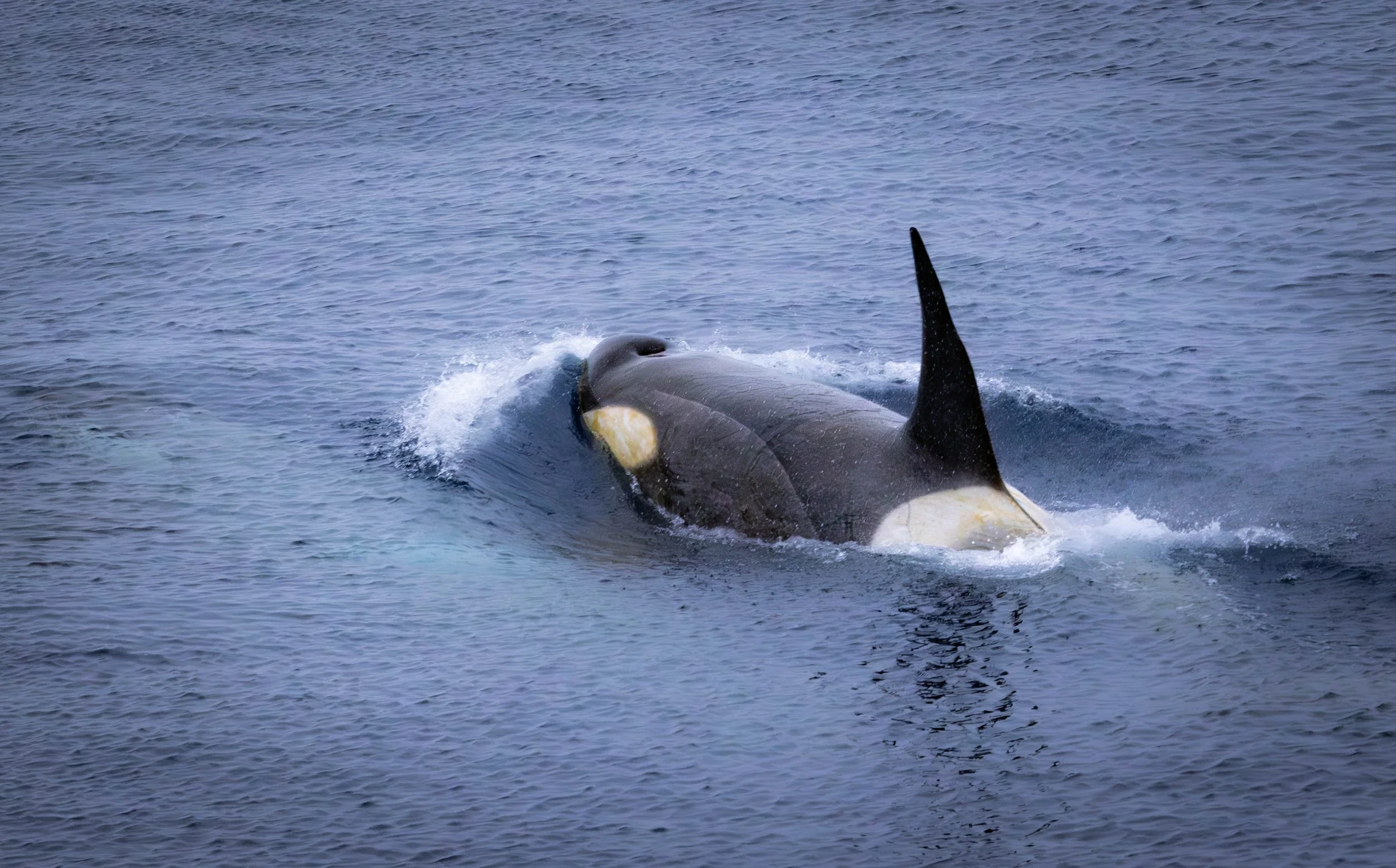
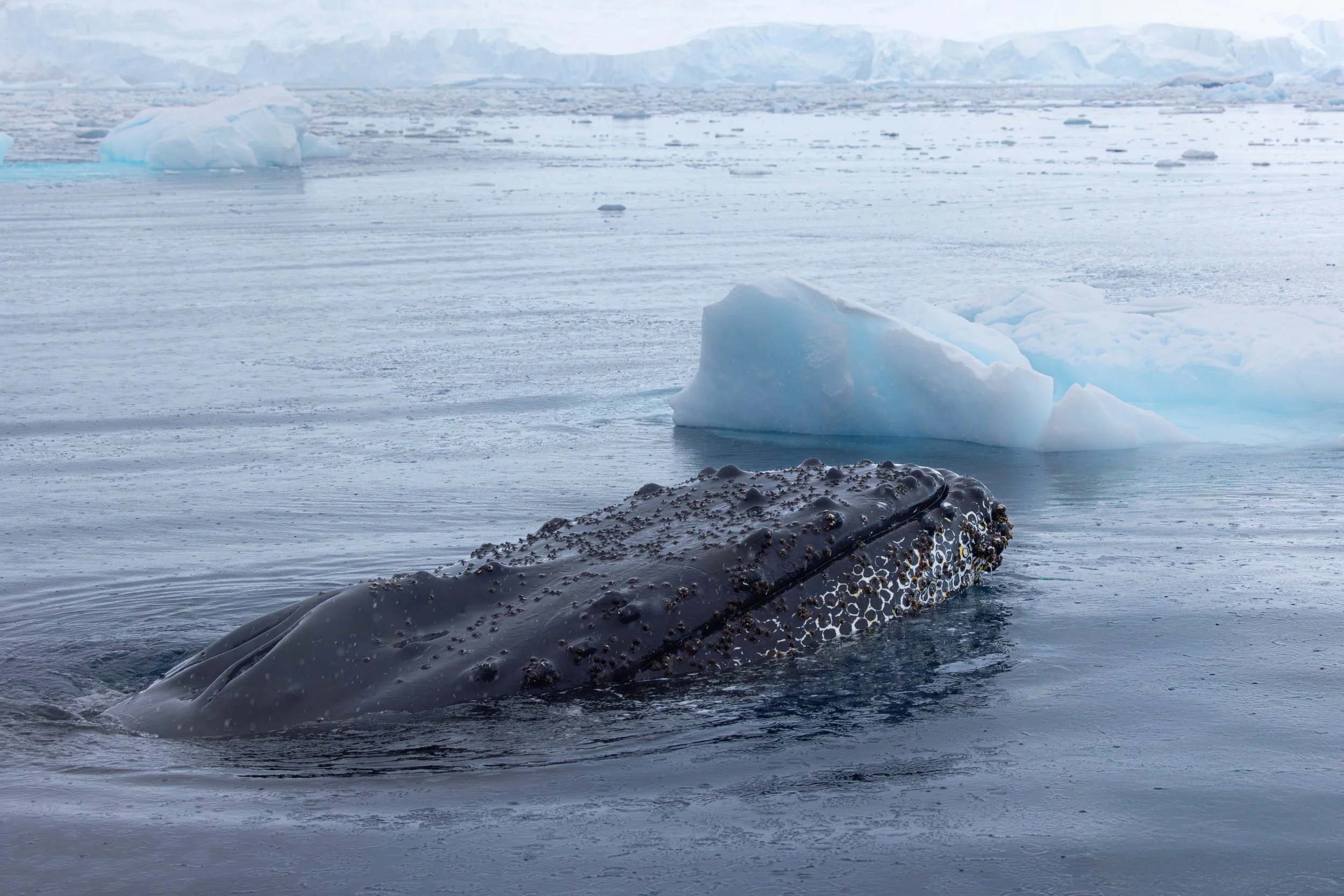
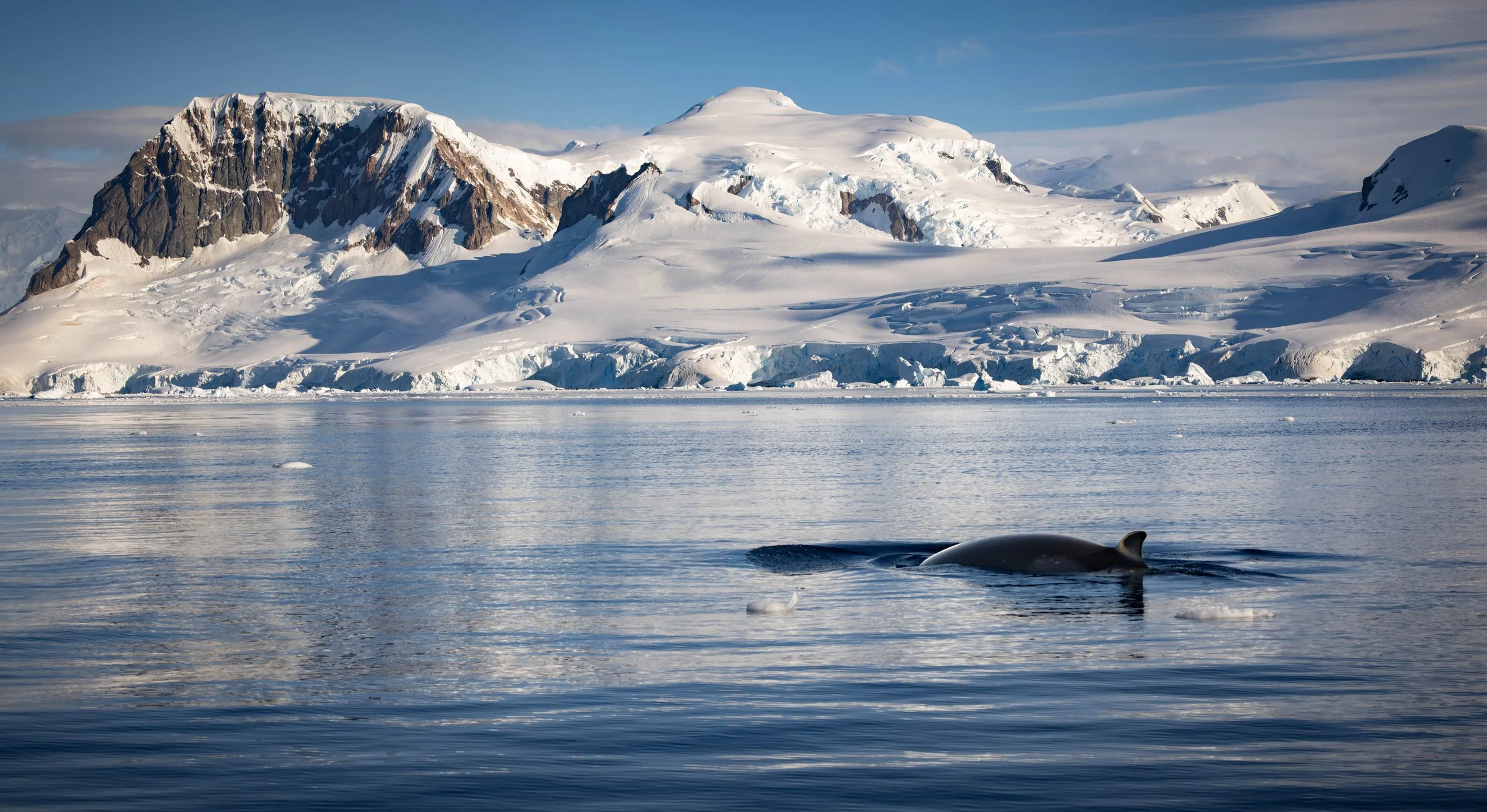
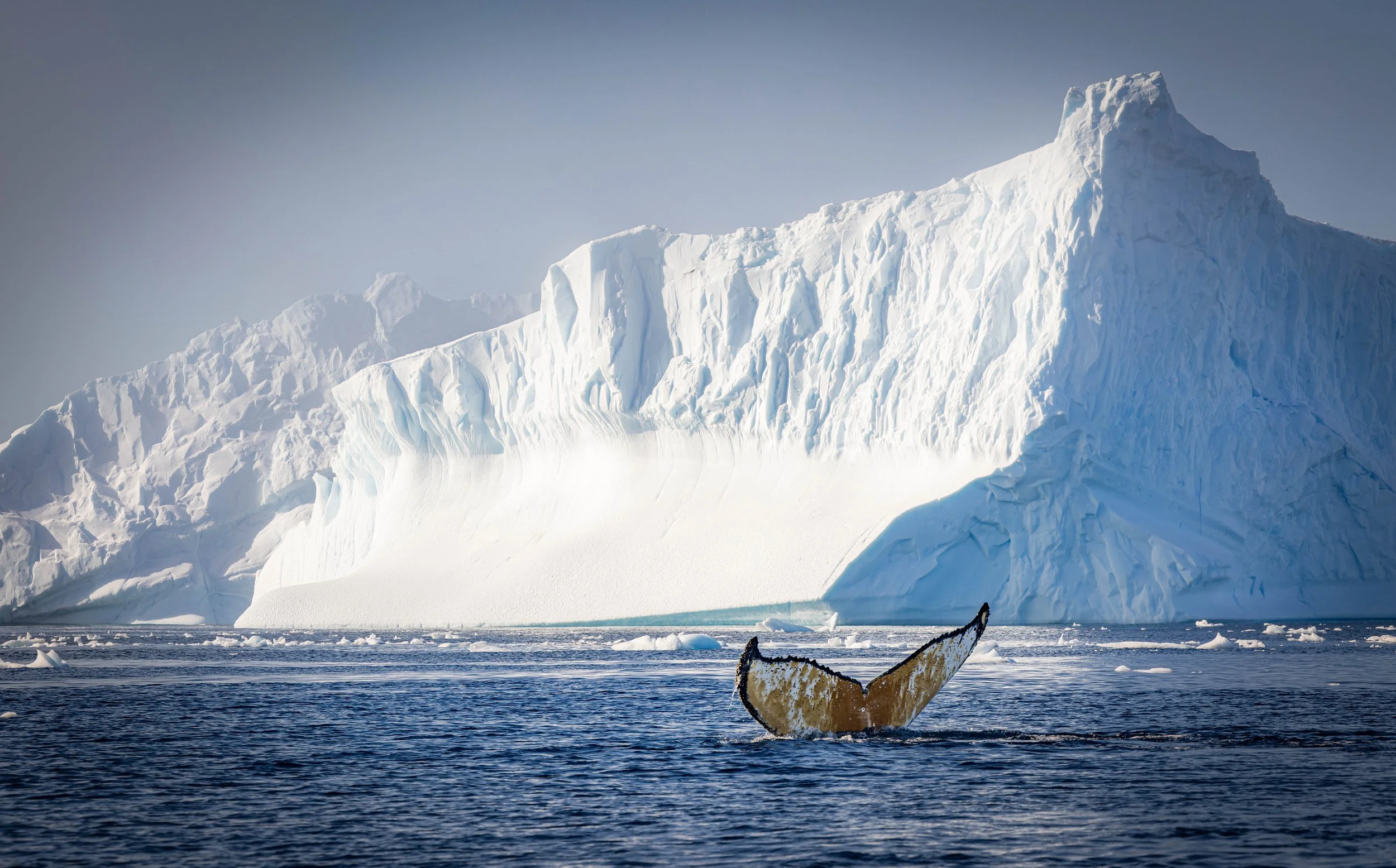
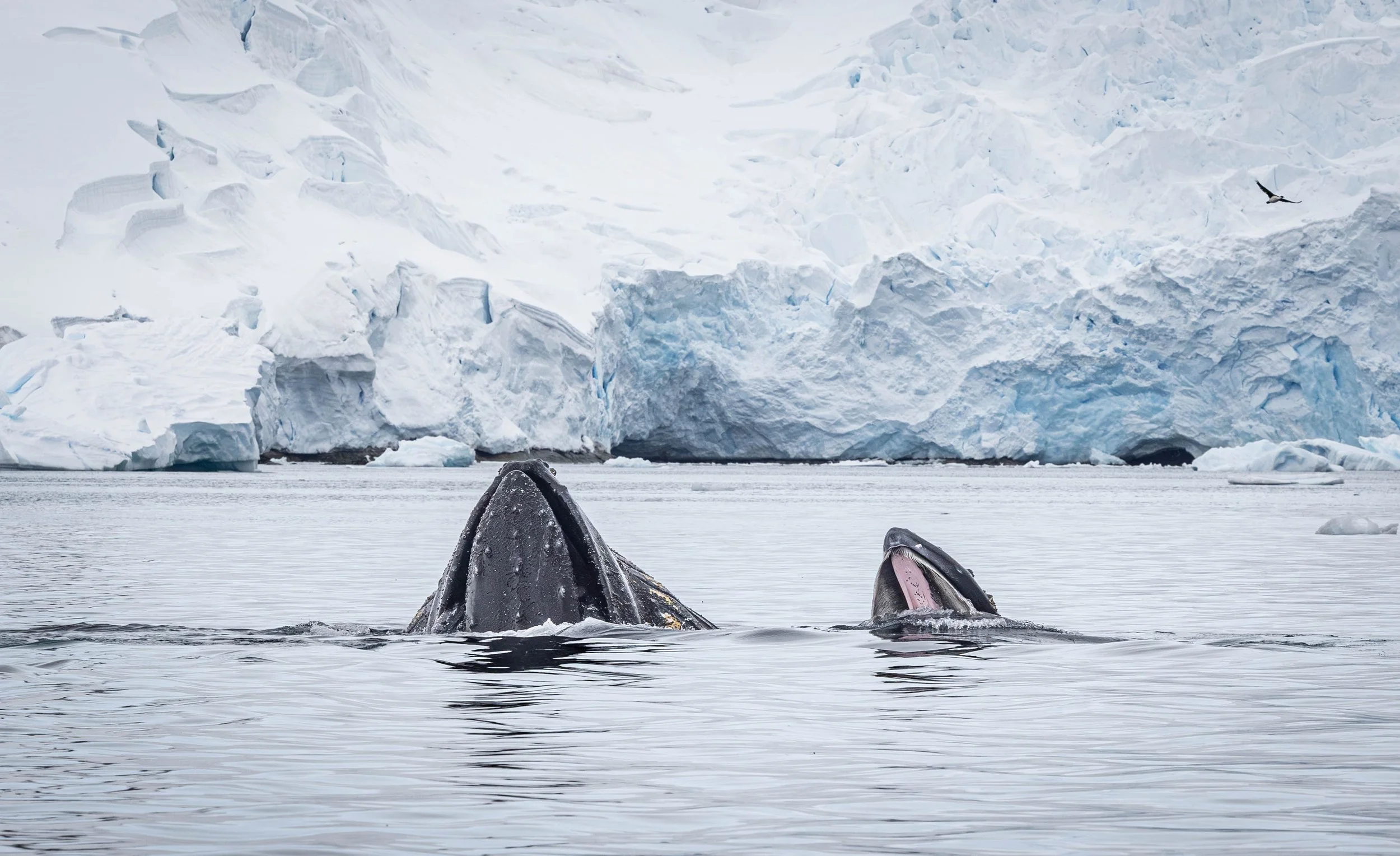
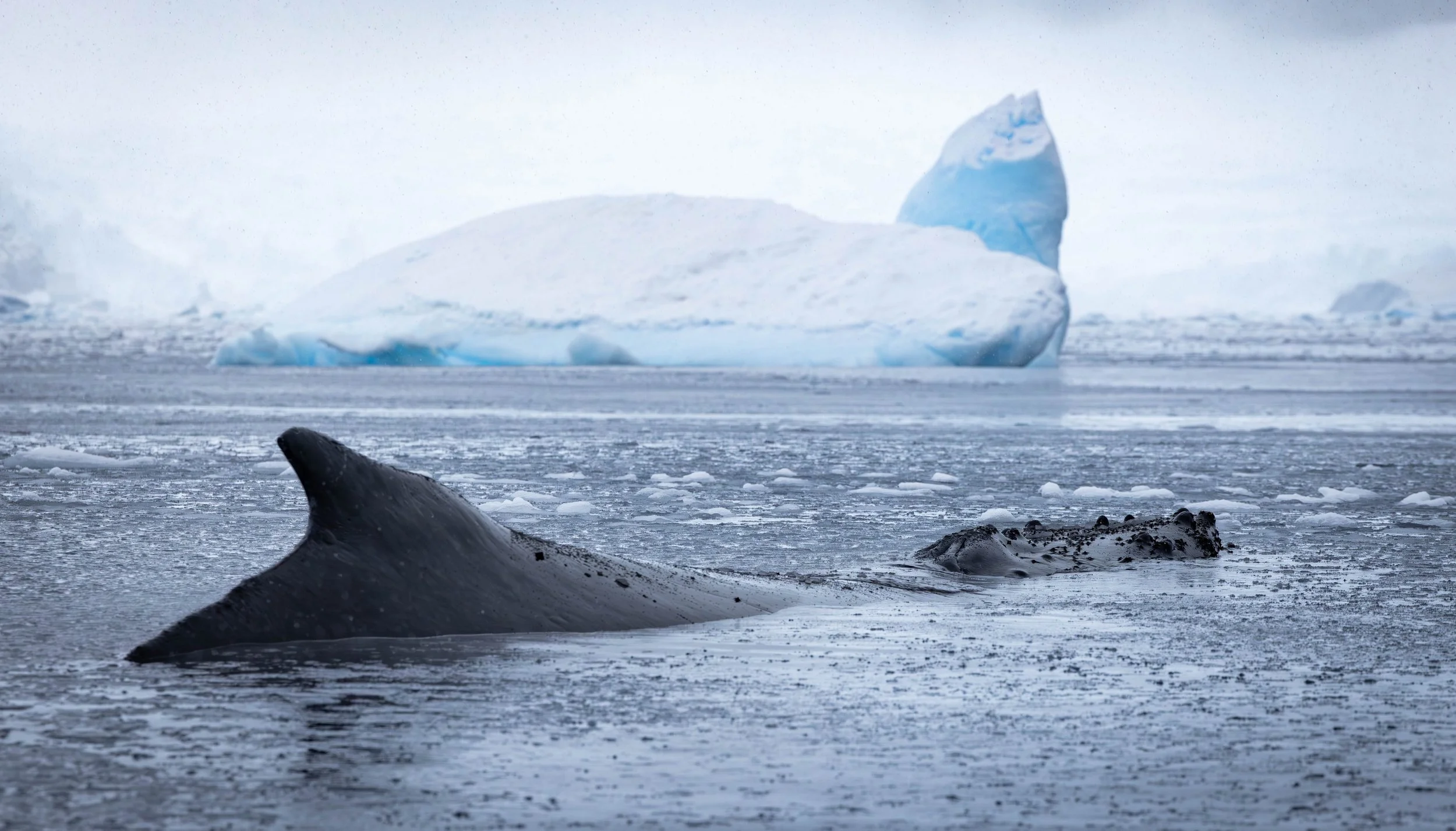
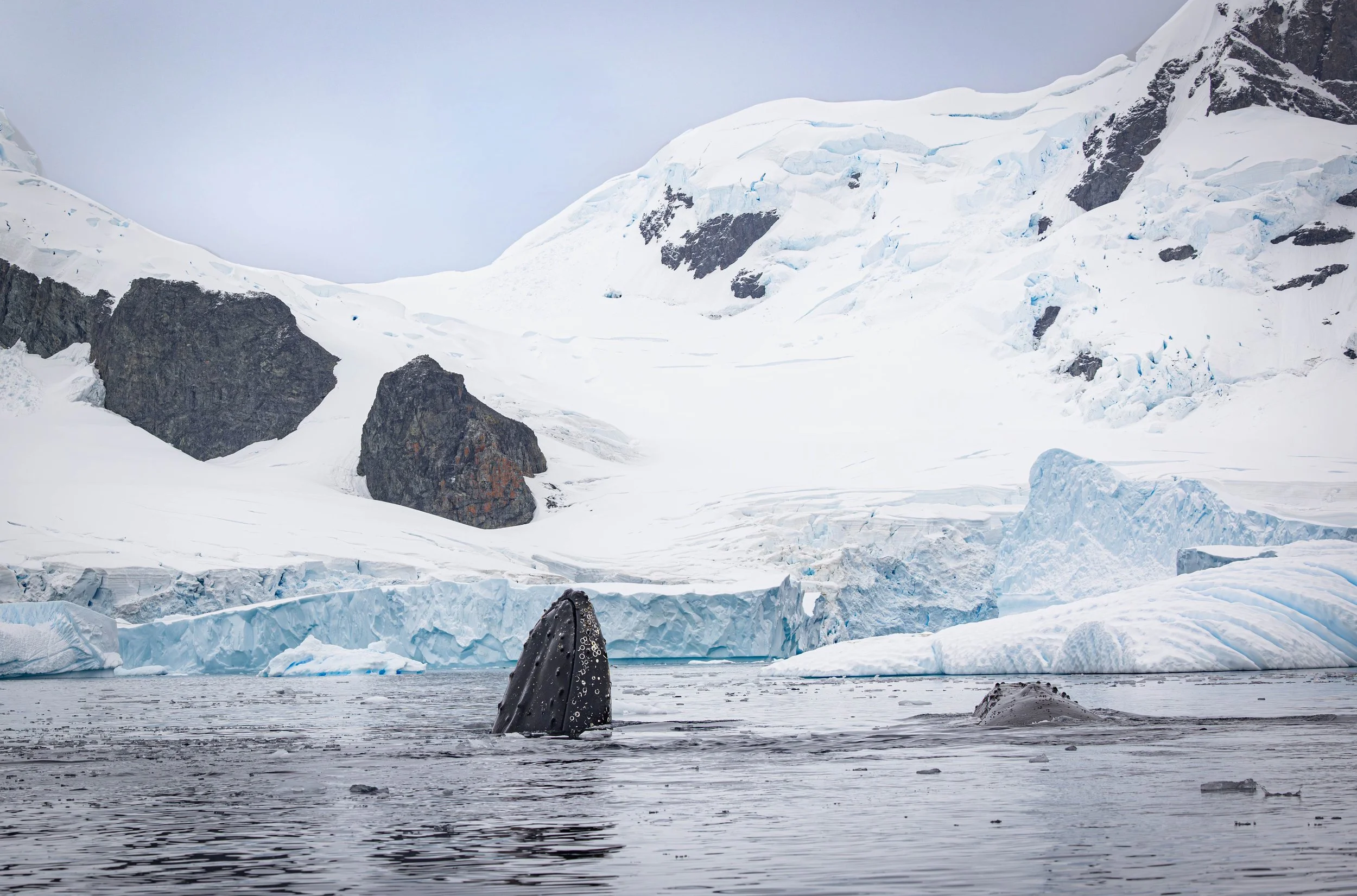
Antarctic waters host one of the greatest seasonal gatherings of whales on the planet, drawing species like humpbacks, orcas, and minkes to the Southern Ocean each summer. From roughly December through March, these whales arrive to take advantage of an extraordinary abundance of food, particularly Antarctic krill, which thrives in cold, nutrient-rich waters linked to sea ice. By late summer—when I was photographing here in February and March—feeding activity is often at its peak. Humpbacks lunge-feed in coordinated bursts, minkes slip quietly along the ice edge, and orcas patrol the channels with precision and intent. These months are critical: whales are building the energy reserves they will need for long migrations to lower latitudes, where breeding and calving occur in warmer waters far from Antarctica.
Despite the apparent richness of this ecosystem, Antarctic whales face growing and interconnected threats. Climate change is altering sea ice patterns and krill distribution, while increased ship traffic, underwater noise, and the expansion of the commercial krill fishery add additional pressure by competing directly with whales for their primary food source. Photography plays a powerful role in both studying and protecting these animals. Images can support identification and monitoring efforts through citizen science platforms like Happywhale, where individual whales are tracked across oceans using unique markings on their flukes and dorsal fins. Beyond formal databases, photography helps tell a broader conservation story—connecting people emotionally to animals they may never see in person, and transforming fleeting encounters into lasting advocacy.
A Continent of Extremes
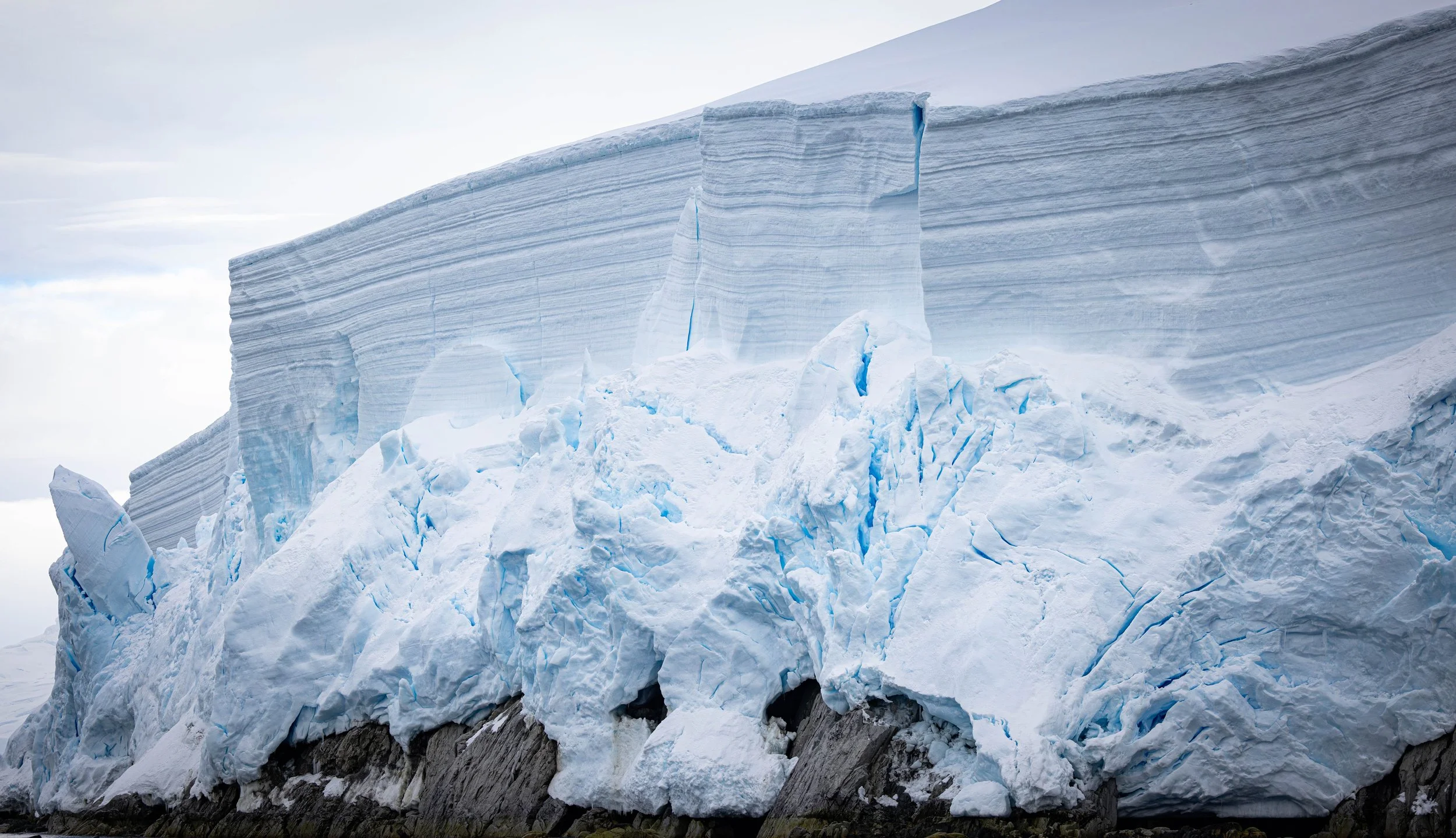
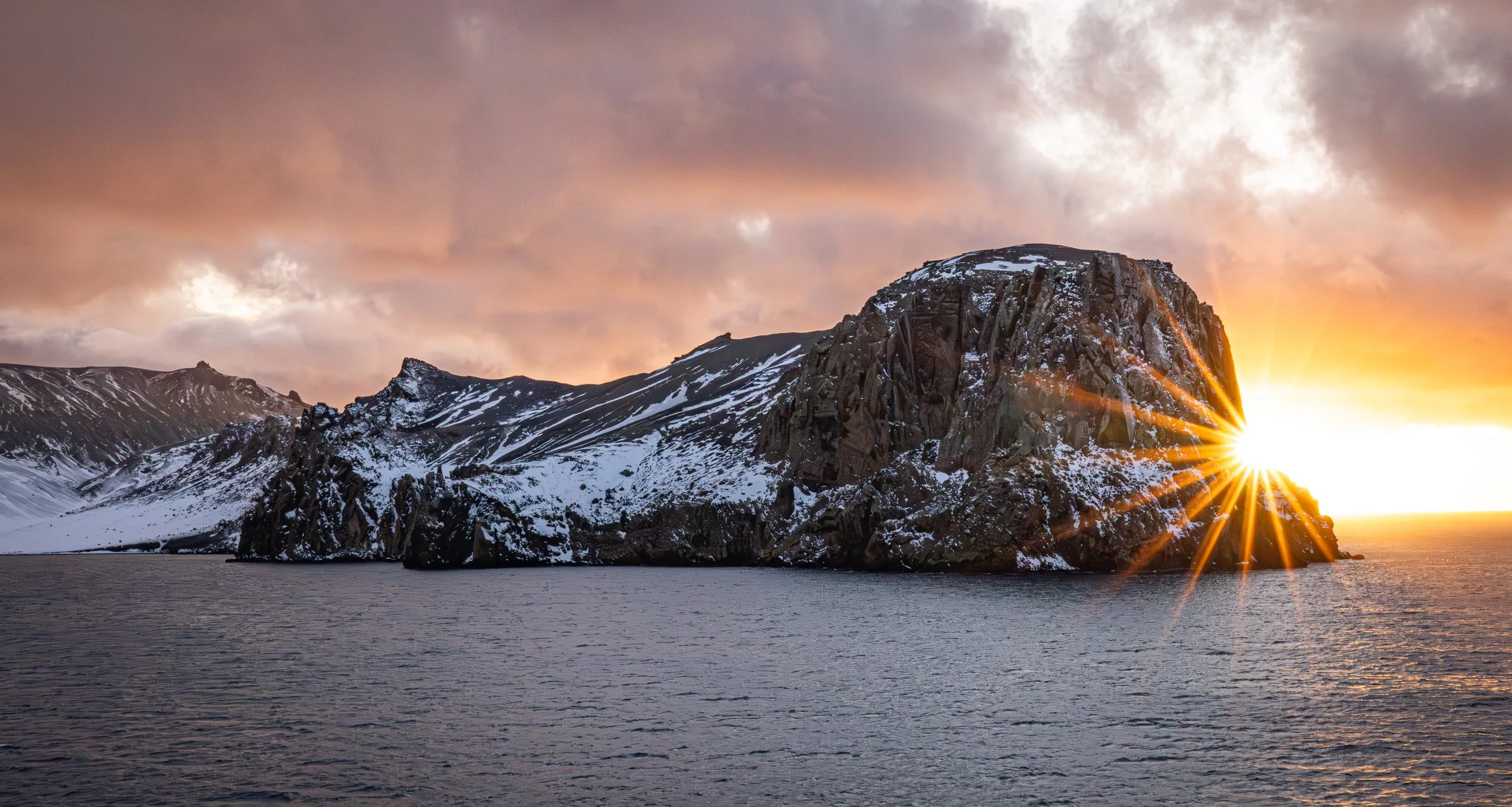
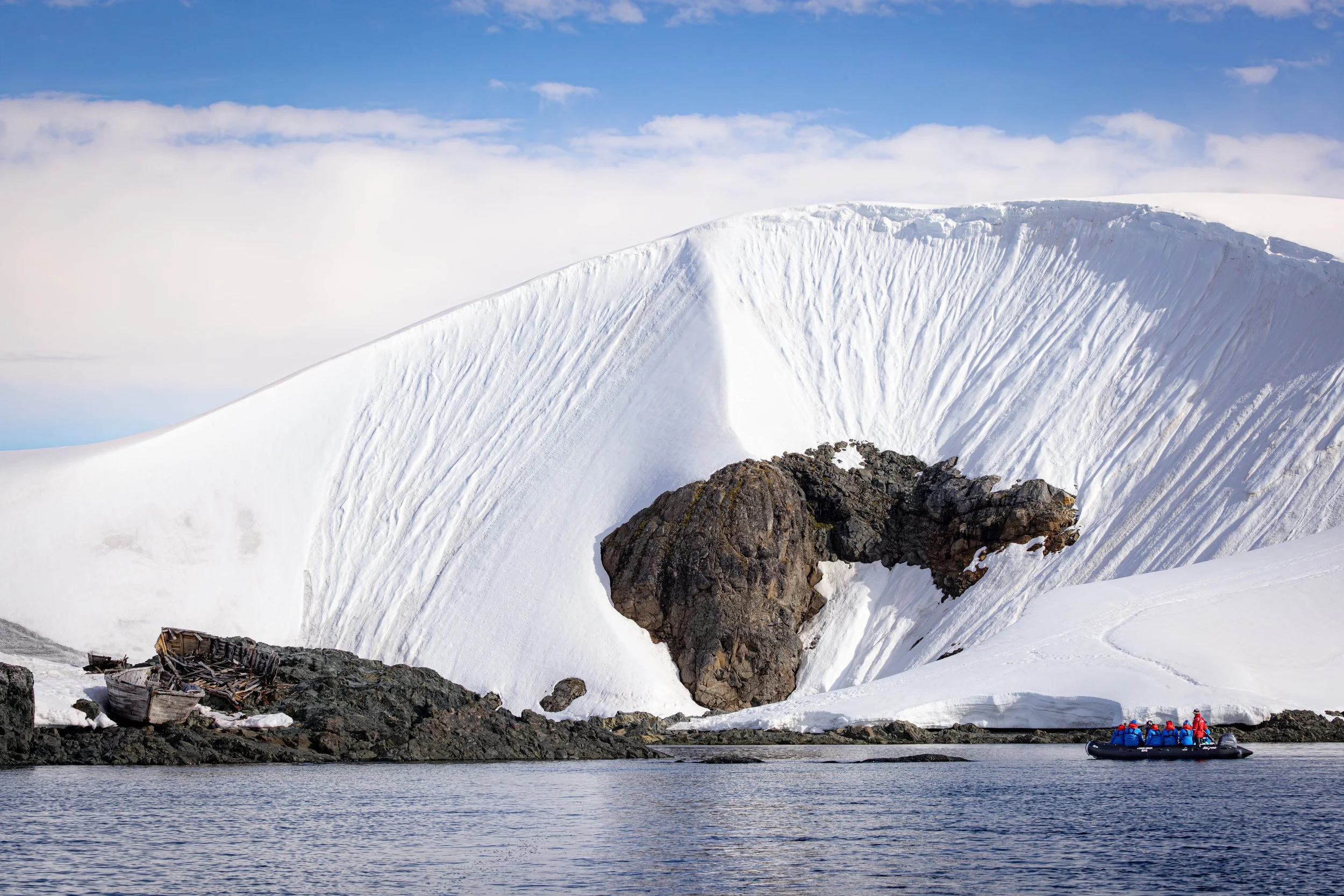
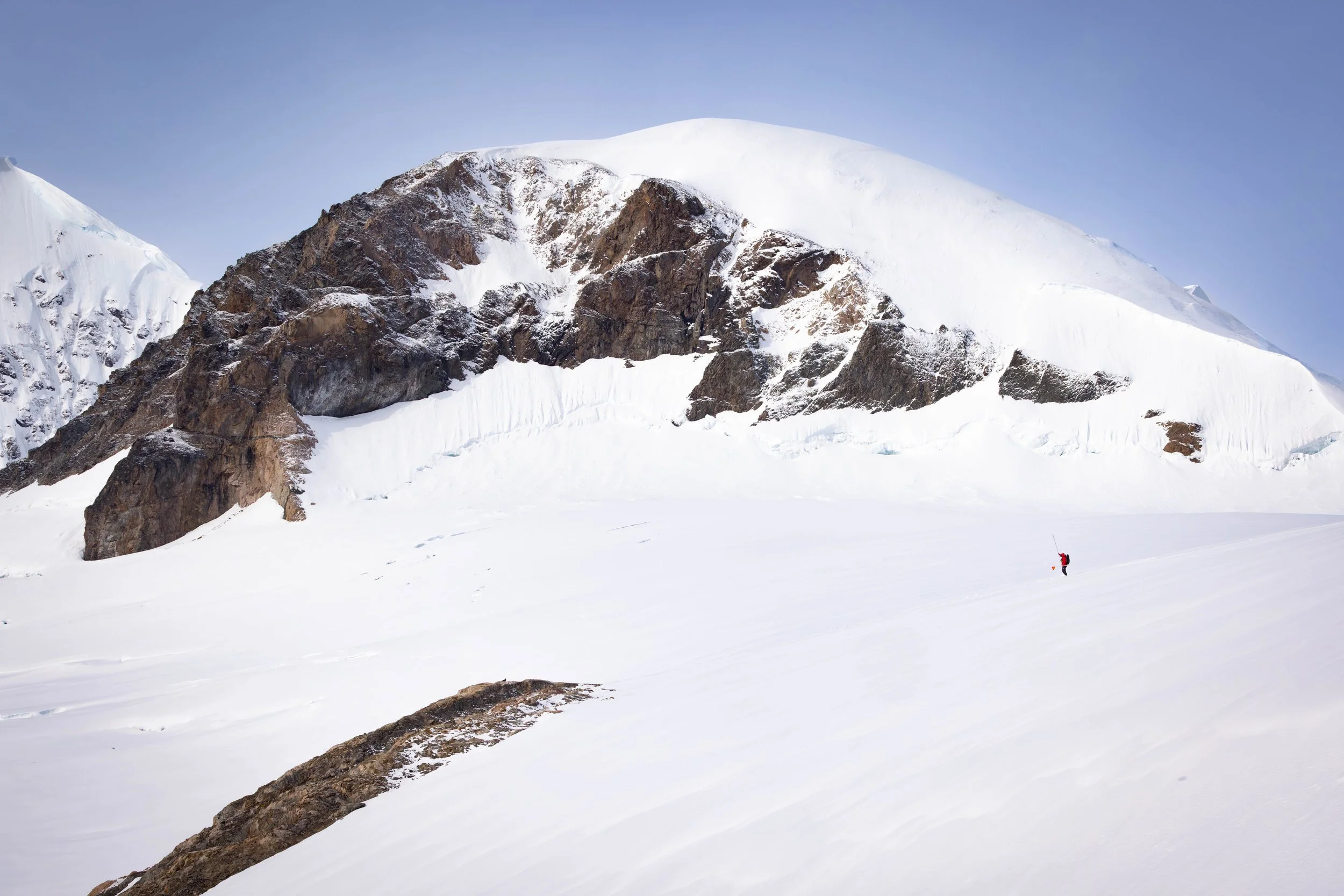
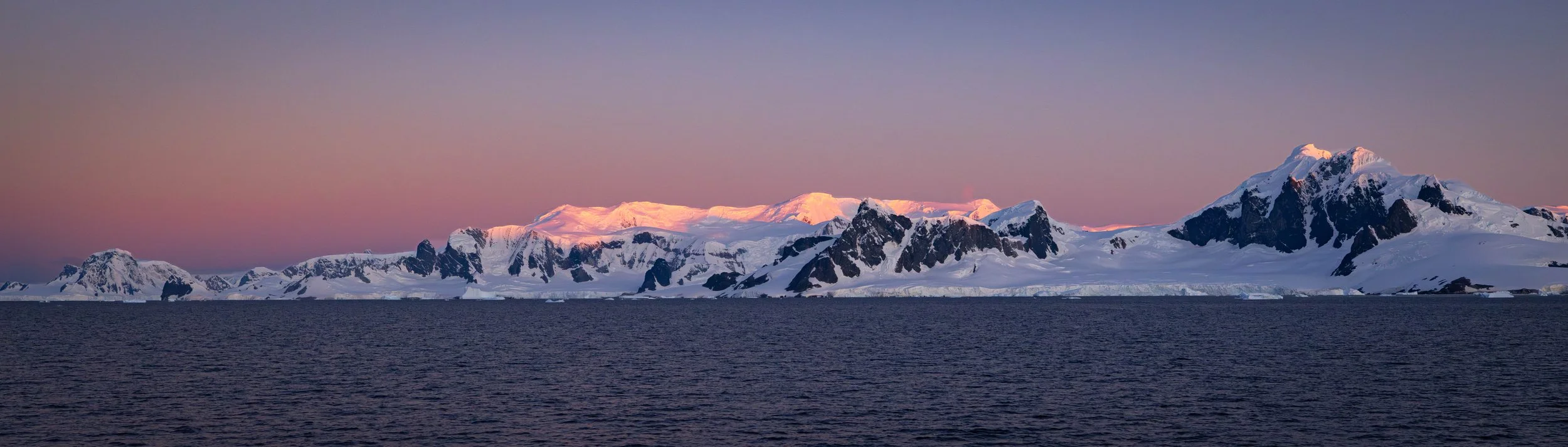
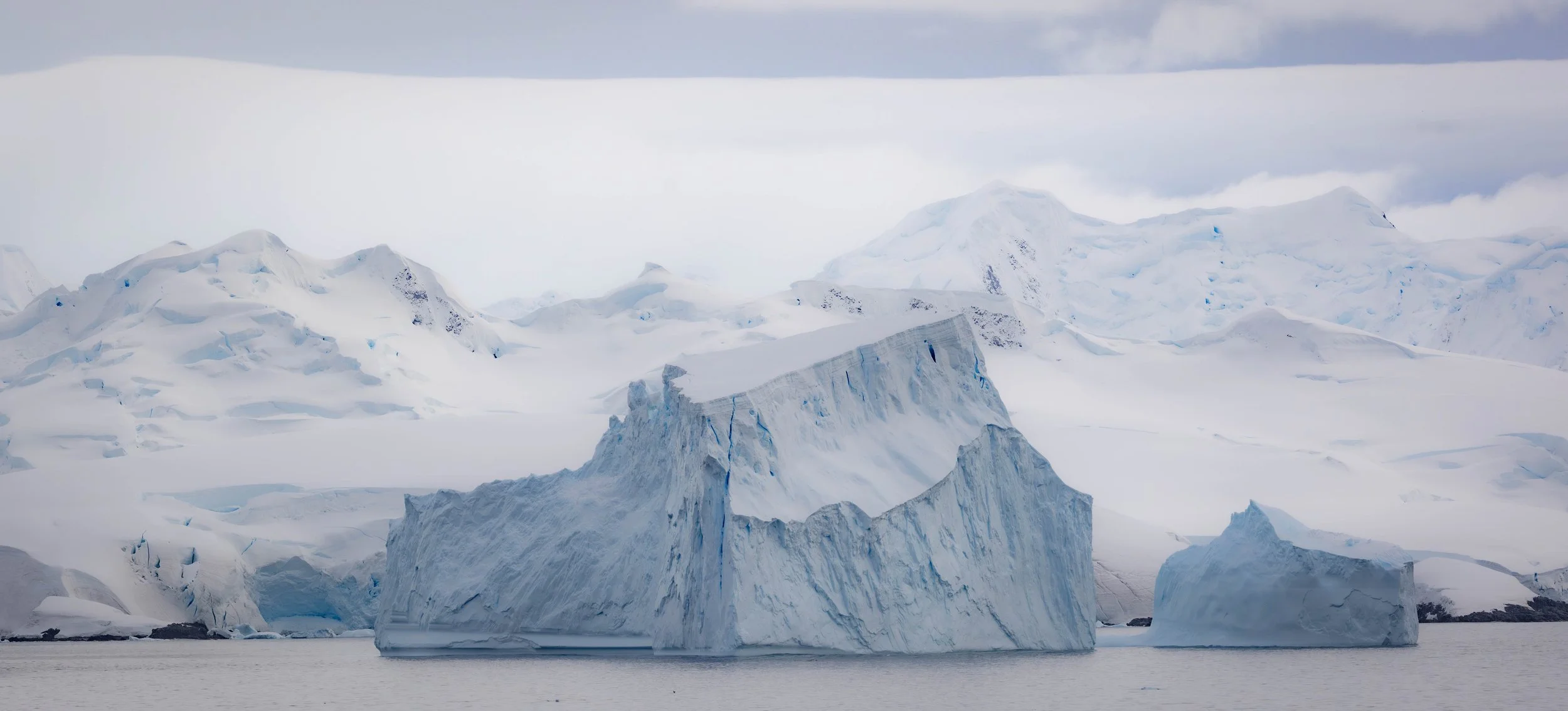
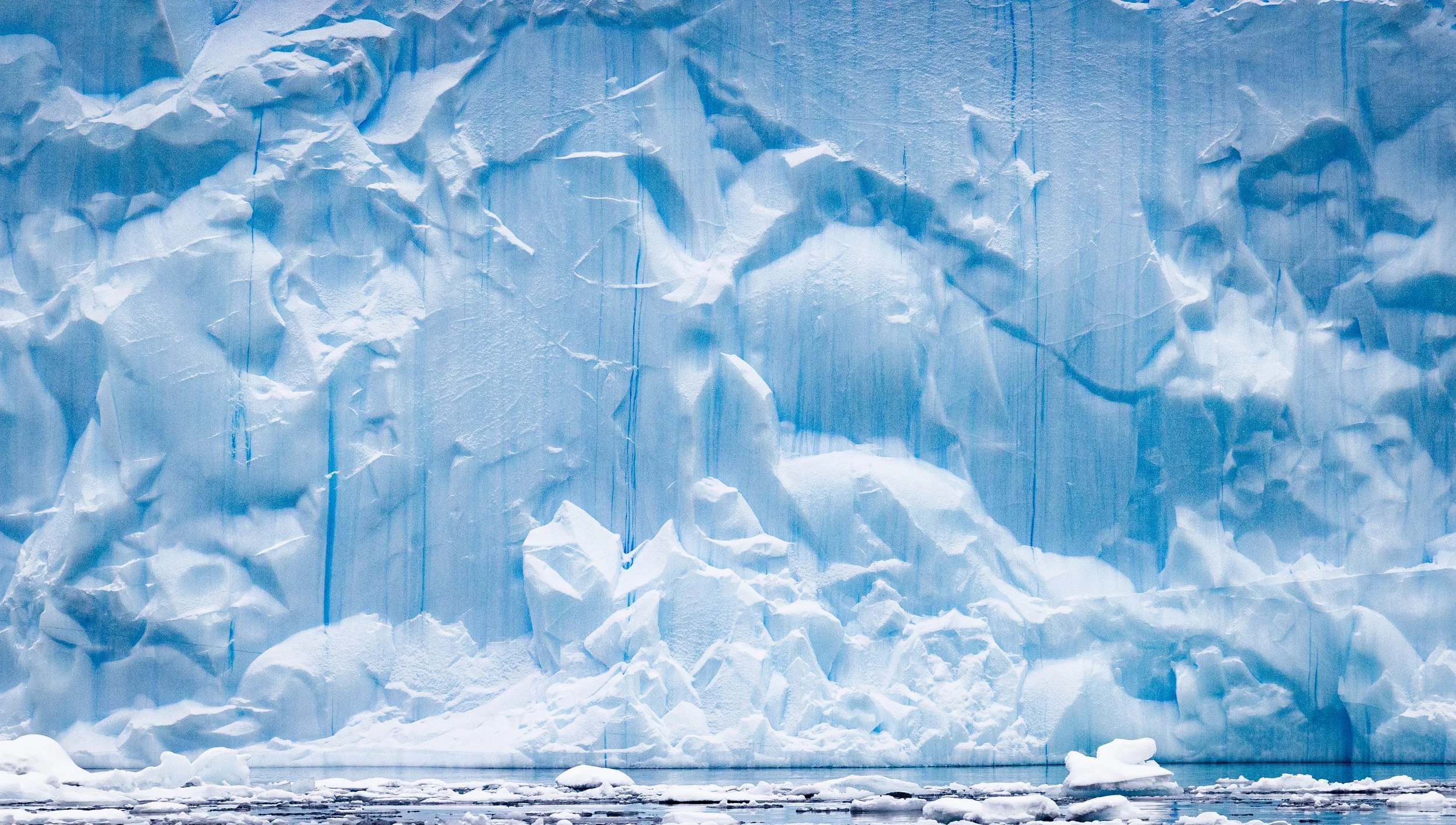
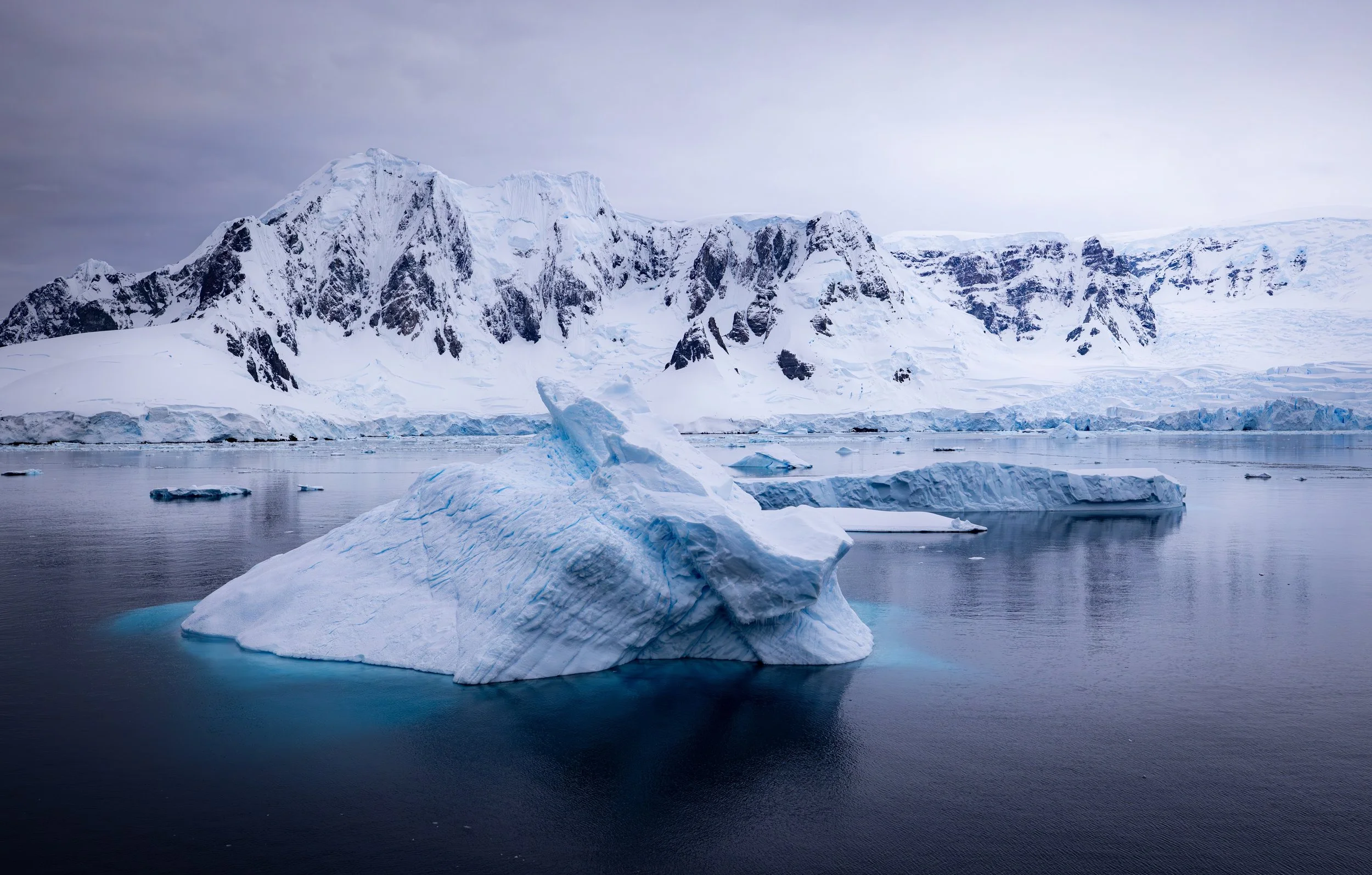
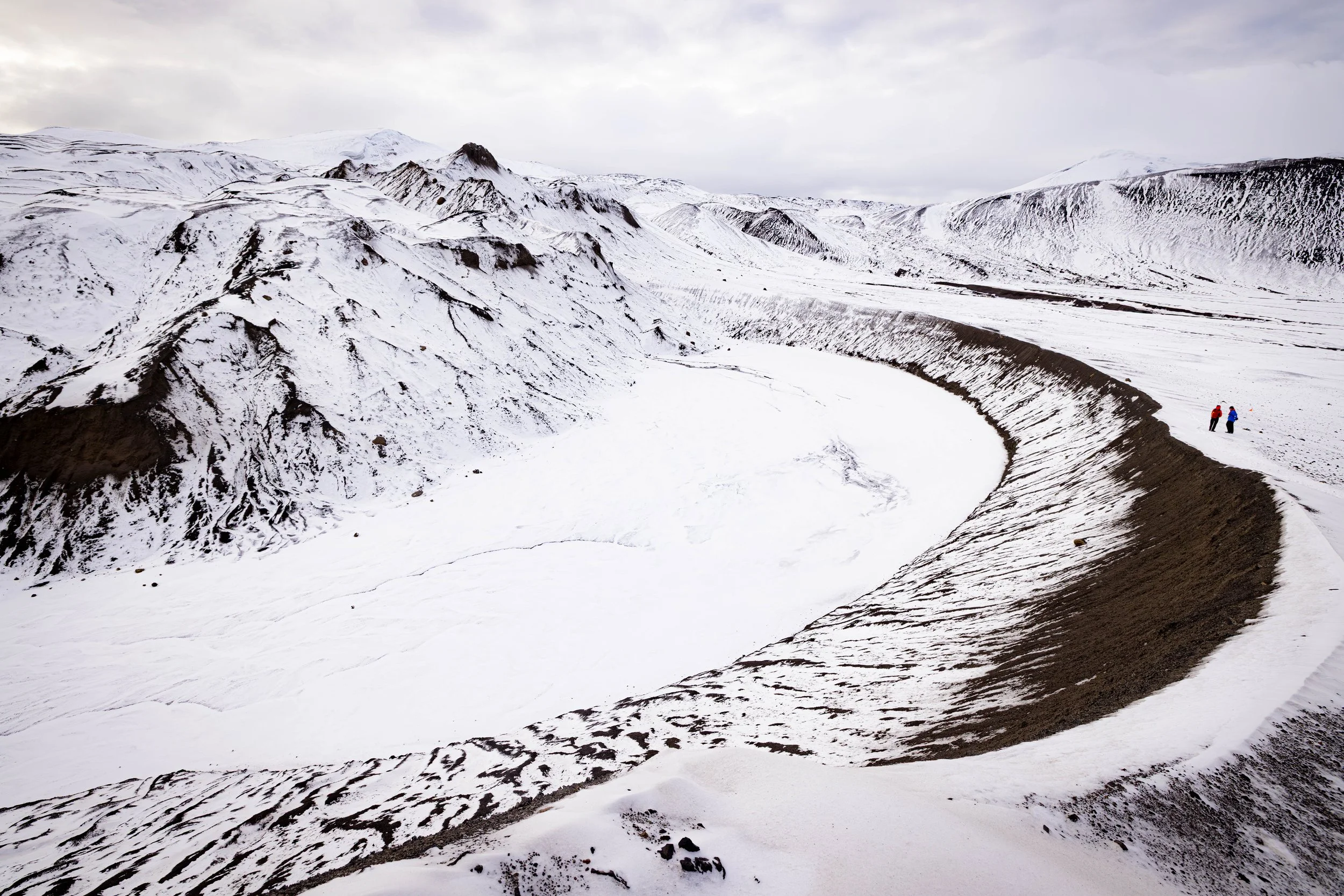
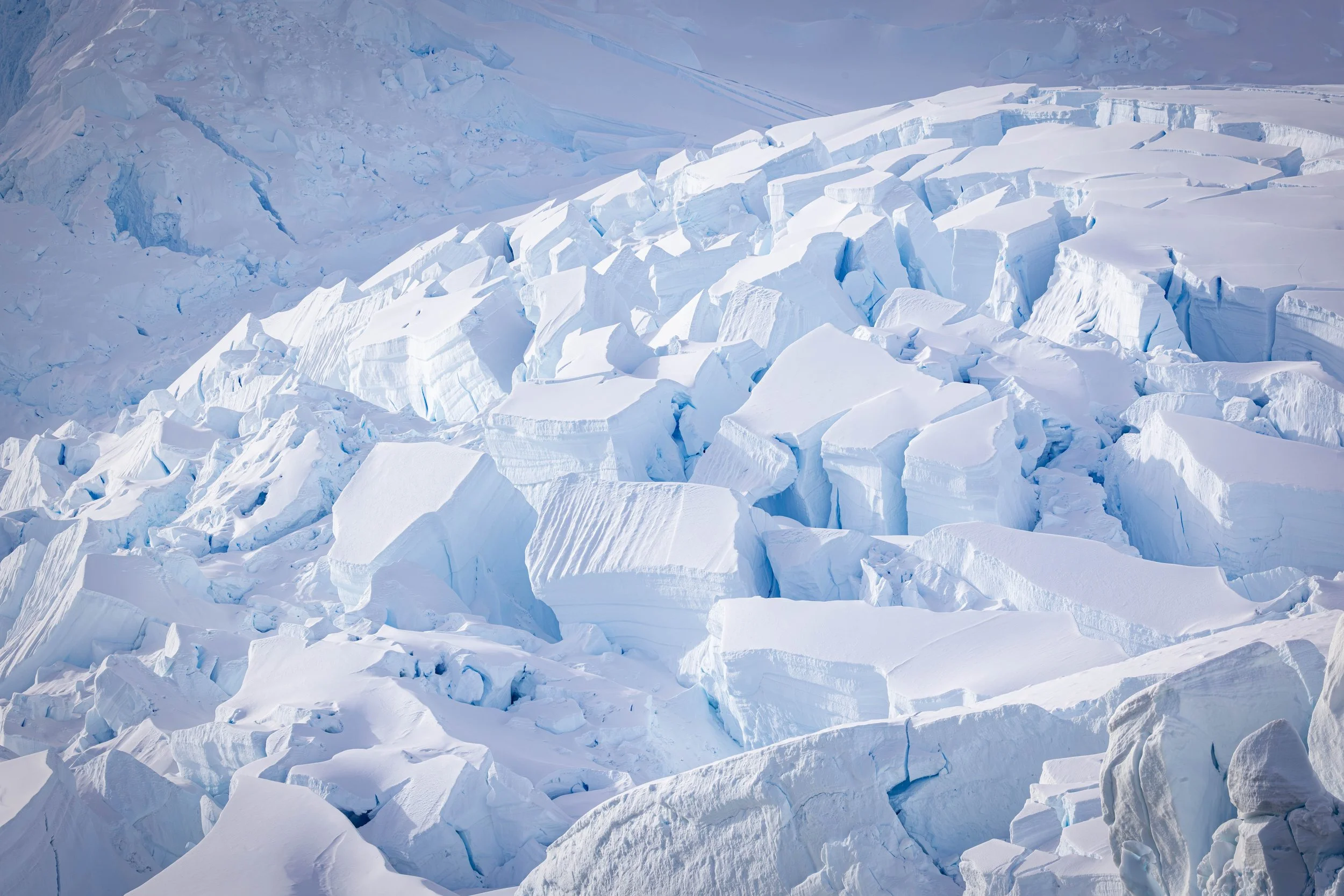
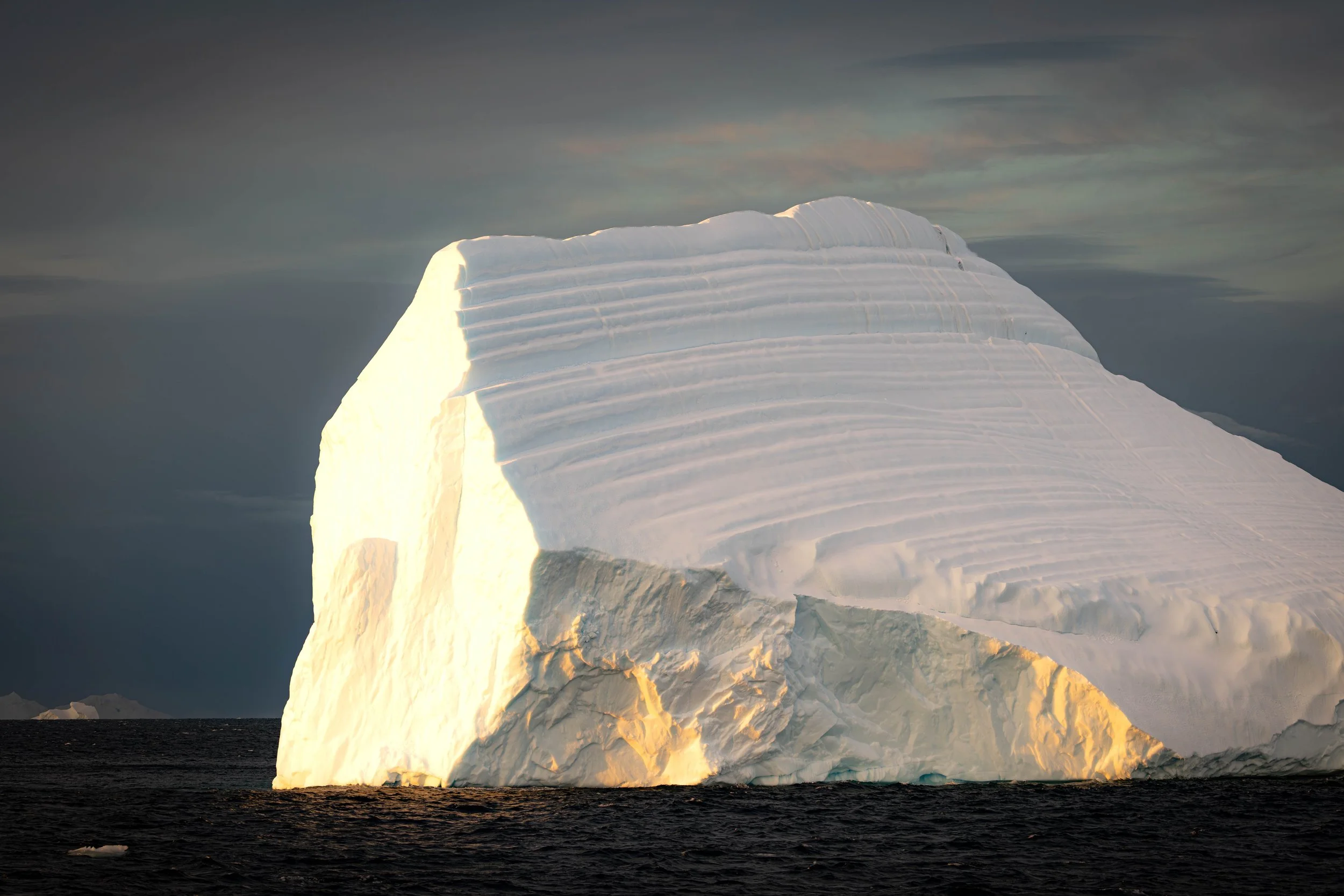
The Antarctic landscape tells a story written in ice, one of beauty, danger, and human resilience. Endless ice shelves, jagged peaks, and drifting icebergs form a terrain that has challenged every person who has ever set foot here, from the earliest explorers to those who visit today. Vast glaciers spill into the ocean in slow motion, their creaking and calving echoing across the water, while mountains pierce through the ice like the exposed bones of the continent. Silence dominates this place, broken only by wind, cracking ice, or the distant call of wildlife, creating a sense of scale that is difficult to comprehend until you stand within it.
Long before cameras, satellites, and expedition ships, this frozen world drew explorers driven by curiosity, ambition, and the desire to reach the unknown. The heroic-age expeditions of the early 20th century, led by figures such as Shackleton, Scott, and Amundsen, pushed human limits in an environment that offered no forgiveness for mistakes. These journeys unfolded across the same glaciers and mountain ranges seen today and were marked by isolation, extreme cold, and unimaginable hardship, where survival depended on teamwork, resilience, and adaptability. Today, we move through these landscapes with cameras rather than sledges, guided by modern navigation and safety systems, yet the scale and severity of Antarctica remain unchanged. Standing here is a powerful reminder of both the fragility of human presence and the enduring strength of this extraordinary place—an environment that continues to inspire awe, humility, and deep respect.