Great Bear Rainforest

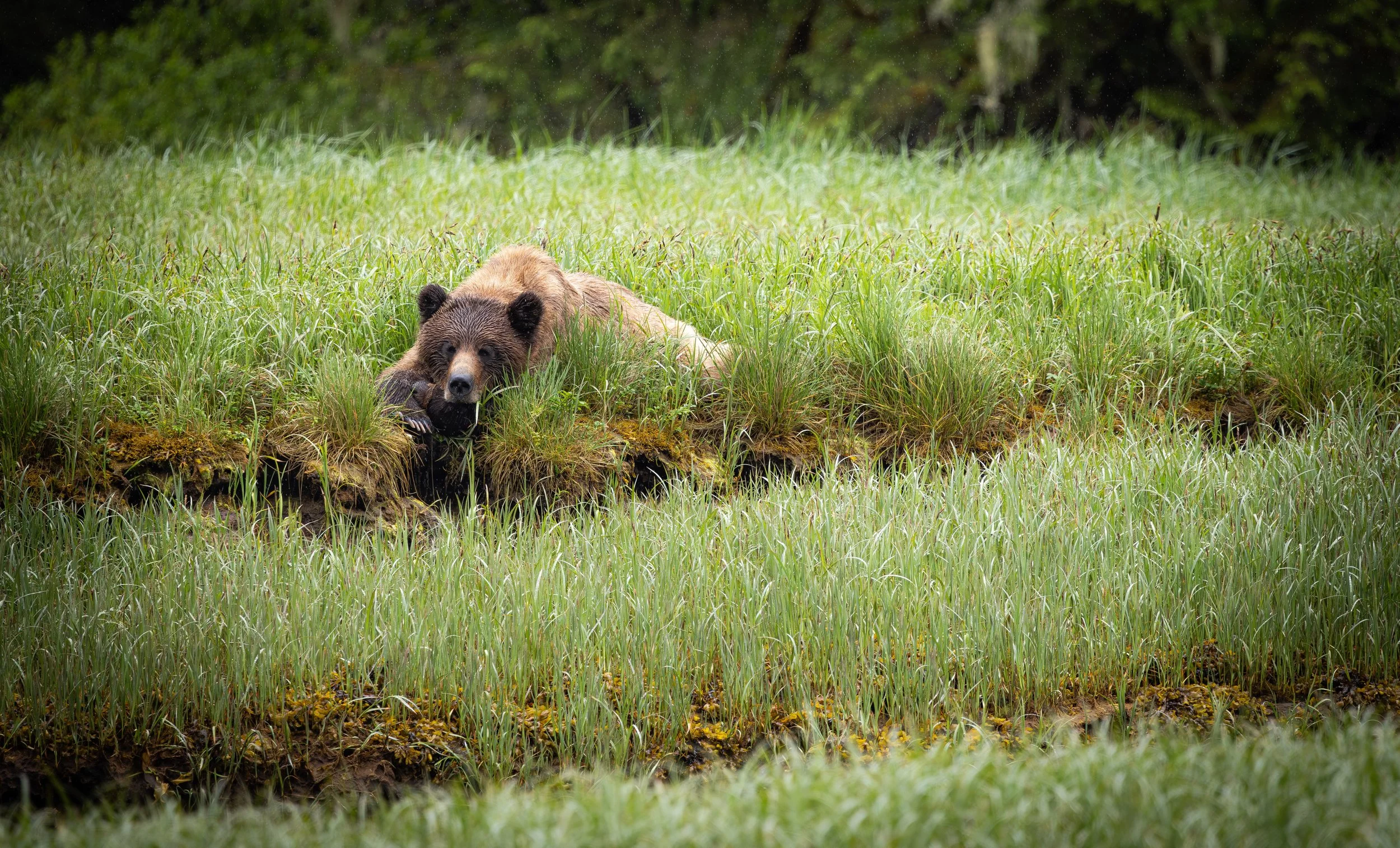
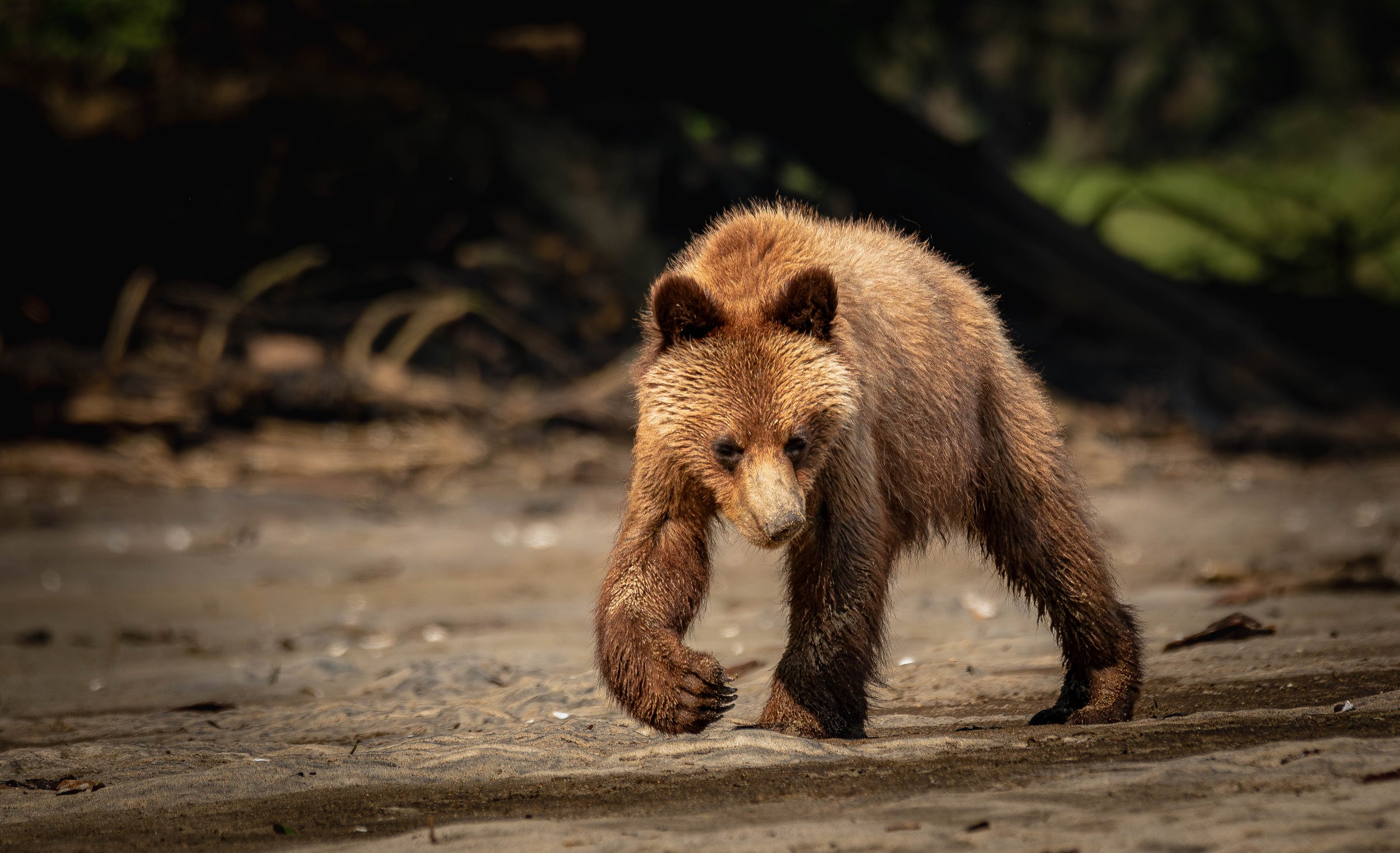
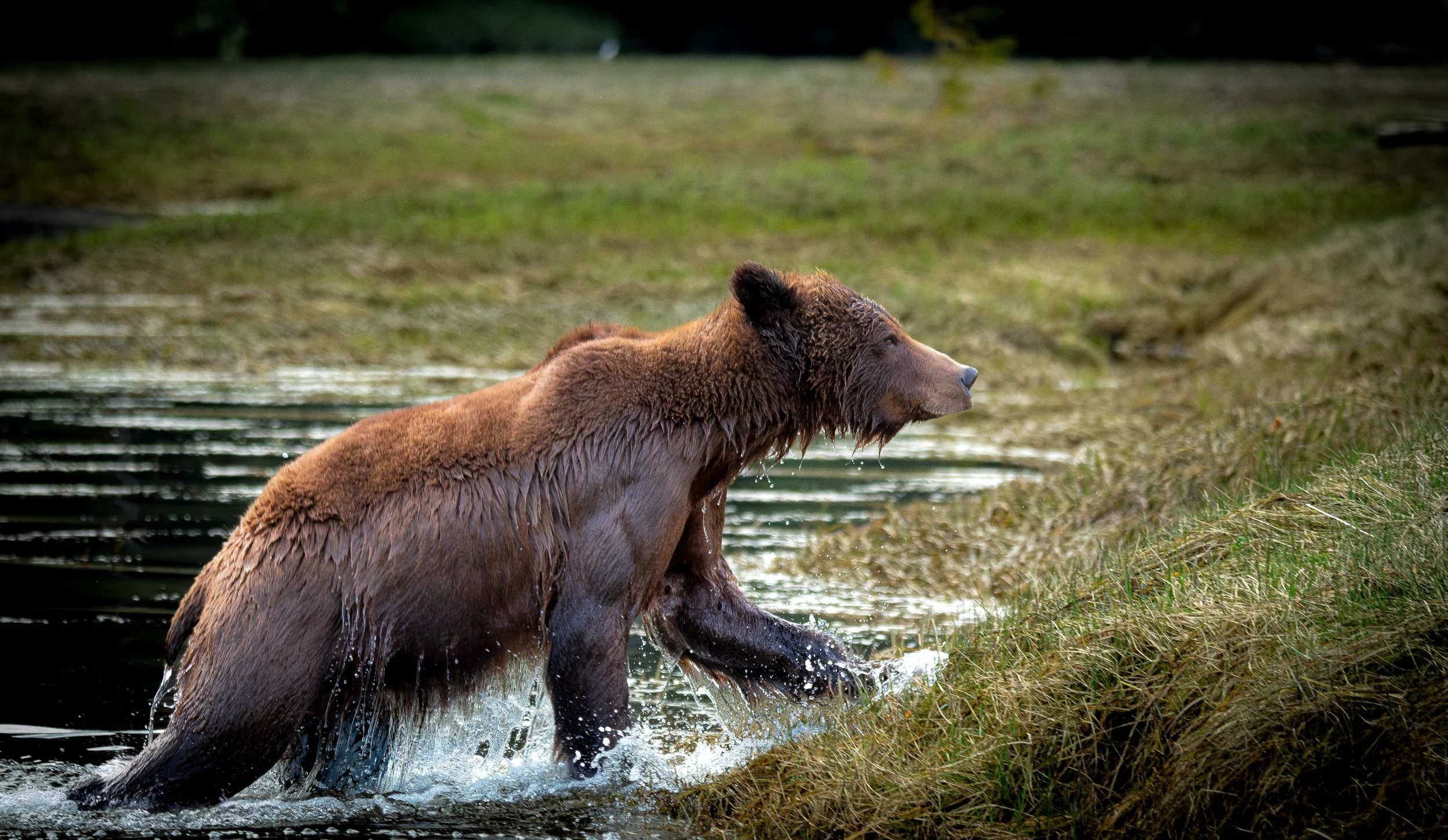
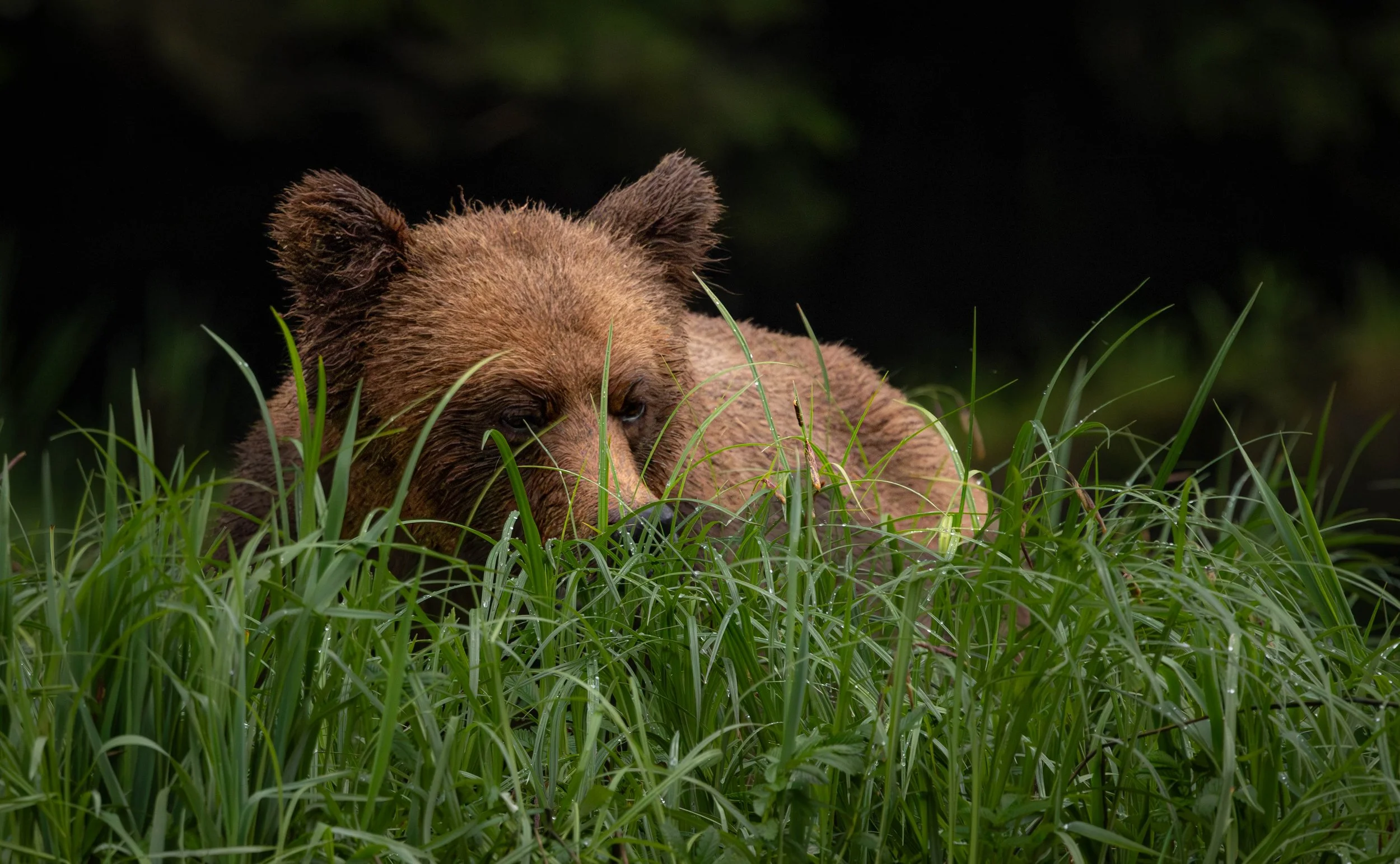
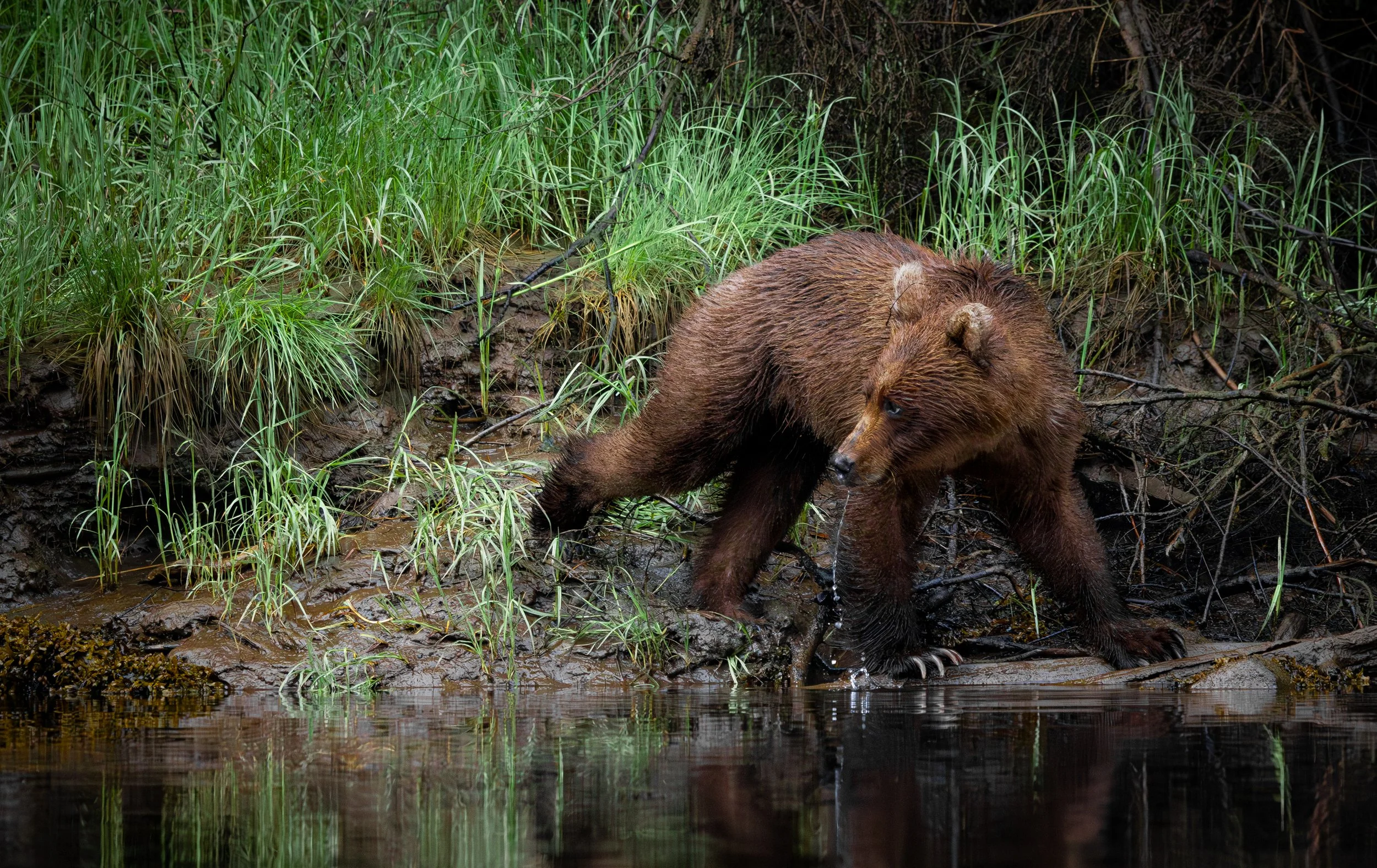
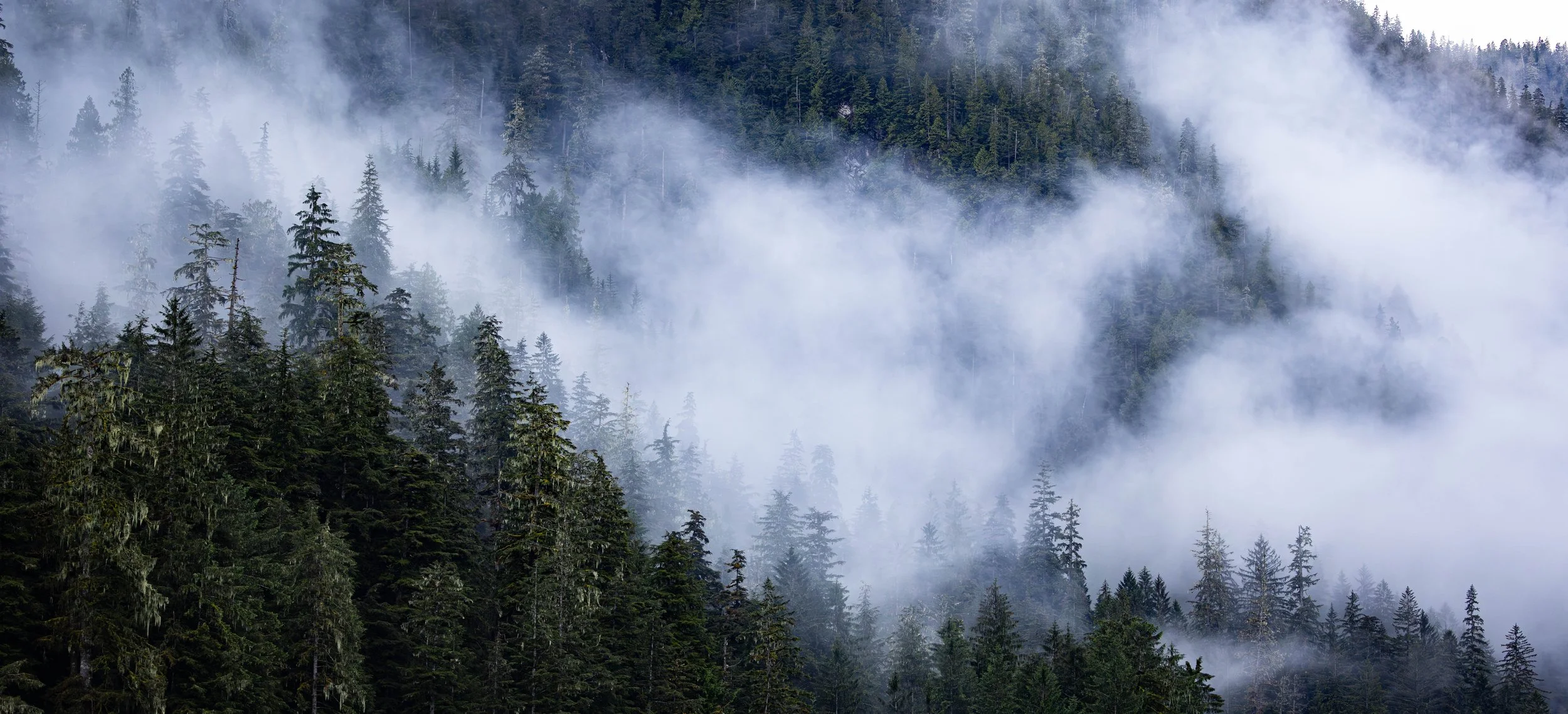
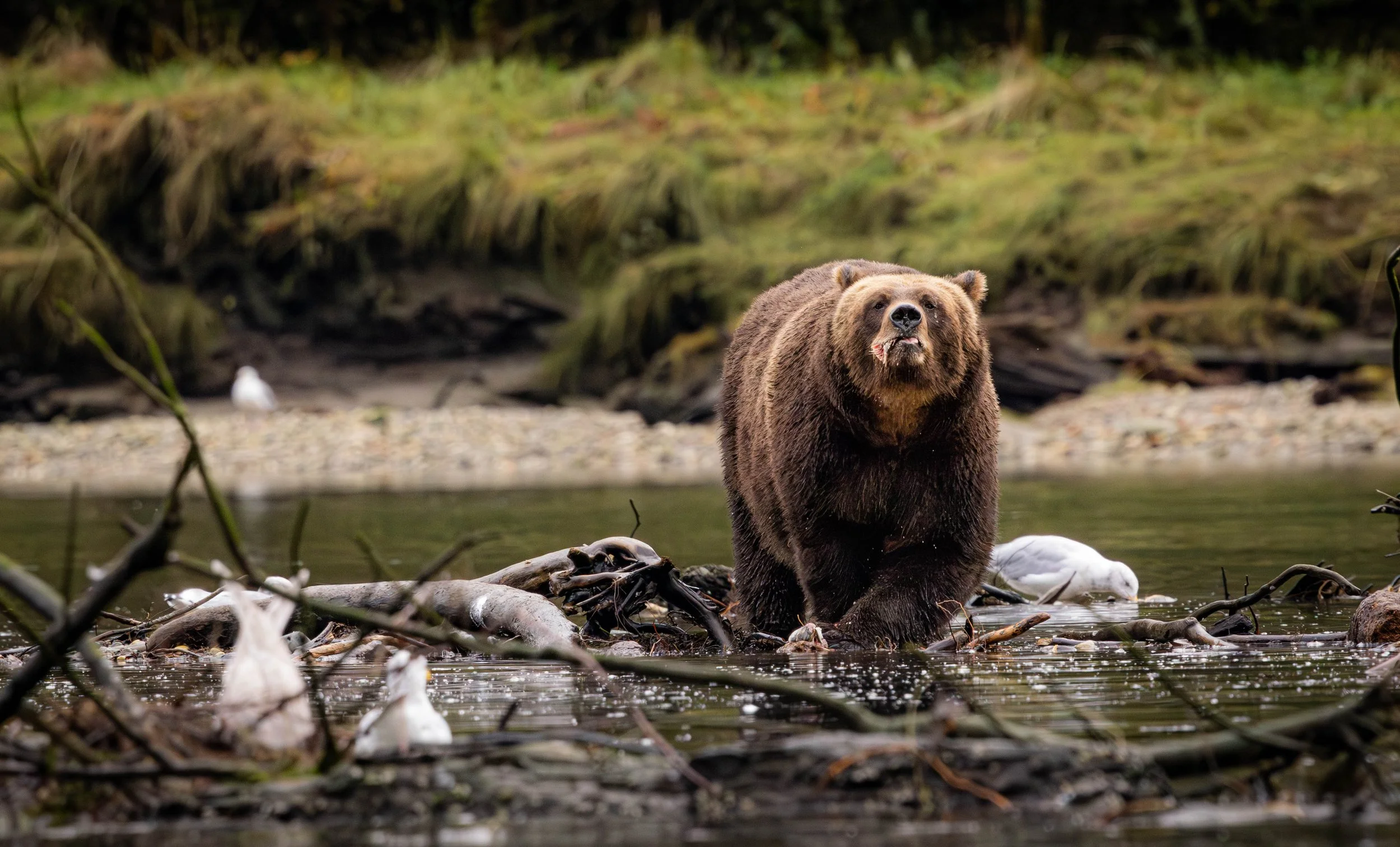
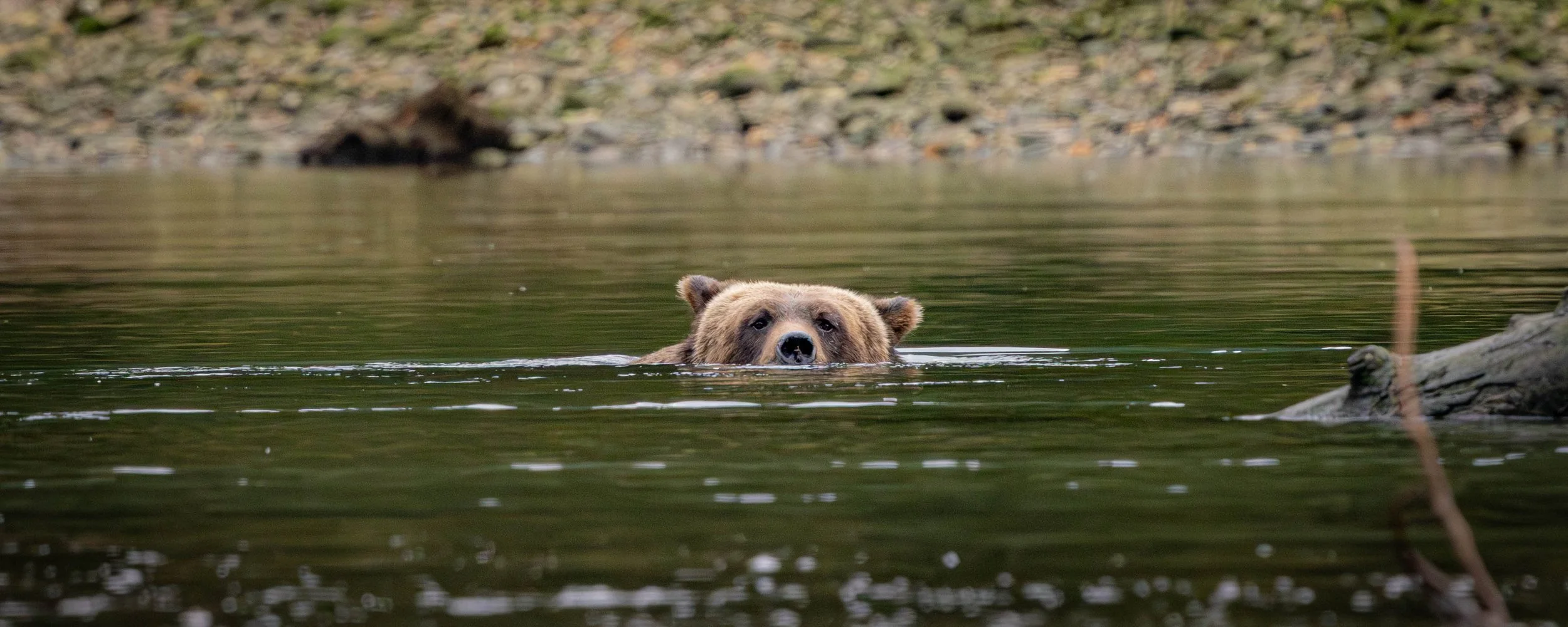
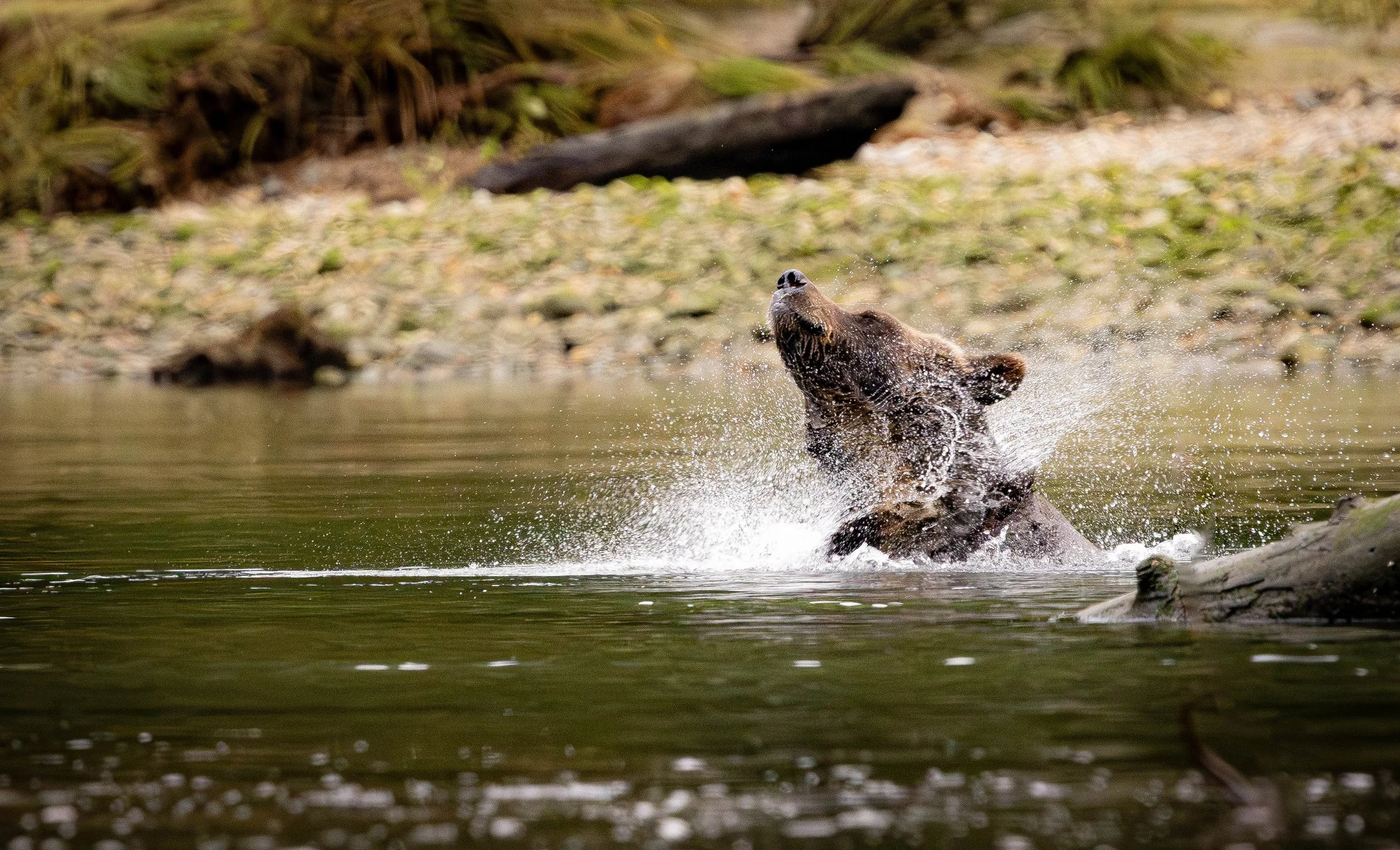
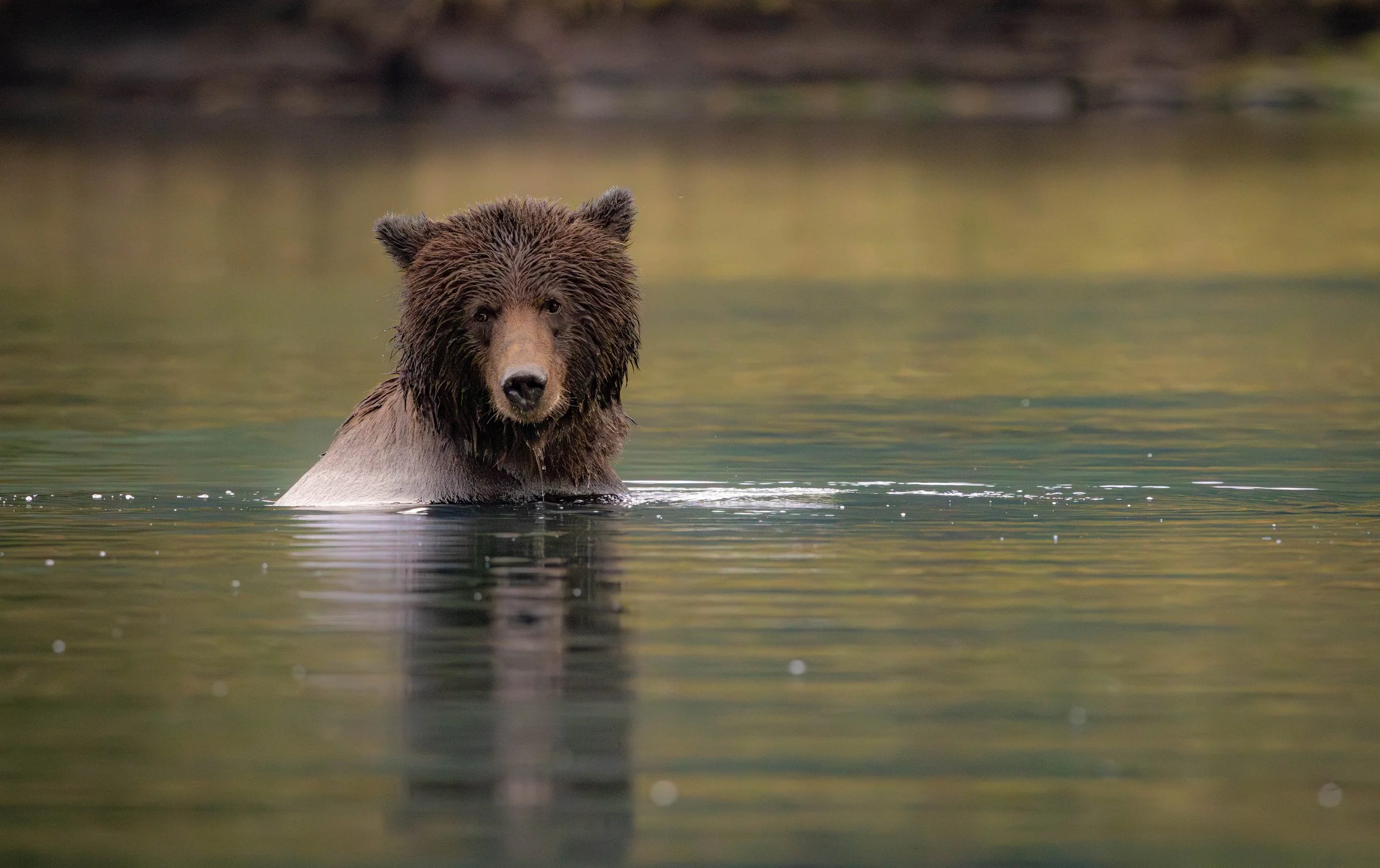
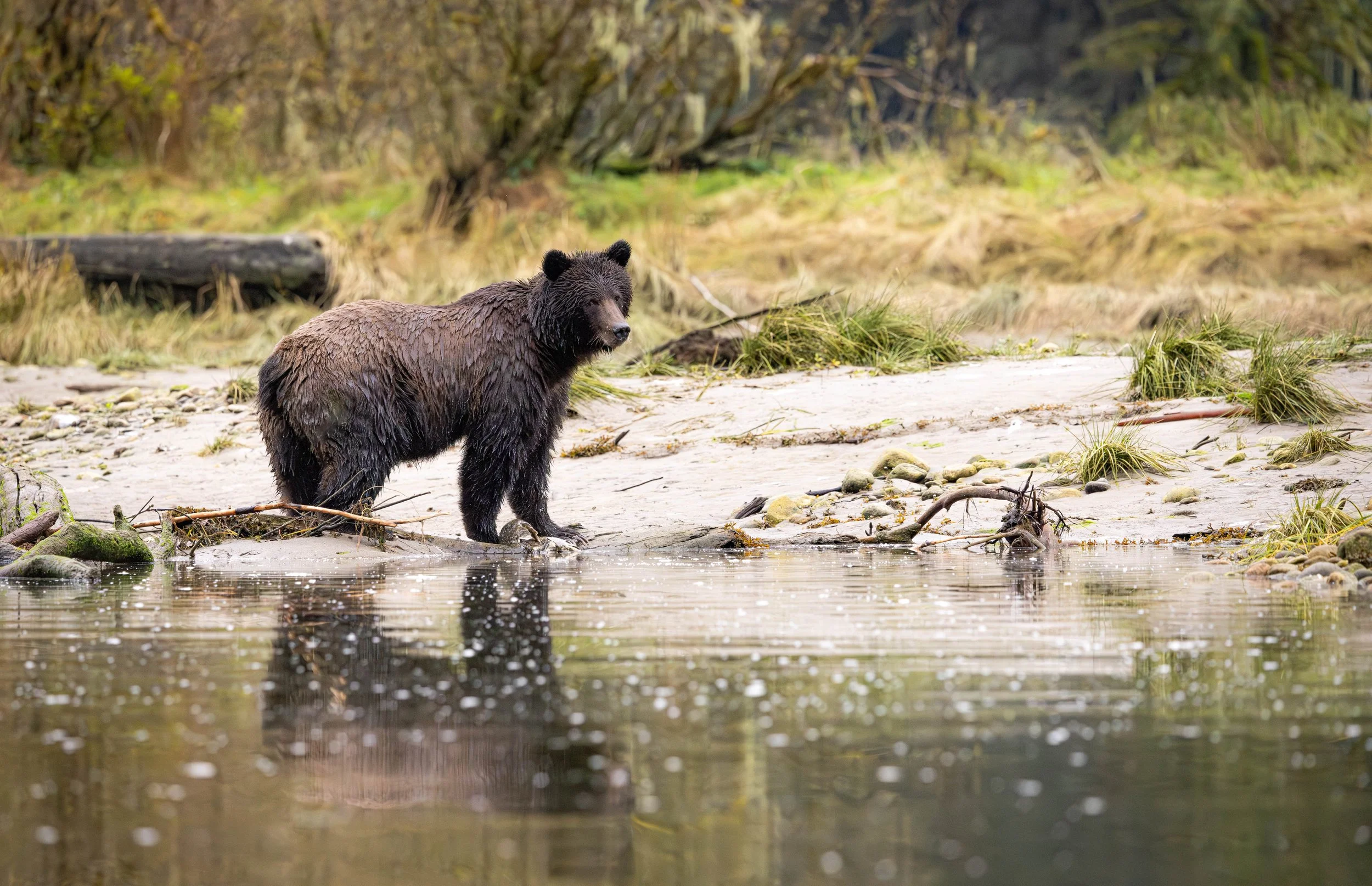
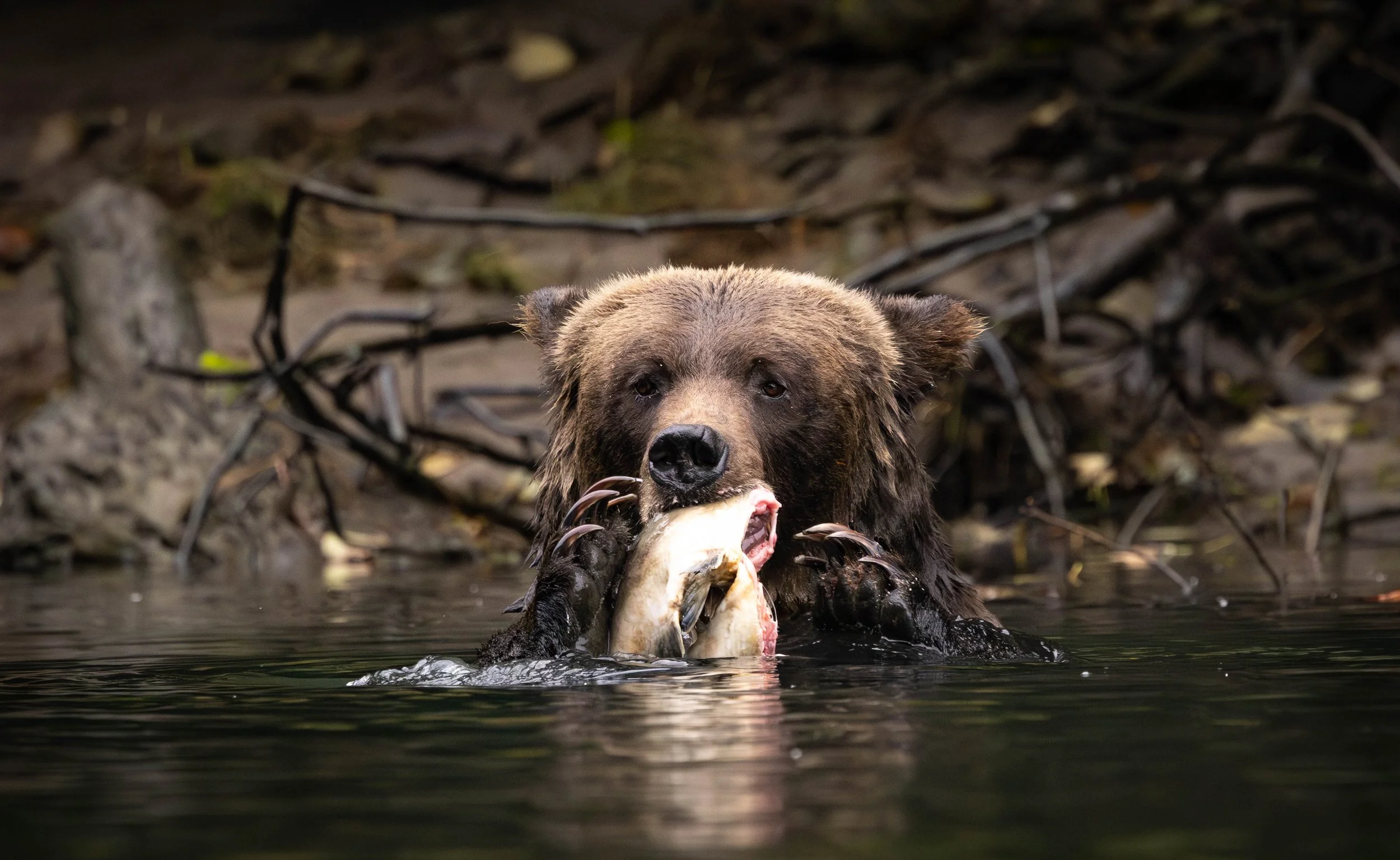
The Great Bear Rainforest is one of the largest remaining intact tracts of coastal temperate rainforest on Earth, spanning approximately 6.4 million hectares along British Columbia’s north and central coast. In 2016, a landmark agreement between the Province of British Columbia and local First Nations formally recognized the region and committed to protecting roughly 85% of its old-growth forests from industrial logging, with ecosystem-based management guiding the remaining areas. This rainforest plays a critical role as a global carbon store, helping to mitigate climate change, while supporting extraordinary biodiversity. Within the Great Bear Rainforest lies the Khutzeymateen Grizzly Bear Sanctuary—Canada’s first area protected specifically for grizzly bears, established in 1994. Co-managed by the Province of British Columbia and the Tsimshian Nations, the Khutzeymateen represents a powerful model of Indigenous-led conservation, safeguarding critical estuarine and forest habitats that support one of the highest densities of coastal grizzly bears in the world.
Join me on a Photography Expedition for the Grizzlies of the Great Bear Rainforest in 2027!
Guiding in Grizzly Bear Country
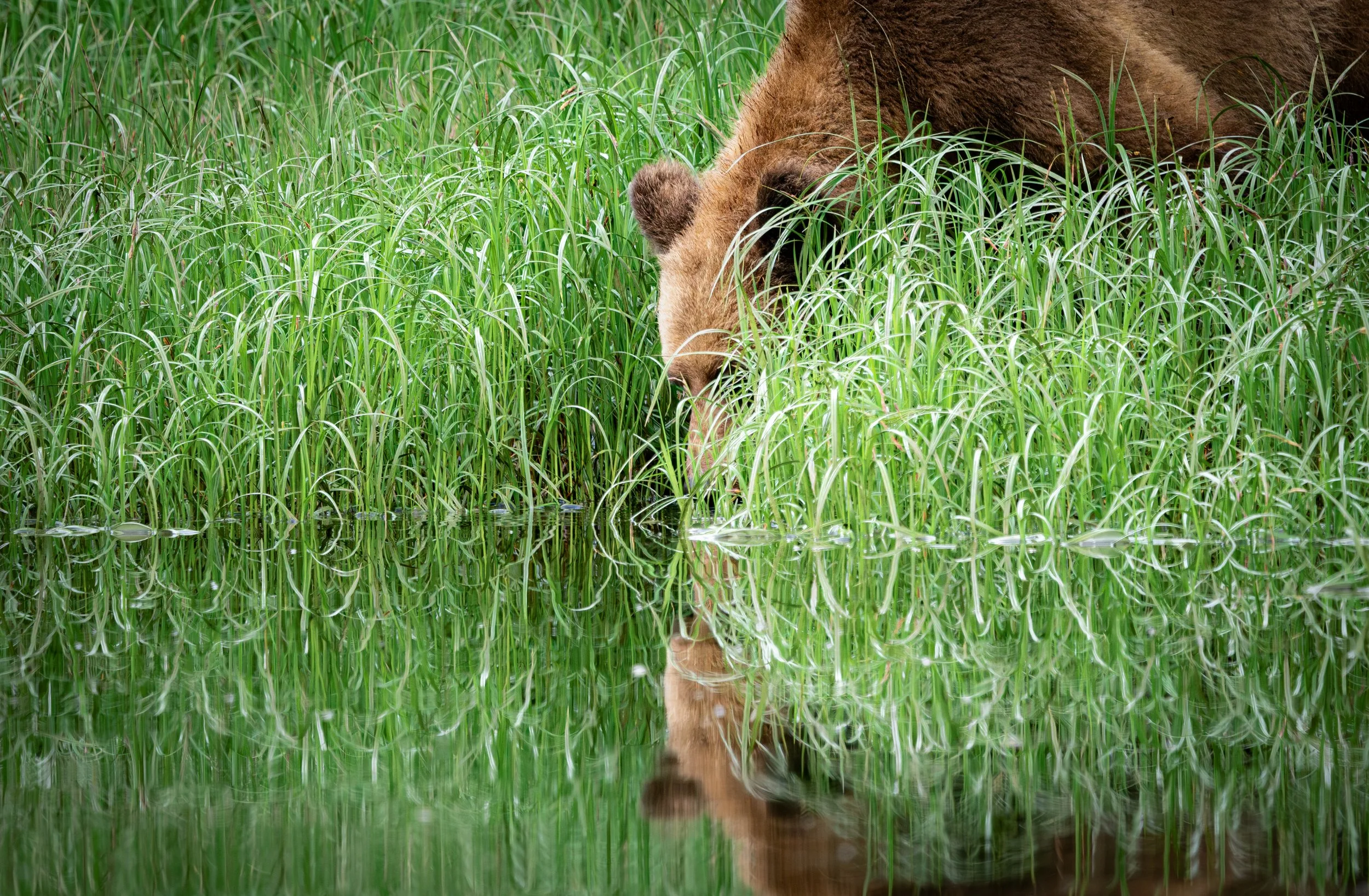
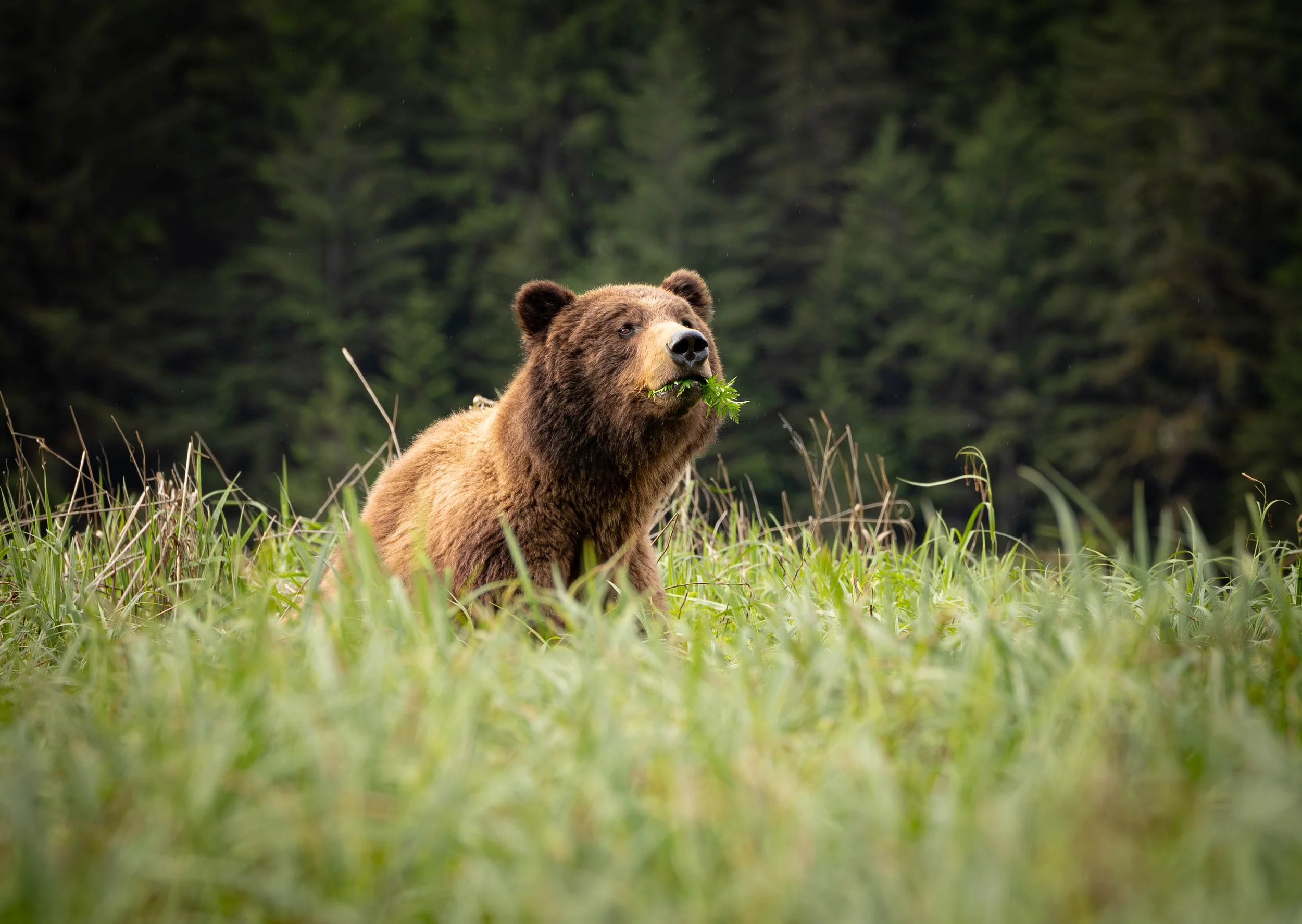
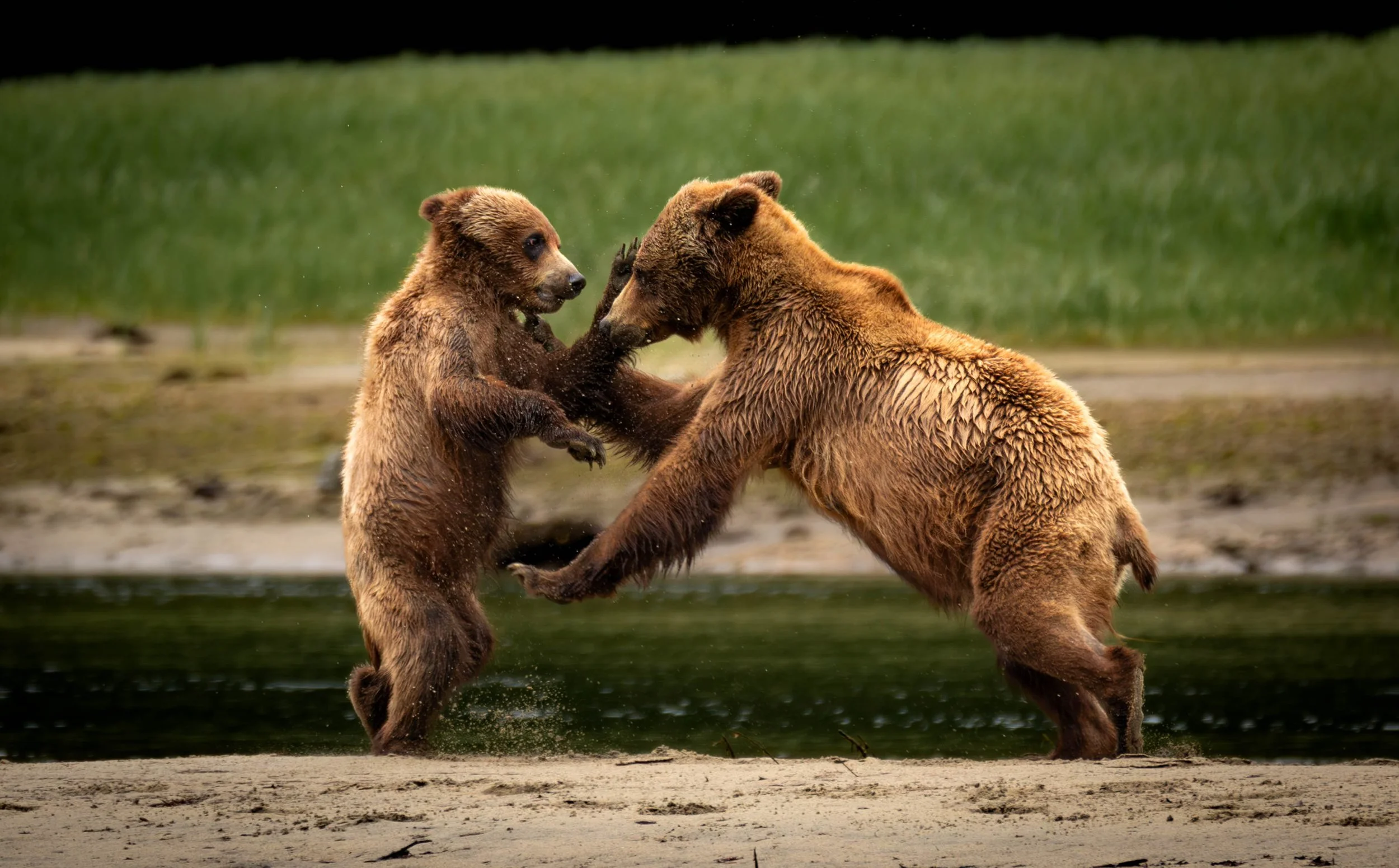
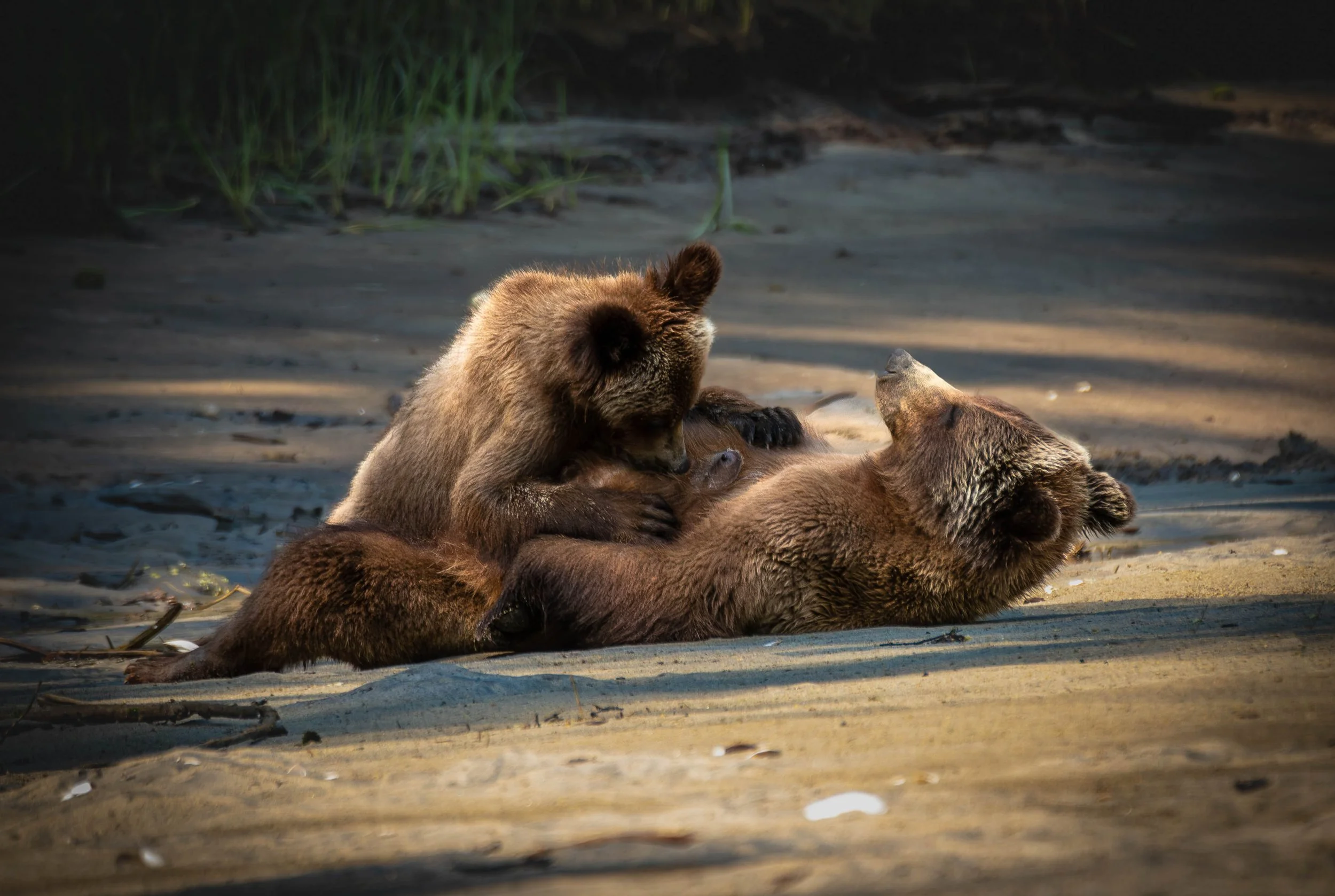
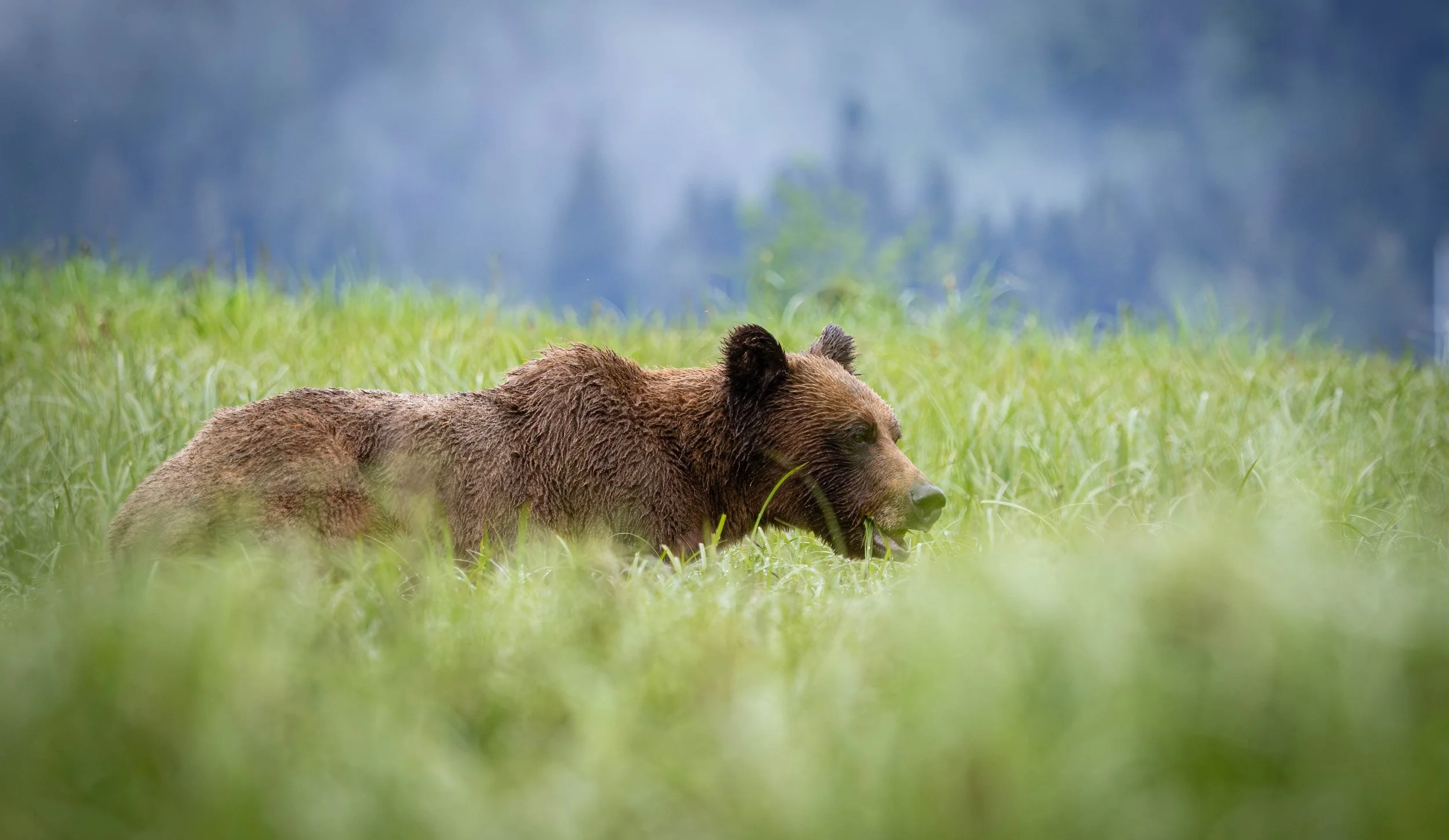
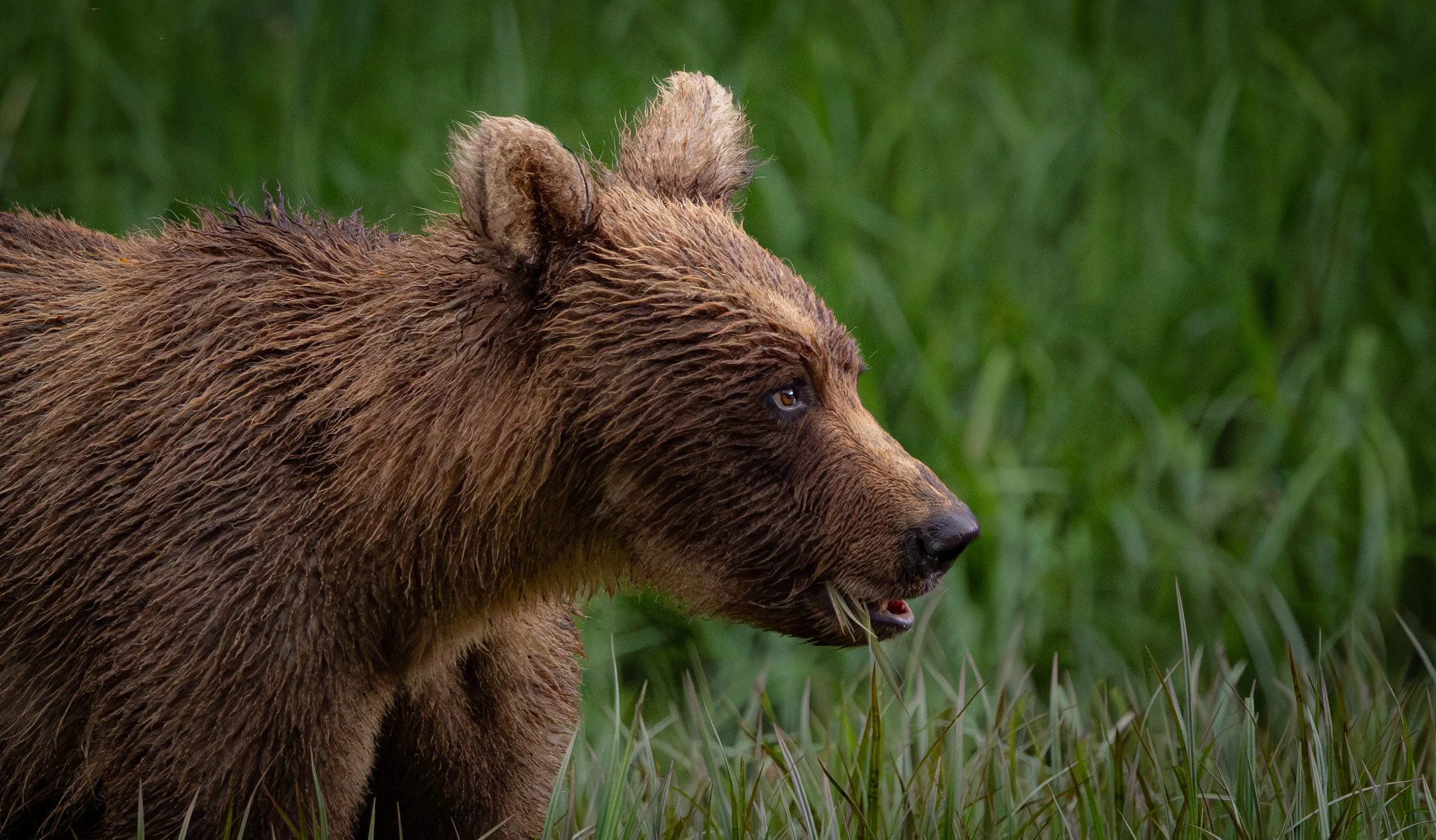
Since 2023, I have spent multiple seasons guiding and working throughout the Great Bear Rainforest, gaining experience across several regions and platforms. My work has included leading science-driven grizzly bear experiences with Great Bear Nature Tours, operating from boats along the remote coastline between Kitimat and Bella Bella, and guiding within the Khutzeymateen Grizzly Bear Sanctuary. Across these varied settings, I have focused on natural history interpretation, bear behaviour, and ethical wildlife viewing, helping guests understand not just what they are seeing, but why it matters. The Great Bear Rainforest remains one of the most serene and biologically rich places I have ever worked—an ecosystem where bears are not fleeting encounters but deeply embedded presences. Few places on Earth offer moments as intimate as hearing a bear quietly chewing sedge just metres away, smelling freshly turned beach sediments where a bear has been digging for clams, or listening to the rhythmic thump of paws during a playful interaction between a mother and cub. These experiences are powerful reminders of how alive and intact this landscape still is.
Spirit Bears of Gribble Island
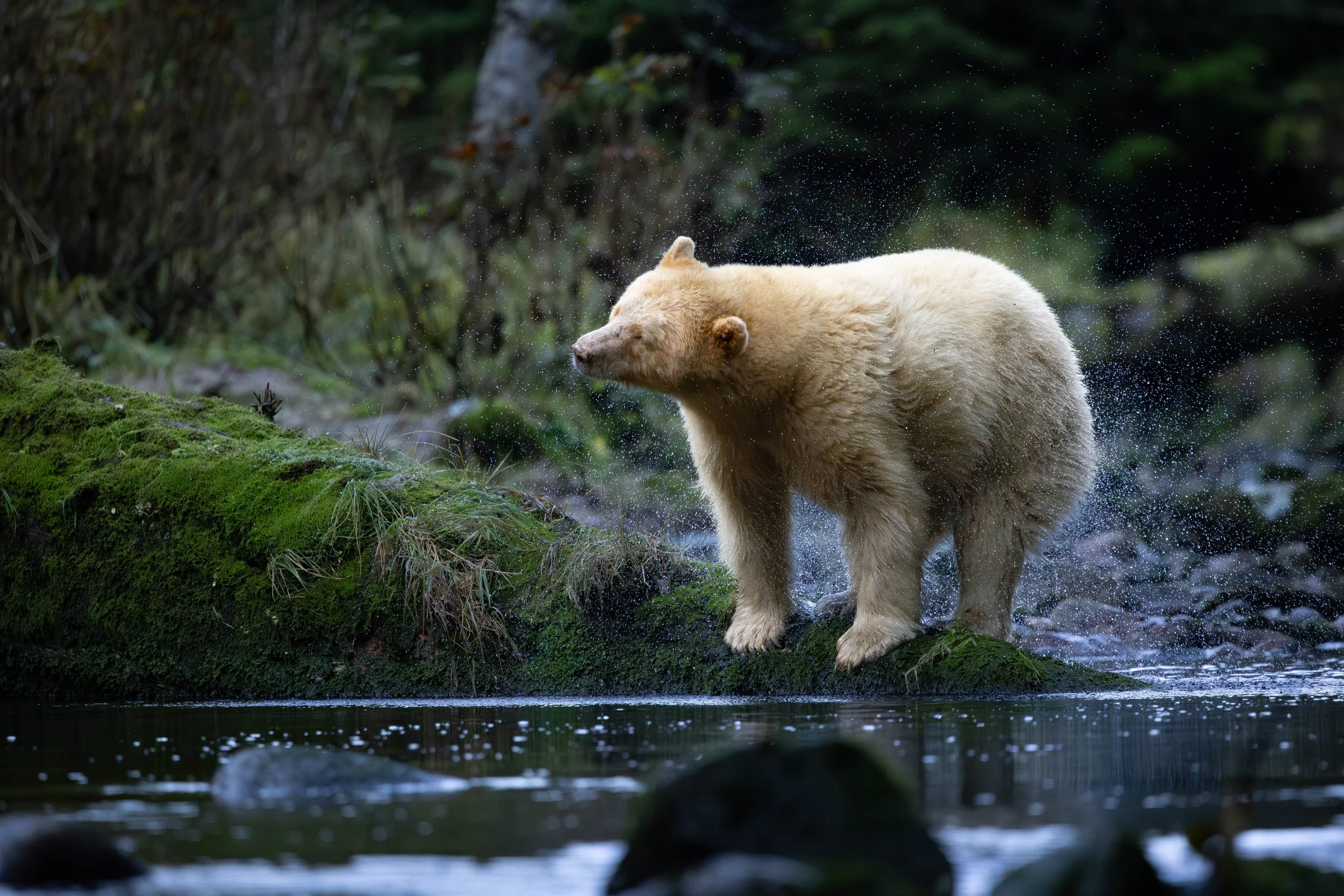
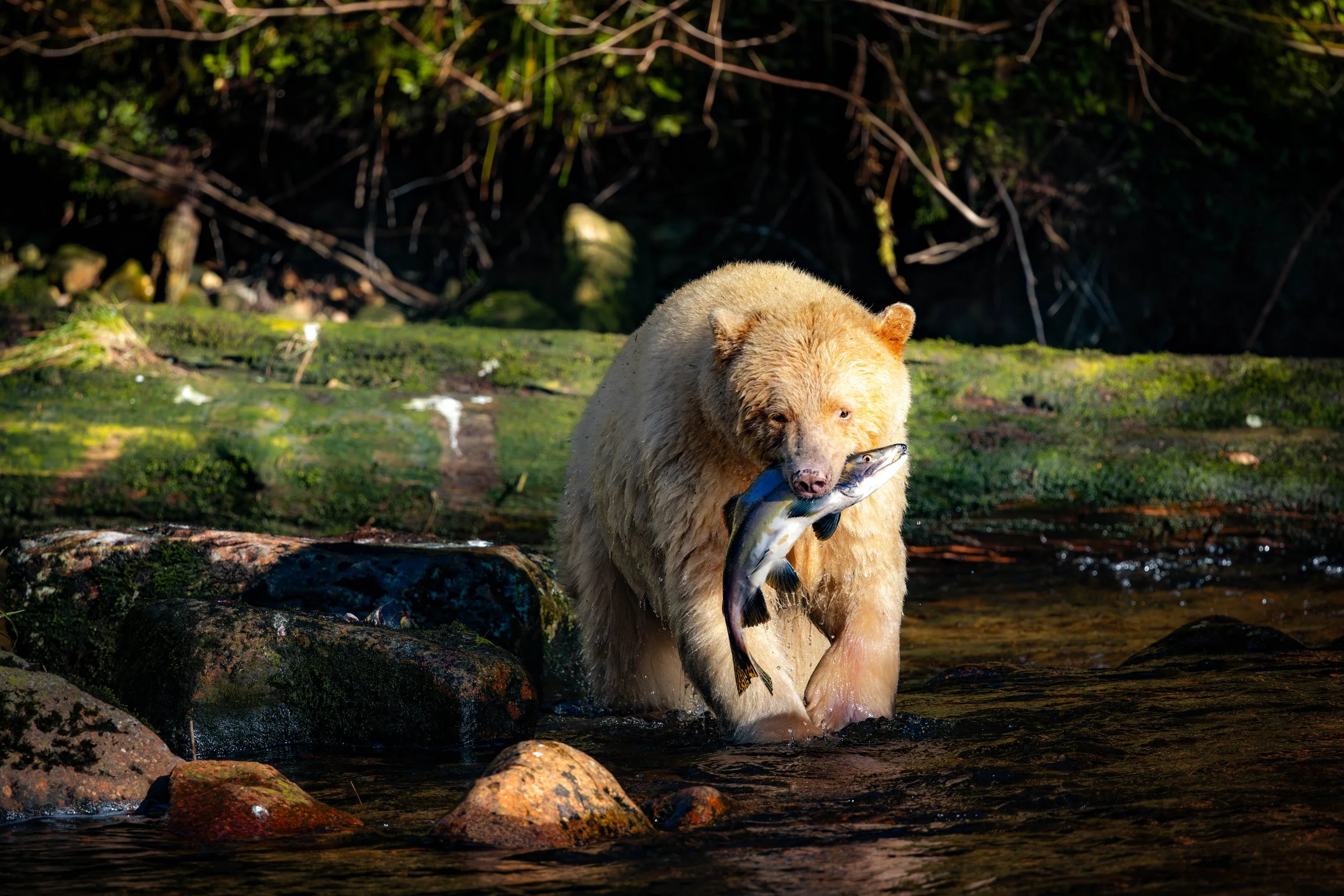
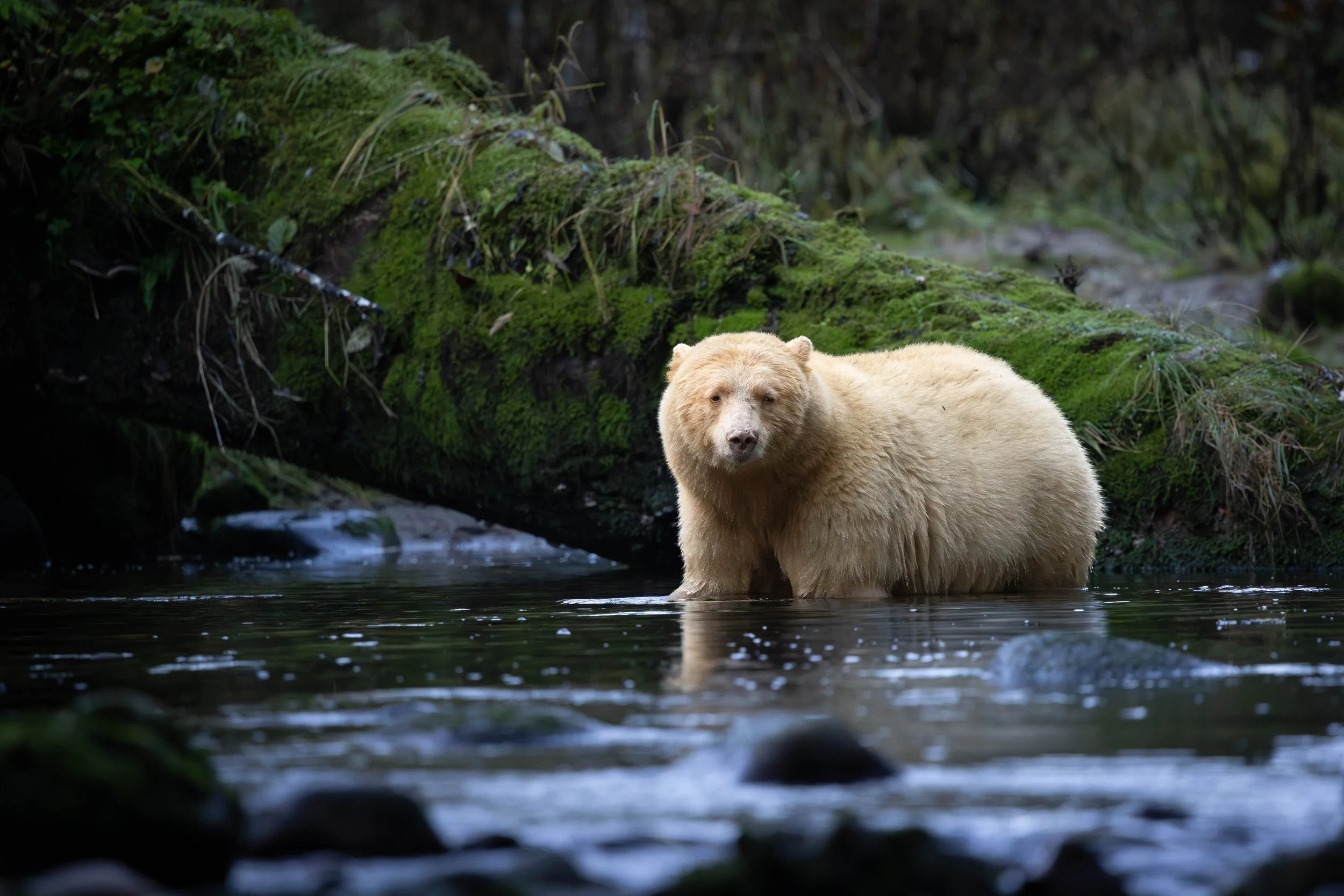
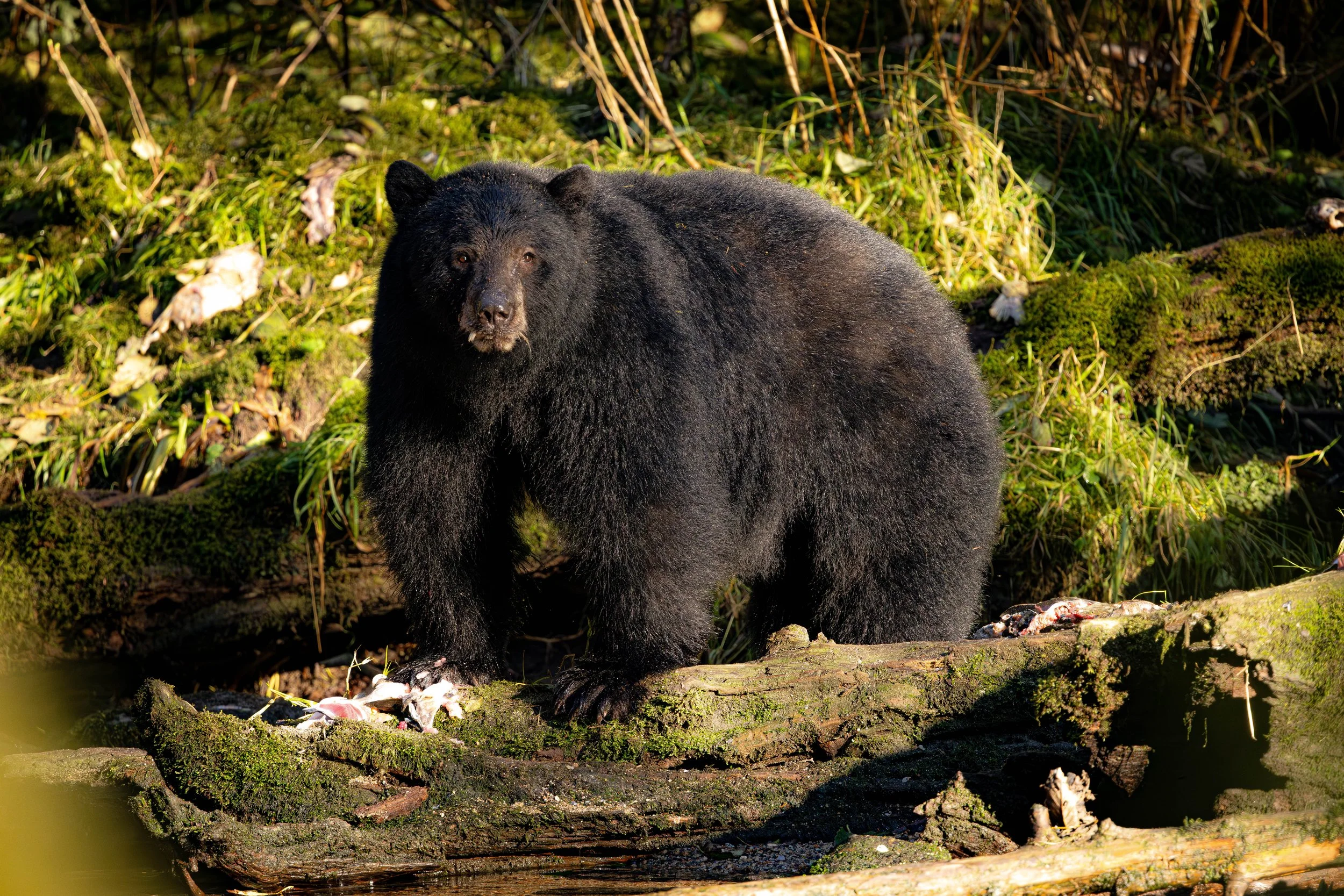
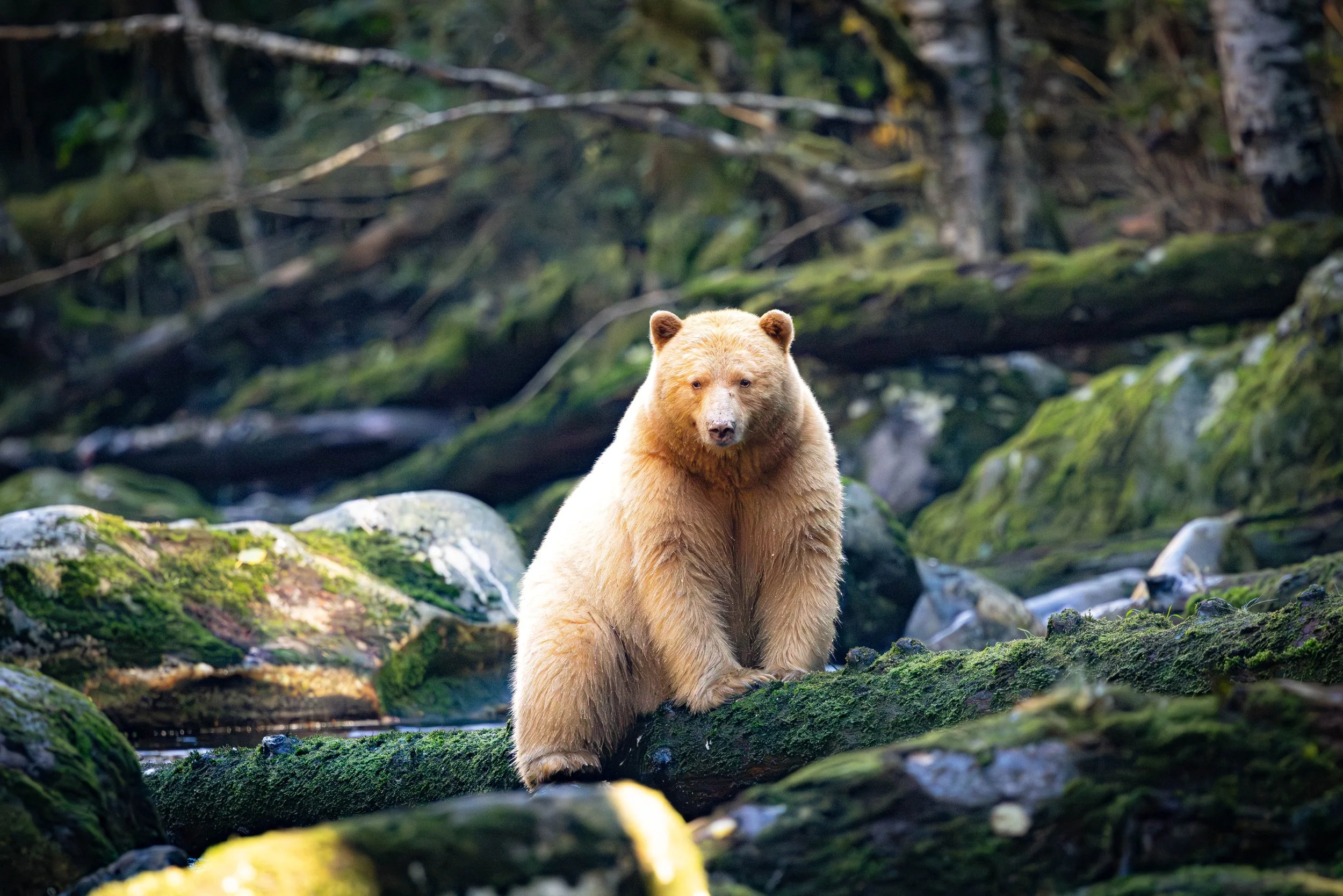
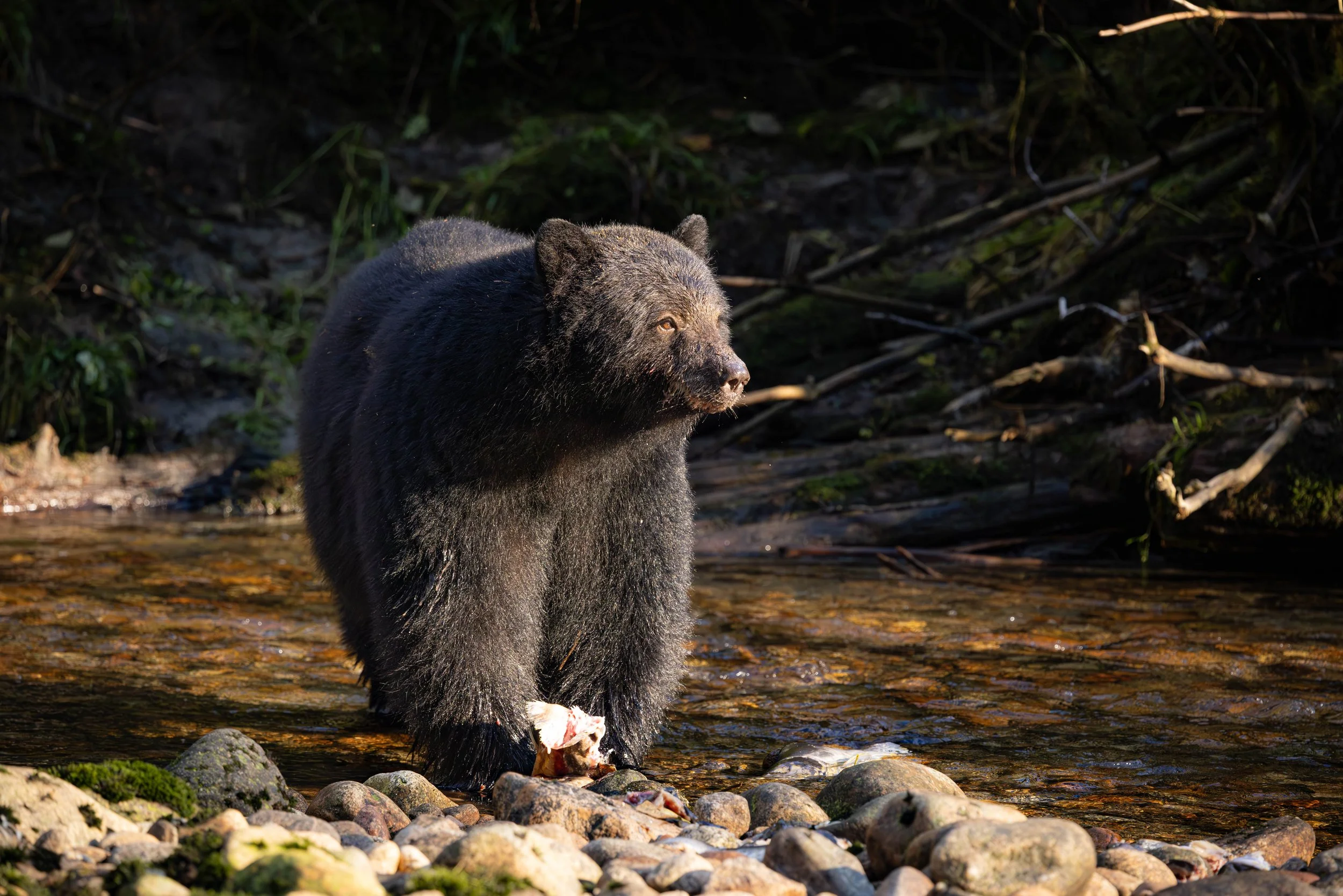
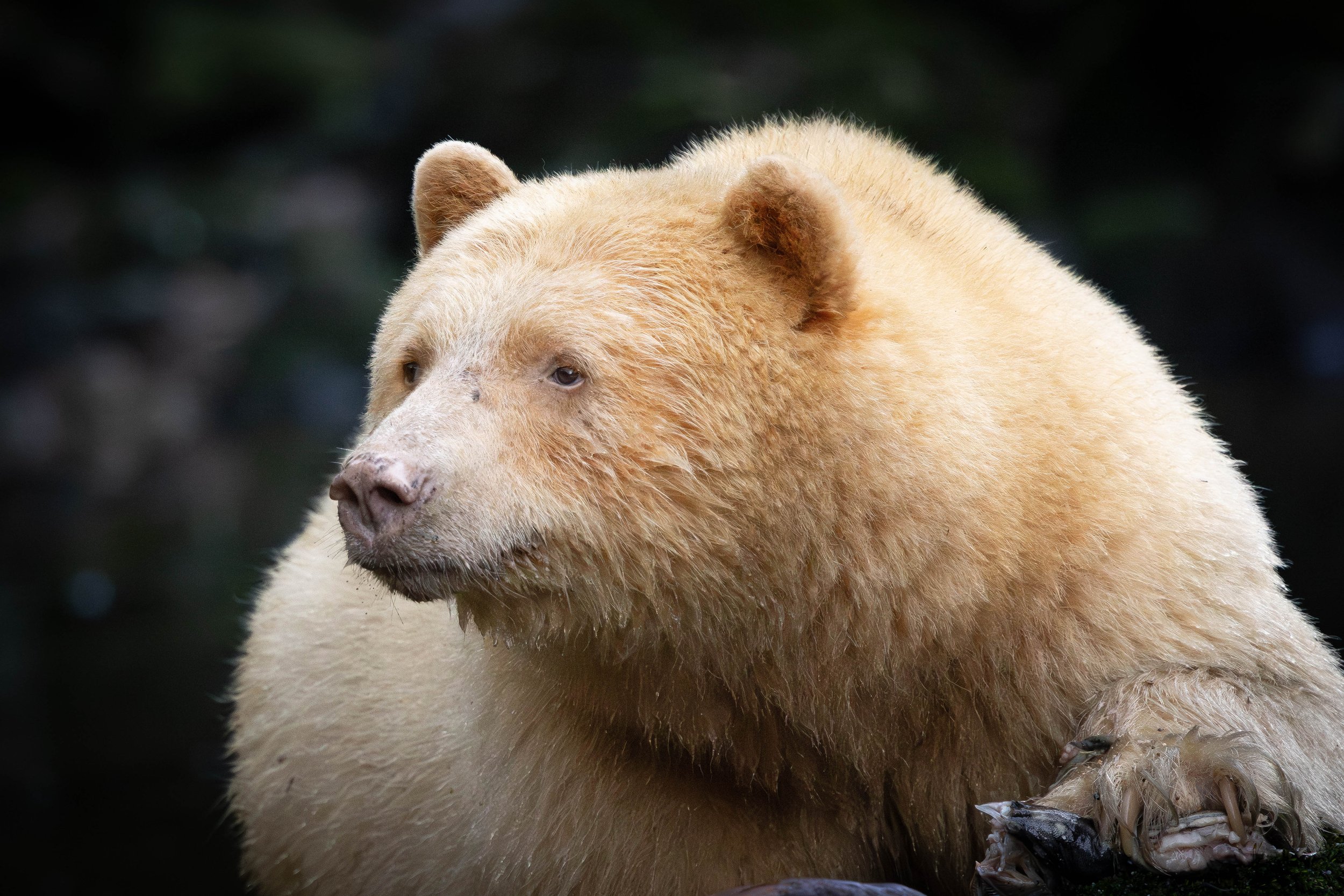
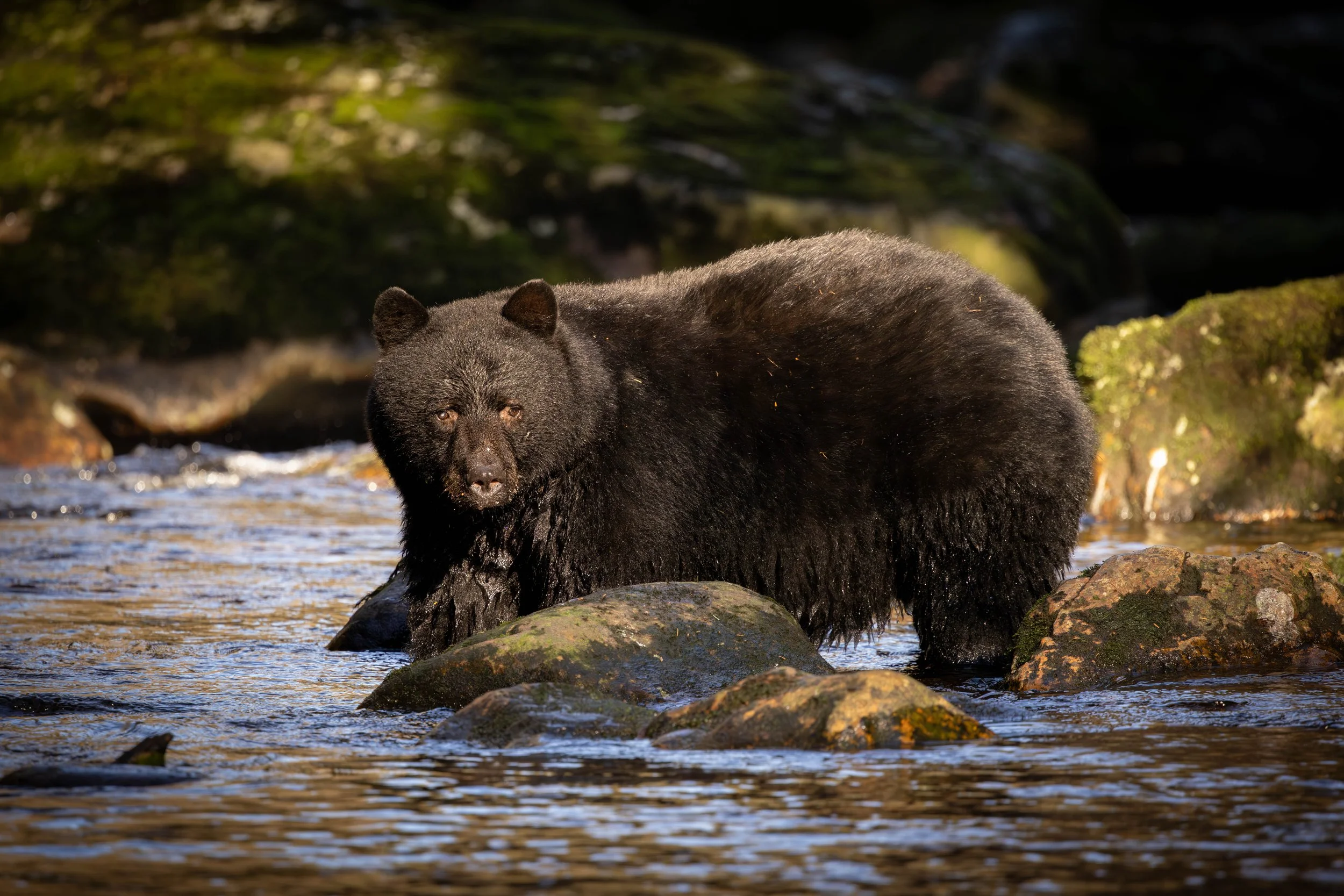
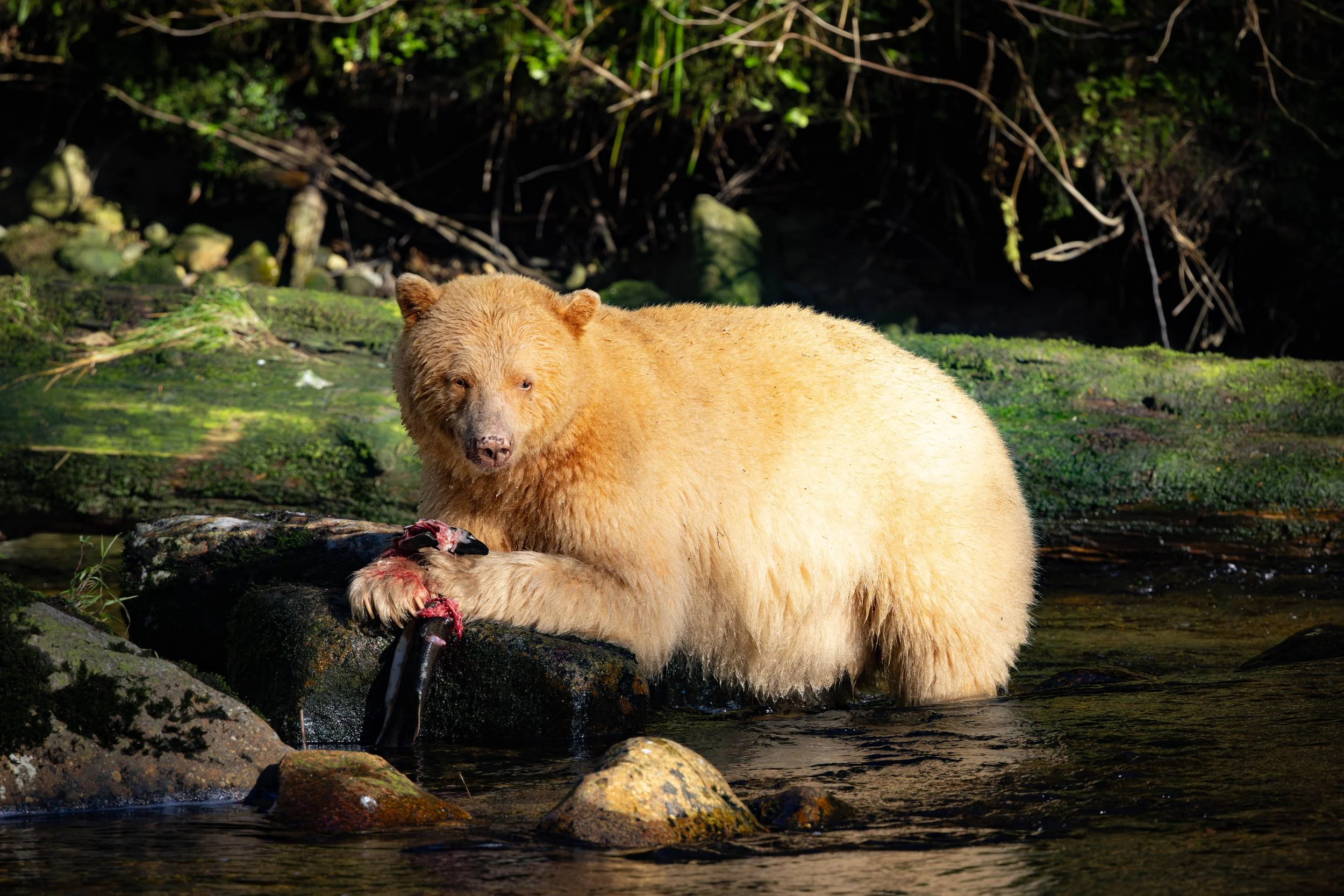
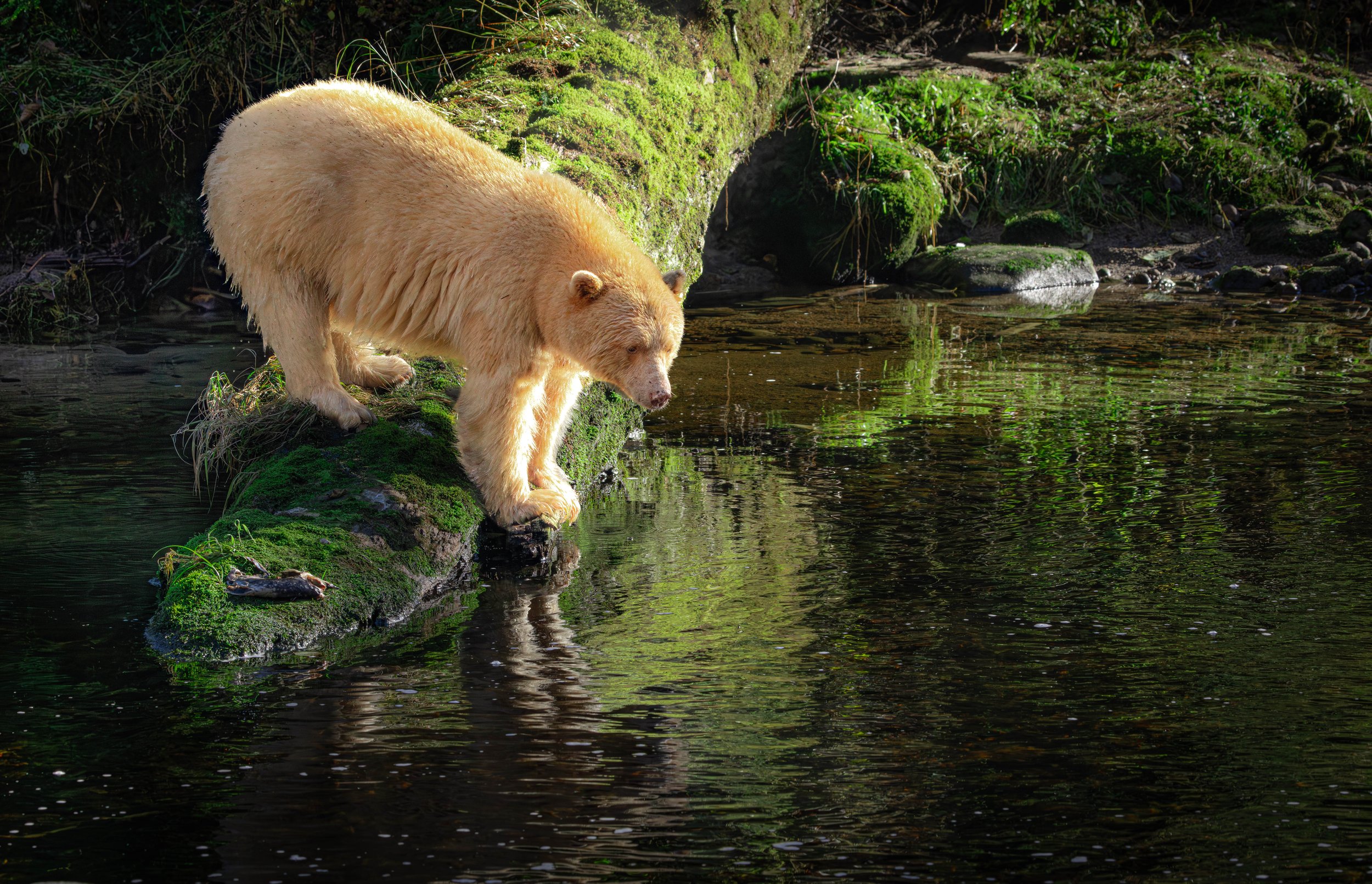
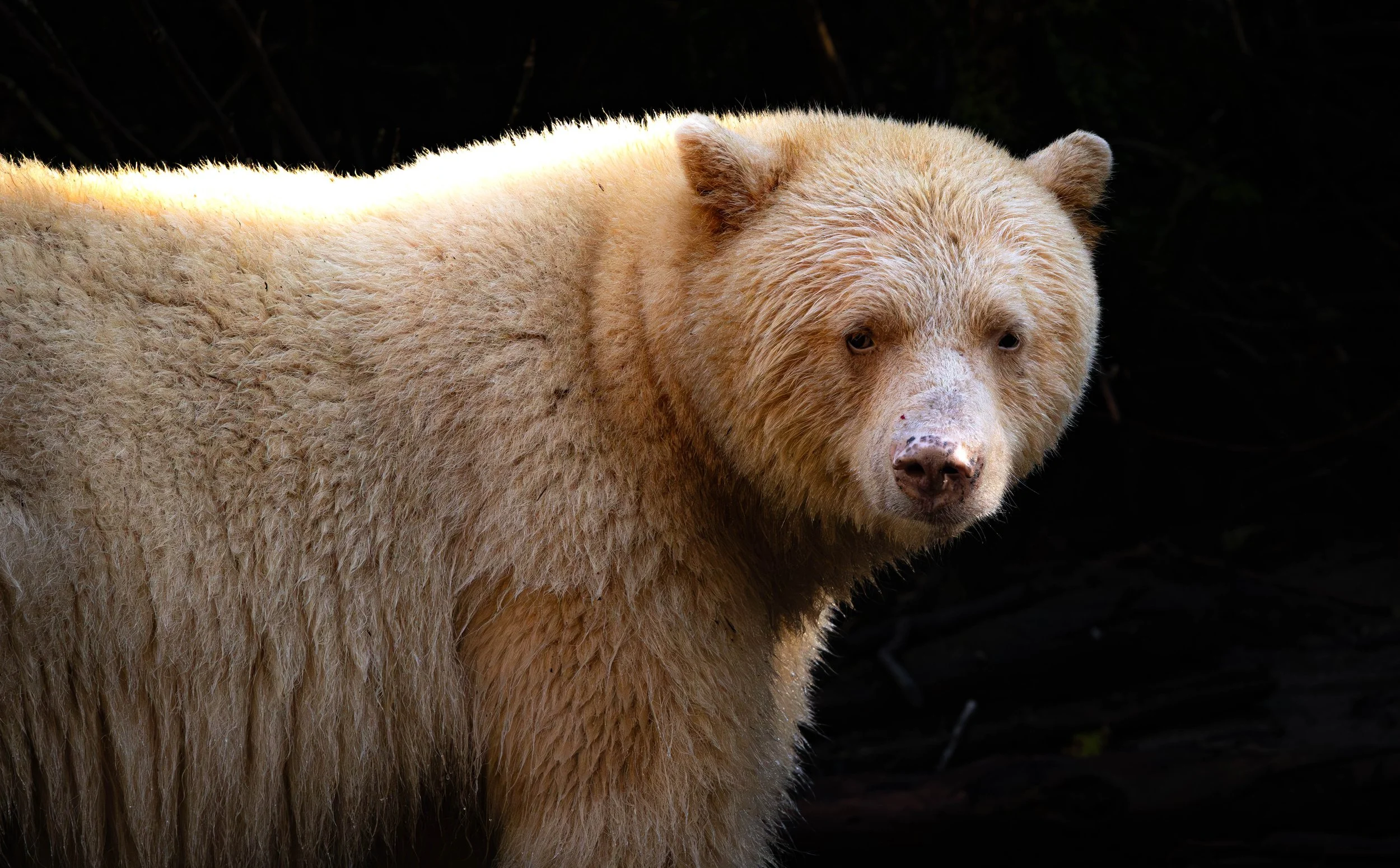
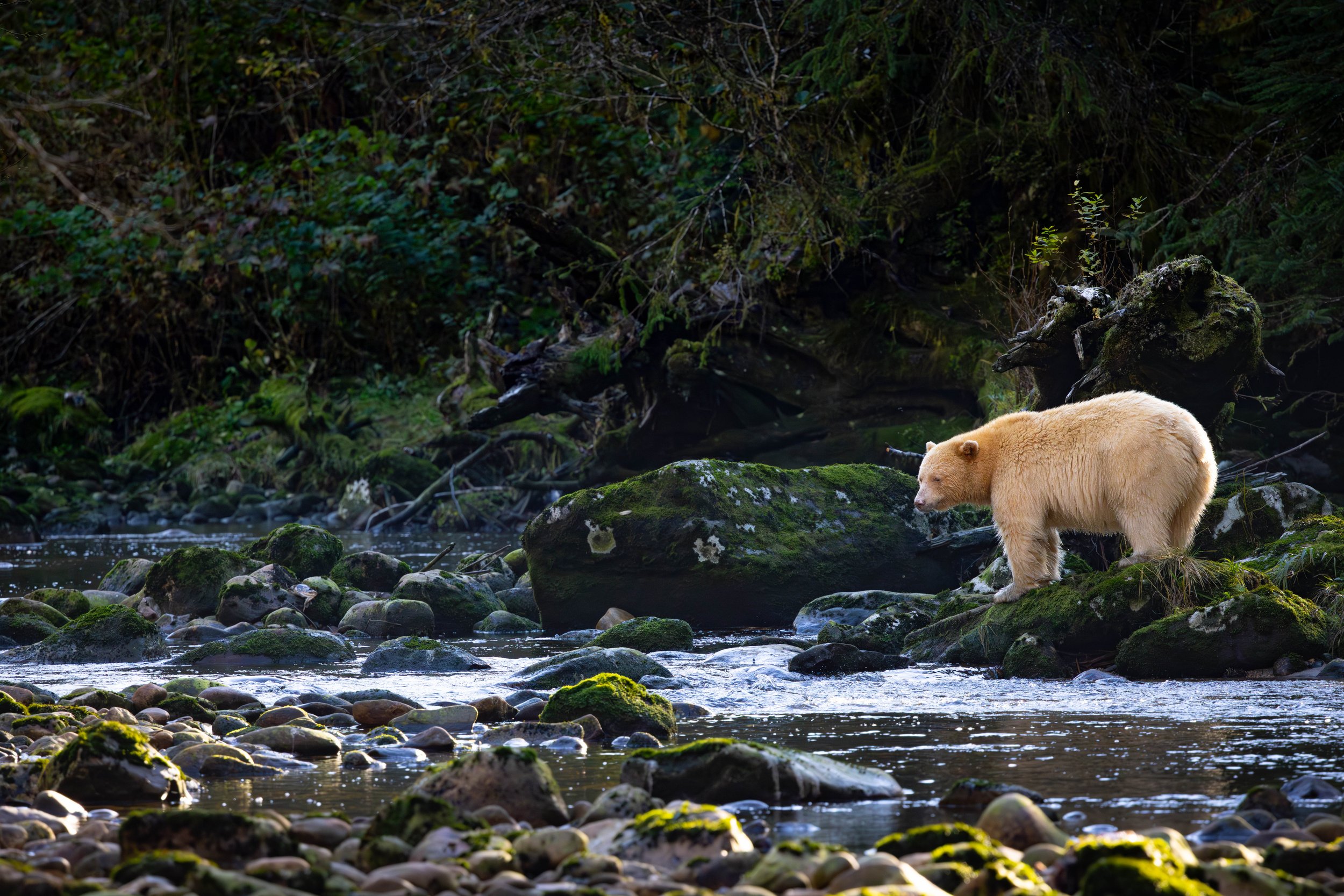
Gribble Island, located off the north coast of British Columbia, is one of the most important places in the world to observe the spirit bear, also known as the Kermode bear. Spirit bears are a rare genetic colour morph of the American black bear, caused by a recessive gene that results in cream-coloured fur. While genetically black bears, their light colouring provides a unique ecological advantage when fishing for salmon, as they are less visible to fish in daylight conditions. Spirit bears are found almost exclusively along the central and northern coast of British Columbia, making this region globally unique. Their cultural significance to Indigenous Nations is profound, with spirit bears featuring prominently in oral histories, laws, and stewardship practices. Conservation of Gribble Island and surrounding habitats is therefore not only about protecting a rare animal, but also about preserving cultural heritage, salmon ecosystems, and intact coastal rainforests. As development pressures increase elsewhere, these protected islands and waterways remain essential strongholds for one of the most iconic and symbolically powerful bears on the planet.
Photography and Conservation
Working so closely with bears has profoundly shaped both my photographic practice and my conservation ethic. Photography allows me to document nuanced behaviours, fleeting light, and the complex relationship between bears and their environment, while also creating images that can educate and inspire. Through visual storytelling, I aim to bridge the gap between scientific understanding and emotional connection—inviting viewers into these remote landscapes in a way that fosters respect, curiosity, and stewardship. Beyond storytelling, photography is increasingly being used as a practical conservation tool. Projects such as BearID are demonstrating how high-quality images can support non-invasive research by enabling the identification and long-term monitoring of individual bears. By adapting human facial recognition algorithms for wildlife and incorporating contributions from citizen scientists and camera traps, BearID highlights how photography now plays a dual role: strengthening conservation narratives while directly contributing to research, management, and protection efforts for bears and their habitats.